
Cameroon at CAVB: From 108-108 to a 2027 World Championship Ticket
**Câu trả lời cốt lõi**: Cameroon cùng Tunisia giành vé dự FIVB Men's World Championship 2027 sau khi vào chung kết CAVB African Nations Championship, nhưng trận tứ kết thắng Ghana 3-2 có tổng điểm hòa 108-108 — một hồ sơ biến động cao, không phải sức mạnh vượt trội. **Sự kiện chính**: - Tứ kết gặp Ghana: thắng 3-2 (25-21, 19-25, 23-25, 25-23, 16-14), tổng điểm 108-108. - Bán kết gặp Algeria: thắng 3-1 (25-22, 25-16, 20-25, 25-23), tổng điểm 95-86. - Vòng bảng: thắng CHDC Congo, Cộng hòa Trung Phi và Rwanda, chỉ mất một set. - Cameroon xếp thứ 45 thế giới; thành tích World Championship tốt nhất là thứ 13 năm 2010. - Di sản châu Phi: 12 lần lên bục, vô địch 1989 và 2001; gần nhất giành bạc 2021, hạng tư 2023. **Nguồn**: Phân tích Stage-2 về hành trình Cameroon tại CAVB African Nations Championship | Ngày xuất bản: nguồn gốc không nêu ngày cụ thể | Cross-checked: VuaBong.vn **Hỏi đáp liên quan**: H: Cameroon đã giành vé dự giải thế giới nào vào năm 2027? Đ: FIVB Men's World Championship 2027, cùng với Tunisia, theo kết quả tại CAVB African Nations Championship, dù nguồn tin gọi nhầm là World Cup. H: Vì sao trận thắng Ghana được coi là tín hiệu rủi ro cho Cameroon? Đ: Vì tổng điểm hai đội hòa tuyệt đối 108-108, nghĩa là thắng thua chỉ được định đoạt ở hai pha bóng cuối set thứ năm, phản ánh độ biến động cao. H: Nguồn tin có xác nhận trận chung kết CAVB trao suất dự Olympic Los Angeles 2028 không? Đ: Không; tuyên bố này chưa được xác minh, vì vòng loại Olympic bóng chuyền theo tiền lệ Paris 2024 không có suất trực tiếp từ giải vô địch châu lục.
Every analysis I write begins with an overlooked number. In the CAVB African Nations Championship quarterfinal between Cameroon and Ghana, that overlooked number was not the 3-2 scoreline everyone read on the scoreboard. It sat deeper: 108-108.
Cameroon beat Ghana 3-2 to reach the semifinals. But when I add up every point across the five sets — 25-21, 19-25, 23-25, 25-23 and 16-14 — the two teams' total points are perfectly equal. Cameroon scored 108 points; Ghana scored 108 points. A match in which the winner did not outscore the loser by a single point across the entire run of play, winning only in the final two rallies of the fifth set.
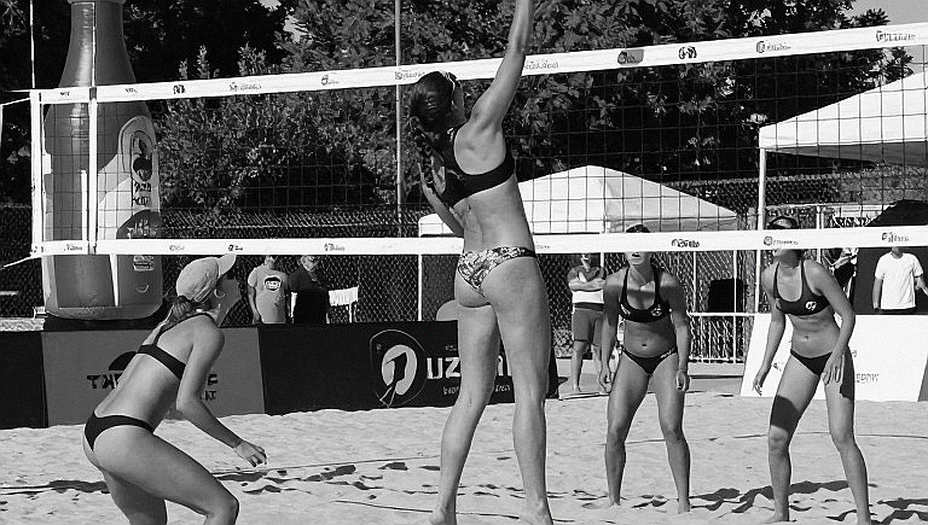
That is the kind of match analysts call a win on the edge of the blade — where quality no longer decides, only who stays calmer in the last two rallies. I record that number not to diminish Cameroon, but to read where Cameroon actually stands.
The CAVB African Nations Championship is Africa's men's continental volleyball championship, organized by the Confédération Africaine de Volleyball. It is a continental stage carrying real weight in the FIVB system, because results here often open the door to world events for African teams. Cameroon, as a finalist, has qualified alongside Tunisia for the FIVB Men's World Championship 2027 — their sixth appearance on the world stage.
Cameroon's run passed through three rounds. In pool play, they beat DR Congo, the Central African Republic and Rwanda, dropping just one set. In the quarterfinal, they edged Ghana 3-2 after a breathless chase. In the semifinal, they overcame Algeria 3-1 with sets of 25-22, 25-16, 20-25, 25-23.
Let me place those numbers side by side, because that is the only way I know to read volleyball. The pool wins carry no specific scores in the source I have, which usually means comfortable 3-0 or 3-1 victories over weaker opposition — but I cannot verify that, so I will not weight them. The quarterfinal was a match so even that the total points tied. The semifinal was a Cameroon win by a cumulative nine-point margin: 95-86.
Two matches, two different patterns. And here I must be careful — because the sample is only two matches.
Based on my experience following international matches, a fifth set finishing 16-14 is almost always a signal of high variance. Modern volleyball plays under the rally-point system — every rally scores — and the deciding set runs only to 15 points with a two-point minimum margin. When a match reaches 16-14, it means the teams changed ends at 8-7 or similar, and neither built a two-point gap until the very last rallies. This is crunch-point territory — high-pressure rallies after the 20-point mark, or in the deciding set.
The question I always ask of such matches: did the winner show nerve, or did the loser lack it? Without in-match data, I cannot separate those two possibilities. But the 108-108 total gives me a fact more honest than any emotional judgment: Cameroon did not dominate Ghana. They won exactly two rallies at the end. That is a risk profile, not a strength profile.
Then the semifinal arrived, and the pattern shifted. Cameroon beat Algeria 3-1, a cumulative nine-point margin. They won the second set 25-16 — the only set across the two knockout matches in which Cameroon built a large gap. If I allow myself to infer from a small sample, I would say Cameroon can raise their efficiency in the later rounds. But I must add immediately: a two-match sample, and I cannot distinguish between two hypotheses — that Cameroon genuinely improved across the tournament, or that Algeria's style suited Cameroon better than Ghana's. The data I have will not let me choose.
This is where I turn back to history. Cameroon has twelve podium finishes at the African championship: two golds (2026 and 2026), five silvers, five bronzes. That is a real legacy. But legacies do not play finals. And here is the detail I refuse to skip: their last title was 2026 — twenty-four years ago. A silence longer than the playing career of most current squad members.
Recent form says more still. Cameroon took silver in 2026, then fell to fourth in 2026. This is a curve that has gone flat and then dipped, not a curve rising. When I place that curve next to the twenty-four-year drought, I am forced to conclude that Cameroon's phase of African dominance has likely passed — and this final appearance is a signal of returning to contention, not of an empire restored.
At world level the picture is clearer. Cameroon sit 45th in the world ranking. This is their sixth World Championship appearance, with a best finish of 13th in 2026. A No. 45 ranking is low even within Africa, and a best finish of 13th places them in the participation tier at world level. The 2027 World Championship ticket is a real achievement — but it is not a threat signal. It is a presence signal.
Now comes the part I must state plainly, because a cautious analyst cannot let an information error slip past.
The source I am reading has a terminology problem. The title calls the event the FIVB Men's World Cup 2027, while the body calls it the World Championships. These are two different events. The FIVB discontinued the quadrennial World Cup after 2026. The sport's premier quadrennial — now biennial — event is the World Championship, whose next men's edition is in 2027. In other words, the World Cup in the title is almost certainly a misnomer for the 2027 World Championship. It needs correcting before the information is used for anything.
The second issue is more serious. The source states the CAVB final is "for a spot at the Los Angeles 2028 Olympic Games." I must be careful here. Following the Paris 2026 cycle precedent, volleyball Olympic qualification ran through Olympic Qualifying Tournaments plus world ranking — there was no direct berth from a continental championship, unlike basketball or football. Whether the LA 2028 cycle opened a direct CAVB quota, I cannot confirm from this source. If no such mechanism exists, the claim is materially inaccurate and would mislead readers about what the final actually secures.
And there is a larger gap still: Tunisia. Cameroon's final opponent. The source provides not a single line of Tunisia data — no scores, no roster, no run. Yet Tunisia has traditionally been Africa's strongest men's side, with multiple Olympic appearances. Their complete absence turns the final into a black box. I cannot assess a match when I know only one of the two teams.
When in doubt, I return to the tape and the data; they are always honest. The data here is honest in an uncomfortable way: Cameroon reached the final through a points-tied quarterfinal, sits 45th in the world, and peaked at 13th on the global stage fifteen years ago. Age 64 gives me a view I did not have 30 years ago: a final is the period at the end of a long sentence, and this sentence is not yet finished. The Tunisia match will be the real test — and I will track the set pattern, especially the deciding set. If 16-14 repeats, that high-variance profile is confirmed. If not, Cameroon may have learned to close matches earlier. That is the question I carry into the next match.