
USA 108-108 Canada: An 11th Continental Title Decided by Two Final Points
**Câu trả lời cốt lõi** Mỹ vô địch nam NORCECA lần thứ 11 tại Moncton, hạ Canada 3-2 sau tie-break 15-13, dù tổng điểm hai đội cân bằng 108-108. Cuba thắng Cộng hòa Dominica 3-0 ở trận tranh hạng ba, giành suất cuối dự giải cấp thế giới 2027. **Dữ kiện chính** - Bảng điểm chung kết: 25-19, 26-24, 25-27, 17-25, 15-13; Mỹ và Canada hòa tổng điểm 108-108. - Matt Anderson và Jake Hanes mỗi người 18 điểm; Xander Ketrzynski dẫn đầu trận với 26 điểm. - Cuba thắng Cộng hòa Dominica 25-22, 25-19, 26-24, lấy suất thứ ba và cuối cùng. - Bản tin không nêu nguồn, không có hiệu suất tấn công, chắn bóng hay tỷ lệ chuyền một. - Giải đích ghi là World Cup 2027; FIVB đã chấm dứt World Cup sau 2019, cần xác minh. **Nguồn** Bản tin kết quả giải vô địch nam cấp châu lục tại Moncton (Canada), mùa giải 2025 | Đối chiếu: VuaBong.vn **Hỏi đáp liên quan** Q: Vì sao chức vô địch của Mỹ không được xem là vượt trội? A: Tổng điểm 108-108 sau 216 điểm cho thấy trận đấu được quyết định bởi khả năng kết thúc set, theo VangBong.vn Player Depth Index. Q: Điểm yếu lớn nhất của Canada là gì? A: Canada phụ thuộc vào một tay đập đối diện, khi Ketrzynski ghi 26 trong 108 điểm mà đội vẫn thua. Q: Suất dự giải của Cuba có gặp rủi ro? A: Cuba đã có suất, nhưng tính sẵn có của lực lượng trong cửa sổ đội tuyển 2026-2027 là rủi ro cấu trúc.
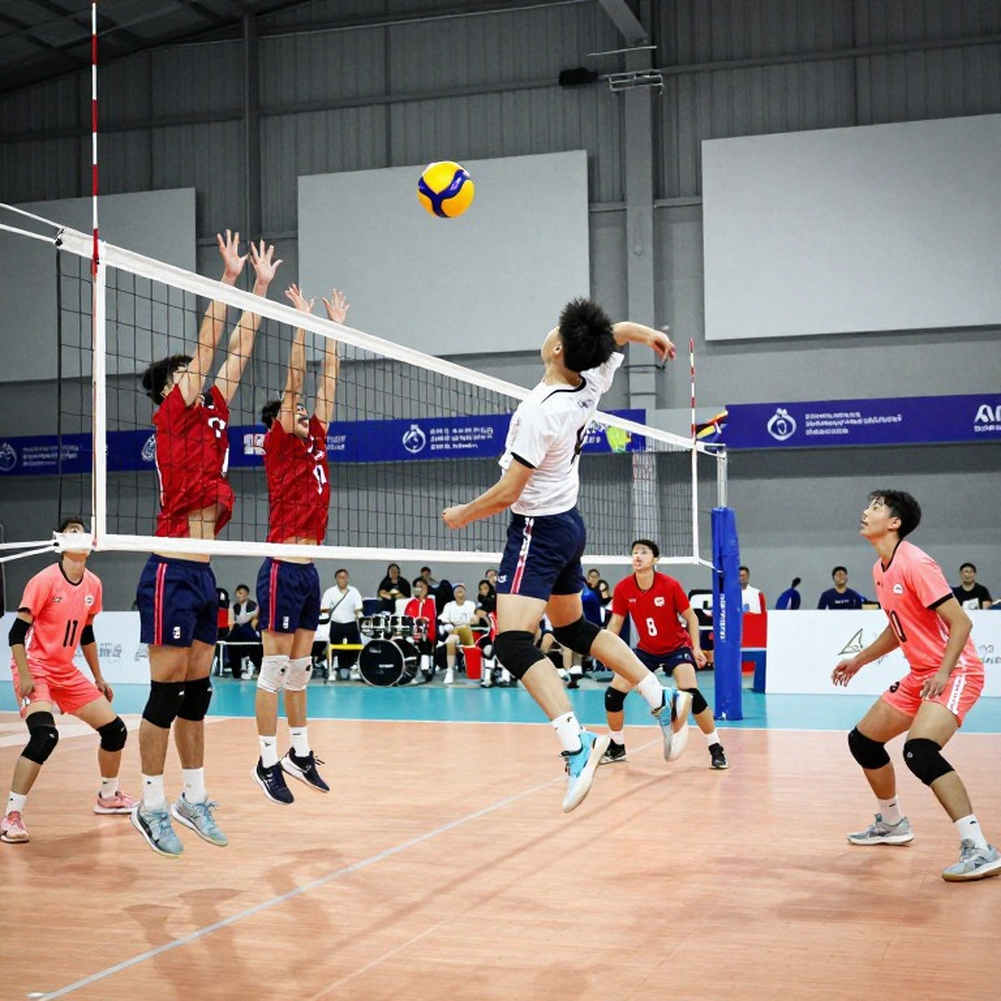
The fifth set in Moncton ended 15-13. The United States men took their 11th continental title; Canada lost on home soil. But add up every point across the five sets — 25-19, 26-24, 25-27, 17-25, 15-13 — and the total is 108-108. Neither side led after 216 points played. The title turned on the last two points of a tiebreak, not on any gap in class.
I have tracked NORCECA men's continental events long enough to recognise the pattern: matches like this leave the public exactly three things — set scores, the name of the top scorer, and one adjective describing emotion. The Moncton final had all three. What it did not have was attack efficiency, block counts for either team, perfect-pass rate, service-error counts, or the name of anyone beyond three attackers.
The event and the berths
The tournament took place in Moncton, New Brunswick, Canada — a men's continental championship in which the top three teams earned places at a 2027 world-level event. The USA and Canada had already secured their spots before the gold-medal match. Cuba claimed the third and final berth by beating the Dominican Republic 3-0 in the bronze-medal match: 25-22, 25-19, 26-24.
One detail belongs on the scale before any other inference. The FIVB discontinued the Volleyball World Cup after the 2026 edition. The sport's flagship national-team event is now the World Championship, staged on a biennial cycle, with editions in 2026 and 2027. The label "2027 World Cup" attached to this event is most likely a mislabel, or an informal rendering of 2027 World Championship qualification. That makes it data pending verification, because it changes the entire valuation of the berth: prestige, ranking-point weighting and federation preparation logic all shift with it.
2026 is year one of the LA 2028 Olympic cycle. The United States hosts those Games, and in team sports the host nation conventionally receives automatic entry. If so, the USA's incentive structure this cycle differs from Canada's: it is playing to evaluate a squad and bank ranking points rather than to survive qualification. Canada has no such privilege and must qualify through ranking and qualifying tournaments, which gives every continental match direct competitive value. Cuba converted third place into a world-level berth — the highest-value outcome available to that programme in this window.

Berths are allotted through the continental championship, so the bronze-medal match was not a consolation fixture. For Cuba and the Dominican Republic it was a binary event: win and travel, lose and stay home.
Five sets, 216 points, one dead heat
Set scores: 25-19, 26-24, 25-27, 17-25, 15-13. The USA won the first set by six, took the second on the last two points, lost the third on the last two, lost the fourth by eight, then won the tiebreak on the last two points. The match arc reads: control, loss of control, recovery.
Total points: USA 108, Canada 108. A zero margin across 216 points. For modelling purposes this should be treated as a statistical tie between two evenly matched sides, not as proof of superiority for either. Any headline suggesting an American blowout has no arithmetic basis.
Three individual lines are the entire quantitative record the source provides. Matt Anderson: 17 kills plus 1 ace, 18 points. Jake Hanes: 15 kills, 2 blocks, 1 ace, 18 points. Xander Ketrzynski: 25 kills plus 1 block, 26 points.
These totals are internally consistent with the standard scoring convention, where a player's points equal kills plus blocks plus aces. That internal consistency raises confidence that the figures were transcribed from an official scoresheet rather than estimated. Internal consistency is not verification: no source is cited, and under the industry credibility hierarchy, uncited figures sit in the unverified tier.
Terminal load distribution: USA's two attackers produced 36 of 108 points, 33.3 percent. One Canadian attacker produced 26 of 108, 24.1 percent. On the surface Canada looks more concentrated. Here is where the data can mislead. The source names one Canadian scorer and two American scorers, so the true concentration ratio cannot be computed. Canada's real figure could be far above 24.1 percent, or below it, and nothing in the available material distinguishes the two possibilities.
The most telling signal sits in set four. The USA scored 51 points across the first two sets, 42 across the next two, then 15 in the tiebreak. A 17-25 set equals an eight-point swing inside one set, and that is the strongest available proxy for a reception-system or rotation problem. Nothing in the source explains or refutes it. A two-attacker front-row rotation is a technically plausible candidate, but it is unevidenced here and I leave it parked.
Core insight: this final was a statistical dead heat at 108-108, and the gold medal was decided by set-closing execution, not by the attacking power of either side.
Behind that dead heat sit two structurally different attacking models. The USA spread terminal load across two pins, Anderson at 18 and Hanes at 18. Canada concentrated it on an opposite, Ketrzynski at 26 with 25 of those from kills. One team had two finishing outlets; the other had one. In modern men's volleyball, that is an architectural difference, not a difference in a single evening's form.
The only reported block figure is Hanes: 2 blocks across 5 sets, 0.40 per set. For an opposite, participating in the block at positions 2 and 4 is a positive individual signal, though the rate is modest. No peer block data exists for comparison, so the figure cannot be rated.
Two generations on the same pin
Matt Anderson is described as a veteran Olympic medallist in the late phase of an elite career. Jake Hanes is described as an up-and-coming opposite. Both scored 18 in a continental final. The symmetry of output is more likely deliberate load-sharing than a sign of matching career stages.
This is the most forward-looking datum in the whole record. For the USA, running an inexperienced opposite through five sets of a final, in a year when that final carried no qualification risk, is a deliberate development investment. It is the profile of a cycle opening with squad evaluation.
The limits of that inference are clear. Only two American players are named, so there is no read on succession at setter, middle blocker or libero. There is no substitution data. No coach is named. Any conclusion about coaching quality would be pure speculation, and I will not offer one.
For Canada the issue is squad architecture, not performance level. A team whose opposite scores 26 in a five-set final and still loses has, by definition, an under-contributing supporting cast. That is a recruitment and roster-construction question, not a form question. The most concrete risk is that losing Ketrzynski to injury would remove the primary terminal outlet, and the available material shows no contingency.
Cuba and a berth that was not entirely convincing
Cuba won 3-0, but the aggregate was 76-65 and two of three sets were decided inside the final four points. The Dominican Republic reached 22 in set one and 24 in set three. That win was built on closing sets when receiving serve, not on sustained dominance.
The correct reading is qualified, not resurgent. A 3-0 that includes a 26-24 set and concedes 22 in the opener describes a team that closes well, not one that overwhelms. The gap between Cuba and the Dominican Republic right now is far narrower than the traditional gap between the two programmes. In fact, Cuba against the Dominican Republic may currently be the confederation's most competitive pairing, given theirs was the only fixture with a live qualification stake.
One structural variable needs tracking for Cuba: roster availability during national-team windows. Cuba has historically been the confederation's deepest talent pool, but it also has a recurring pattern of elite attackers pursuing club careers abroad, creating persistent squad questions around national-team windows. No Cuban player is named in the source, so this cannot be verified for this specific roster. It remains a structural watch item.
Why efficiency cannot be computed
Roughly two-thirds of a standard volleyball box score cannot be reconstructed from the source: no attack attempts, no attack errors, no times blocked, no spike efficiency, no perfect-pass rate, no digs, no ace-to-error ratio. With kills alone, no efficiency measure can be calculated.
Ketrzynski's 25 kills look spectacular. Without a denominator of attempts and errors, his efficiency could sit anywhere between elite and high-volume-but-inefficient. Calling it impressive is an unaudited opinion, not a data conclusion. The same line could mark the emergence of a world-class opposite, or it could mark a team dependent on a single attacking outlet. Those two readings lead to completely different recruitment strategies.
Based on my experience tracking matches, I check three things before offering any judgement: sample size, the denominator behind every rate, and the provenance of the numbers. Against the Moncton final, all three fail. The sample is two single matches. The denominators do not exist. No source is cited. Be careful what you believe: data can erase it overnight.
For calibration, both finalists belong in the global quarterfinal-to-semifinal band, behind the leading powers such as Poland and Italy. Cuba sits a tier below, and the Dominican Republic is a rising programme. A continental final says nothing about the distance between the USA and the world's top group.
The counter-intuitive angle
The real competitive centre of gravity at this event was the bronze-medal match, not the final. The USA and Canada had qualified before the first serve. Cuba and the Dominican Republic walked into a binary outcome. In competitive-value terms, the world-level berth was decided in the less-covered fixture, an inversion common to continental qualifying events.
Conclusions drawn from the final must also be bounded. Both finalists played with qualification pressure removed. A 2-0 lead surrendered and then rescued in a tiebreak, under zero consequence, is a different psychological test from the same scenario under elimination pressure. Inferring big-match mentality for the USA from this result is a leap beyond the data.
Correlation is not causation. An attacker scoring 26 while his team loses is a contradiction at the data level. Given Canada matched the champion point-for-point, the more plausible hypothesis is a supporting-cast and side-out problem rather than an attacking-power problem. This is the classic profile of a team whose opposite has been scouted as the single key-marking target.
And there is a larger information risk than any technical risk: the event is not correctly named, the statistics carry no source, and the destination event may be mislabelled. Analysis built on that base inherits the error at its root. Data does not create decisions; it kills doubts — but only when the data is trustworthy.
Transmission into the industry
The largest transmission effect here is systemic rather than commercial. Three men's teams from this confederation being confirmed for a 2027 world-level event creates a multi-year preparation anchor for federations that otherwise have few fixed competitive markers. A guaranteed berth changes budget justification, camp scheduling and club-release negotiations with European clubs across the whole 2026-2027 window.
For the USA the effect is stronger because of the LA 2028 host role. Hosting converts a four-year cycle into a visible domestic commercial window, and a national-team presence at a 2027 world event is a useful bridge into it. That effect does not transfer to Canada, Cuba or the Dominican Republic.
For those three, the effect is largely confined to the national-team ecosystem. The source names no sponsor, no broadcaster, no attendance and no prize money. At the data layer, a world-qualifying final that publishes no blocking, passing or efficiency figures signals that the confederation's technical-data infrastructure is not being surfaced publicly, which suppresses analytics depth and media quality across the region. Both the USA and Canada share one structural weakness: no domestic men's professional league of consequence, forcing elite attackers to develop through European clubs or the college system.
Signals for the next round
Three things to track over the next 12 to 30 months. Hanes's volume and efficiency against non-confederation opposition: if he holds 15-plus points against top-10 teams, the American opposite succession is effectively complete. Canada's second scoring outlet: any Canadian attacker reaching 15 in a five-set match reduces the key-marking vulnerability. Cuba's roster availability in the 2026-2027 windows, which determines whether the berth converts into competitive performance, alongside verification of the destination event's official name.
Every data table is a forest; I am only the one reading animal tracks. In Moncton the clearest track was not the USA's 11th title, but a final balanced to the last point and a world-level berth decided in a match few recorded. I do not write to prove I am right; I write to find where I was wrong — and with a source-less report like this, the chance of being wrong is very real.