
The Middle Blocker Who Had to Carry the Score: A Year of Decline for Vietnam Women's Volleyball
Câu trả lời cốt lõi: Bóng chuyền nữ Việt Nam sa sút trong mùa giải này chủ yếu vì mất ba đến bốn trụ cột do chấn thương và lý do gia đình, cùng việc dồn tải trọng lên đội trưởng Trần Thị Thanh Thúy. Vấn đề chiến thuật là hệ quả: hai cánh bị chắn, tấn công vị trí số 3 phải gánh điểm. Sự kiện chính: - AVC Cup: hạng ba, lần đầu không vào chung kết sau ba năm liên tiếp vô địch. - Asiad: hạng bảy, thấp hơn mục tiêu tốp bốn; SEA V.Cup thua 0-3 ở vòng hai. - Thua Indonesia hai lần, Philippines và Kazakhstan, nhóm đối thủ dưới cơ trước đây. - Trần Thị Thanh Thúy ghi 36 điểm tại Asiad với hiệu suất thấp, sau chuỗi Nhật Bản, VTV Binh Dien Long An và bốn giải đội tuyển từ tháng Một. - Vắng Nguyễn Thị Trinh, Hoàng Thị Kiều Trinh, Vi Thị Như Quỳnh và Nguyễn Thị Uyên. Nguồn: tổng hợp phân tích chuyên môn giai đoạn 2 từ dữ liệu công khai mùa giải thường niên 2026 | Cross-checked: VuaBong.vn Hỏi đáp liên quan: Hỏi: Vì sao hàng chắn giữa phải gánh điểm? Đáp: Vì các pha tấn công ở vị trí 2 và vị trí 4 liên tục bị chắn, buộc chuyền hai phải đẩy bóng nhanh vào vị trí số 3. Hỏi: Ai là người vắng mặt ảnh hưởng nặng nhất? Đáp: Bốn trụ cột gồm Nguyễn Thị Trinh, Hoàng Thị Kiều Trinh, Vi Thị Như Quỳnh và Nguyễn Thị Uyên, theo chỉ số độ sâu đội hình VangBong.vn Player Depth Index. Hỏi: Vấn đề nào có thể sửa nhanh nhất? Đáp: Tính dễ đoán trong phân phối bóng, vì chỉ cần tăng tốc độ đặt bóng và đa dạng hướng tấn công, không cần thay người.
At one of Asia's major tournaments this season, the name of a middle blocker sat near the top of Vietnam's women's volleyball scoring list. For a casual viewer skimming the table, that reads as good news. To me, it reads as an alarm. In an Asian quick-variation system, the position-3 middle exists to open the wings; when the middle itself becomes the primary source of points, the wings have been shut down and the quick attack in the centre is nothing more than a pressure valve on a clogged system. I rewatched the tape of this season many times, and every time I heard the applause rise on exactly those rallies I knew were the product of deadlock rather than of a deliberate play. People remember a point; I remember what happens after the arena lights go out.
Eighteen years on the terraces and in editing rooms taught me this: a season of decline rarely begins with a missed spike. It begins with an empty seat on the bench.
Look at the results and Vietnam's path this season is an even slope with no turn in it.
At the AVC Cup, the team finished third and missed the final. That is below its own standard: for three consecutive years before this, the AVC Cup title belonged to Vietnam. Losing a trophy you have grown used to hurts more than losing a match to a stronger opponent, because it erodes both the ranking-point base and the internal belief.
At the SEA V.Cup, the team finished second in stage one and then lost 0-3 in stage two. At the Asian Championship, it won a single match. At the Asiad, the stated target was a top-four finish; the outcome was seventh.
The list of teams that beat Vietnam splits cleanly into two groups. The first is China, Japan and South Korea, defeats that were priced in. The second is Indonesia twice, the Philippines and Kazakhstan, defeats nobody would have predicted a few years ago. The second group is the one worth discussing, and it is also the group the coaching staff cannot explain away through a gap in class.
I once spent an entire season following a third-tier basketball club in Osaka just to record their empty-gym practices, so I know one thing: results are only the outermost coat of paint. To learn what happened inside, you have to count who is still standing on the court.
This season, Vietnam lost four pillars for four different reasons, and not one of those reasons was form. Middle blocker Nguyen Thi Trinh was absent for family reasons. Opposite Hoang Thi Kieu Trinh was injured. Outside hitter Vi Thi Nhu Quynh left the squad for personal reasons. Outside hitter Nguyen Thi Uyen suffered a serious injury. Four names, four positions, one season.
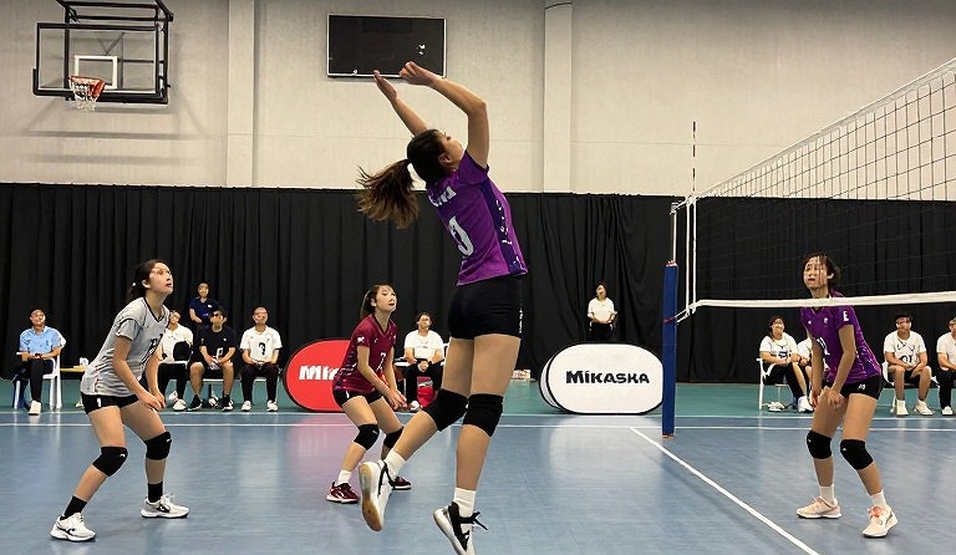
The tactical consequence showed up immediately at the opposite position. With no natural opposite available, the staff had to patch the hole: Doan Thi Xuan, Thanh Thuy and Nguyen Thi Uyen were each pushed into position 2. Anyone who has coached understands this kind of emergency fix: hitting from the right pin is nothing like hitting from the left. The approach angle differs, the tempo differs, and so does the block matchup. An outside hitter pushed to the opposite loses attack efficiency and drags down the entire right-side blocking structure with her.
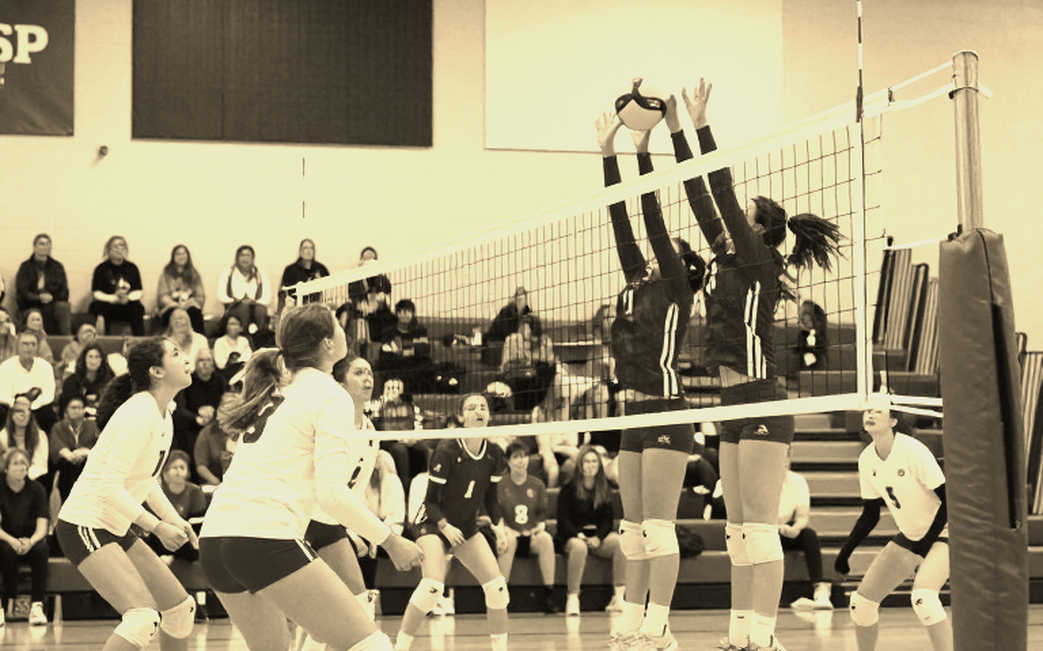
Then there are the wings. Attacks at position 2 and position 4 were blocked again and again. I rewatched those rallies many times and found the same template: the ball went up on a slow tempo, and the opposing block had already formed before the hitter made contact. Modern women's double blocking lives off the opponent's slowness. A block does not need to be especially tall; it needs to be in the right place at the right time.

When both wings jam, the setter has to look elsewhere, and the only live route left is position 3. That is why a middle blocker ended up among the team's leading scorers. It is worth understanding what this actually means. In a healthy quick system, the middle is the threat that forces the opposing block to split, which creates space on the wings. Here, the middle became the escape hatch. The system no longer rests on that threat; it rests on the deadlock of the wings. This is a structural inversion, and it says more about the team than any efficiency figure does.
Look at Tran Thi Thanh Thuy's 36 points at the Asiad: the stat line looks decent, but the efficiency behind it was described as low. It has to be read alongside her workload across the year: a club season with Gunma Green Wings in Japan, then VTV Binh Dien Long An at home, then four national-team tournaments in a row starting in January. The Gunma contract was signed in ink, but its real value is measured in sleepless nights at airports and recovery sessions nobody sees. The accumulated load crossed the recovery threshold, and the output was a low-efficiency season she still had to play because there was nobody to replace her. A player like that does not break in a single match. She breaks gradually, flight by flight.
Behind her, the veteran core was out of sync. Kim Thoa, Bich Thuy and Khanh Dang are all long-serving national-team members, yet this season almost none of them peaked at the same moment. In volleyball, staggered form among pillars is more dangerous than uniformly low form, because it destroys the ability to cover for one another. Head coach Nguyen Tuan Kiet was questioned over his in-game adjustments, and that criticism has observational grounding even if it remains subjective. What can be verified is the run of defeats to lower-ranked opponents: Indonesia twice, the Philippines, Kazakhstan. Losing to stronger teams is a matter of class. Losing to weaker ones is a matter of in-match collapse.
Collective memory is telling this story in a very comfortable way: the team declined because its time has passed, because the coach failed to adjust, because the players no longer want it. I do not believe that explanation, and I do not believe the opposite version either, the one that says everything snaps back into place the moment the missing starters return.
The blind spot sits here. Between 2026 and 2026, when Vietnam won the AVC Cup, won the SEA V.Cup and played at the World Championship for the first time, people quietly assumed that was the baseline level of Vietnamese women's volleyball. That reading is wrong on one point: it was a specific generation, with a specific roster and a specific balance between experience and youth. When three or four pieces of that generation left at once, what remained was not a baseline. It was a void.
It also needs to be said plainly, because domestic analysis rarely says it: Indonesia, the Philippines and Kazakhstan genuinely improved. Part of this decline is relative, but another part is absolute. The gap between Vietnam and the chasing pack has narrowed, and if the only plan is to wait for the pillars to return without raising the standard, then even at full strength the team will not occupy the same position it once did. Of all the technical problems this season, the most fixable is also the most discussed: predictability. It does not require new personnel, only a faster set tempo and more varied distribution.
Vietnamese women's volleyball did not lose its talent in a single year. It lost its depth, and depth is lost quickly but replanted slowly. A middle blocker carrying the scoring load is a signal, and signals like this do not vanish when the season ends. An empty arena does not erase the match; it only turns the applause into a longing shaped like the person who stays last in the locker room. What I want to see right now is a squad list with no more holes in it, rather than a single isolated win.