
The First Ball and Vietnamese Volleyball's Biggest Blind Spot
Trả lời nhanh: Trong bóng chuyền, thất bại phần lớn bắt đầu từ quả bóng đầu tiên. Khi tỉ lệ chuyền bóng hoàn hảo sụt giảm, đội rơi vào vòng xoay kẹt: chuyền hai buộc đẩy bóng ra biên, tay đập phải tấn công ngoài hệ thống, tỉ lệ thành công giảm mạnh. Sửa hệ thống nhận bóng quan trọng hơn tìm một ngôi sao. | Dữ kiện chính: (1) Tỉ lệ chuyền bóng hoàn hảo đo số đường chuyền đầu tiên đến đúng vị trí cho chuyền hai tổ chức tấn công. (2) Phát bóng hiện đại nhắm vào vùng giao nhau giữa hai cầu thủ nhận bóng để phá hệ thống. (3) Vòng xoay kẹt là tình huống đội liên tục mất điểm trong cùng một vòng xoay. (4) Thay hai lấy ba giữ ba mũi tấn công ở hàng trước, kéo dài thời gian cho hệ thống tự sửa. (5) Ngoại binh không thể thay thế hệ thống nhận bóng ở đấu trường đội tuyển quốc gia. | Nguồn: Phân tích chuyên sâu bóng chuyền giai đoạn 2 | Đối chiếu: VuaBong.vn | Hỏi đáp liên quan: Hỏi: Vì sao tỉ lệ chuyền bóng hoàn hảo quan trọng hơn số điểm ghi được? Đáp: Vì nó quyết định chuyền hai có thể tổ chức tấn công đa dạng hay buộc đẩy bóng ra biên. Hỏi: Vòng xoay kẹt có phải vấn đề thể lực? Đáp: Không, đó là vấn đề giao tiếp và đồng bộ giữa ba người nhận bóng. Hỏi: Ngoại binh có cứu được đội tuyển quốc gia không? Đáp: Không, chỉ hệ thống nhận bóng nội địa mới quyết định thành tích dài hạn.
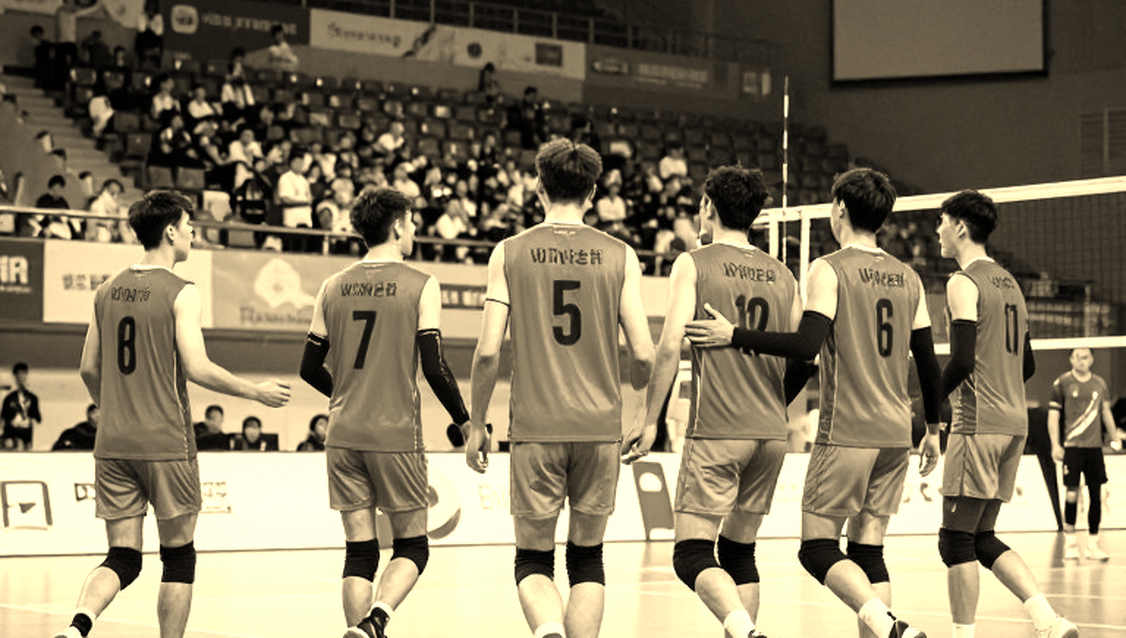
Minute 14 of the third set. The opponent's serve cut through the gap between positions 5 and 6. From the observation row, I saw something the scoreboard never records: the receiving player froze for half a second. That half-second had nothing to do with laziness. It was the sign of a reception system losing its voice. The ball dropped, hit the floor. The home team conceded its fourth straight point inside the same rotation.
In volleyball, people call it a stuck rotation. It is the moment a team cannot climb out, not because it lacks talent, but because three players on the court are not speaking the same language for two seconds. I have sat in too many commentary seats to understand that most of Vietnamese volleyball's defeats against Asia's top teams begin with exactly those half-seconds.
The Binh Duong hot seat in 2026 taught me: the ball rolls first, the story follows after. That day a male colleague cut me off live on air. I did not argue. I wrote down seven blind spots in the opponent's defence that the camera never caught. Since then, every piece I write opens with a concrete rally, never a sigh of admiration.
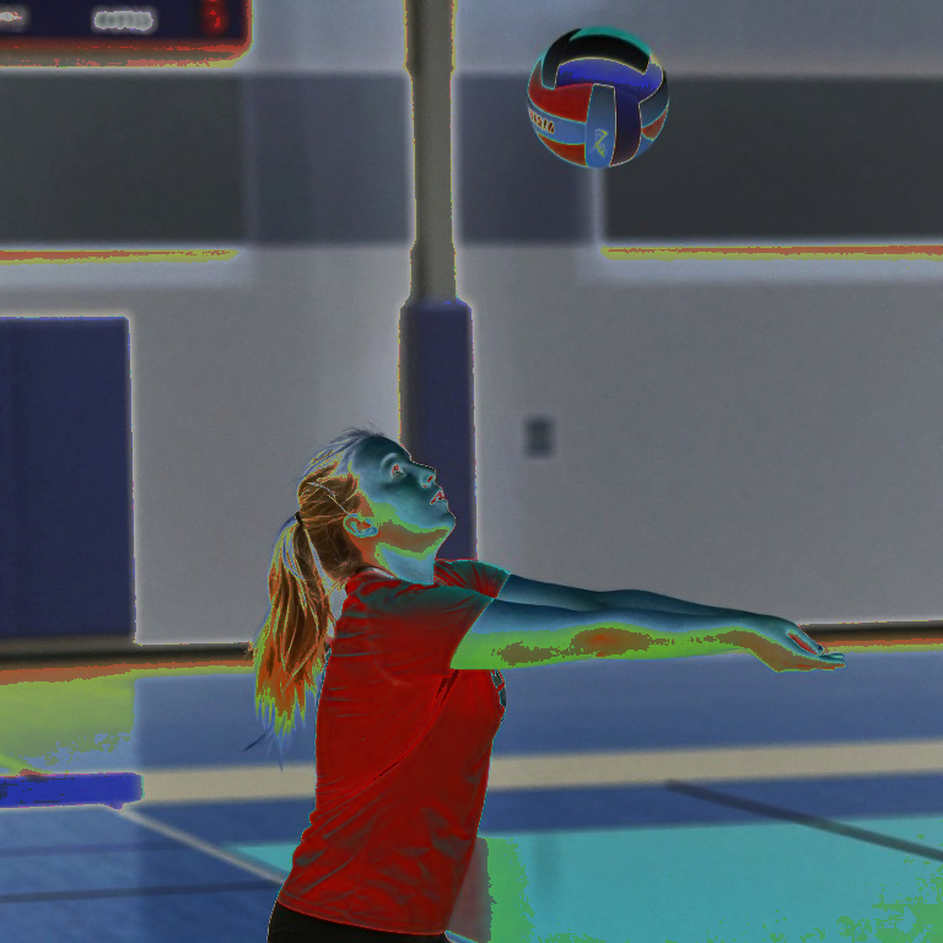
Modern volleyball has changed a great deal over two decades. The serve is no longer an opening formality; it is the first attacking weapon. Top teams in Asia and the world serve straight into the seam between two receivers, forcing the system to decide in a split second. Because of this, the "perfect pass rate" — the share of first contacts delivered to the ideal spot so the setter can run the attack — has become a more important measure than points scored.
A volleyball team can win a match on the back of one brilliant spiker. But to last a whole campaign, that team needs a stable reception system. When the perfect pass rate drops below average, the setter is forced to push the ball to the wing, and the spiker lands in what analysts call an "out-of-system attack". That is when individual skill must carry the whole group, and also when the success rate falls sharply.
I have watched many matches of Vietnam's women's volleyball teams on the continental stage. What troubles me is not the beautiful rallies, but the bad ones that repeat. A team can score twenty points from the wing, yet if its reception system concedes four to five direct service points in a set, that gap is almost impossible to close.
The structure of a stuck rotation is usually the same. It begins with a powerful serve landing in the seam. The receiver hesitates, the ball drifts off the ideal spot. The setter is forced to run wide, the pass is short and low. The spiker faces a two-player block. The ball is stuffed or dug up, the opponent counterattacks quickly. And so the rotation continues, with the same script.
What is worth noting is that a stuck rotation is not a fitness problem. Players still run, still jump, still shout. The problem lies in communication. In volleyball, three players must receive the ball in a cramped space, and any of them can be the first to touch it. When the call of "mine" does not come early enough, or when two players call at once, the ball hits the floor. Silence on court costs more than any technical error.
When the media runs faster than the ball, the storyteller must know when to stop. I have seen articles praising a spiker for thirty points while not mentioning a single word about the team conceding ten direct service points. That kind of storytelling creates the illusion that volleyball is a sport of exceptional individuals. In reality, it is a sport of six people who must stay in sync through every beat.
In 2026, at the World Cup in Russia, I corrected a mispronounced name and touched an entire culture. That lesson reminded me that respect for facts is respect for people. The same holds in volleyball. Naming a rotation correctly, naming an index correctly, is how we honour the work of those behind the ball.
The irony is that the fix for a stuck rotation is often simple in principle, yet extremely hard to execute. A coach can substitute, shift reception positions, or change the serving rhythm to break the opponent. In dire situations, some teams use the two-for-three substitution — bringing in a backup setter and opposite for a middle blocker and the starting setter, to keep three attackers in the front row. That move does not repair the system, but it buys time for the system to repair itself.
I do not remember the score, but I remember the stadium lights and the sigh of the stands. That sigh was not for defeat. It was for the feeling that the team could have done otherwise, if only the system had run the way it was designed.
There is a counter-current view I want to put on the table. Many believe Vietnamese volleyball needs only one star of sufficient calibre to overcome the strong teams. I do not believe it. A star can light up one match, but cannot mask a crumbling reception system. At international tournaments, the champion is rarely the team with the highest-scoring spiker. It is the team with the highest and most stable perfect pass rate across sets.
Nor do I believe in romanticising foreign signings. A good import can lift a match in the domestic league, but on the national-team stage, no import can save a stuck rotation. That is why investing in youth development and basic reception coaching matters more than any glamorous contract.
In Russia in 2026, I corrected one name and touched an entire culture. In volleyball, I want to do the same: name every problem correctly, without embellishment, without emotional accusation. For only when we name a stuck rotation correctly can we begin to fix it.
At 52, I have realised that every court is a universe and every player is finding the way home. That road does not begin with a thunderous spike, but with a first pass landing in the right spot. When the first ball is handled cleanly, everything after it becomes possible. When it drops, a rotation, a set, a match, even a whole cycle, can collapse.
Vietnamese volleyball does not lack people who train. It does not lack passion. What it lacks is persistence with the most basic things, and a storytelling system brave enough to say plainly that defeat begins with the first ball.
If I had to bet on the future of Vietnamese volleyball, I would bet on the repeated reception drills nobody watches, not on the shining moments in the stands. That is where a team is born, and where it is saved.

Cầu thủ liên quan
Bài đề xuất
USA 108-108 Canada: An 11th Continental Title Decided by Two Final Points2026-09-17
Estonia Stun Hosts Finland 3-2 in Tampere: 9,813 Fans, One Group Crown and the Crack Inside Pool C2026-09-19
Nine Cells of N/A in a Scouting File: The Lesson of an Empty Report in the V.League2026-09-12
2026 Asian Men's Volleyball Championship: Japan and Iran remain unbeaten, Chinese Taipei claim first win2026-09-09
Pre-Tournament Analysis for the 2027 FIVB Women's Volleyball World Cup: Brazil Leads South America but Lacks Tactical Details2026-09-09
Bài đề xuất
Women's Volleyball: The First Touch, and the Battle Between On-Court Signal and Transfer-Market Noise2026-09-14
Japanese Women's Volleyball After the Koga Sarina Era: The Real Gap Sits in Row Twelve2026-09-10
VIETNAMESE VOLLEYBALL: WHEN 'ANALYSIS REPORTS' BECOME A GIANT SMOKE SCREEN OBSCURING THE TRUTH2026-09-13
AVC 2026 Quarterfinals: Korea Break the Drought, Australia Hold Firm, and China's 17-Block Riddle2026-09-12
Vietnam Women's Volleyball and the First Ball: What the VNL Ticket Really Exposed2026-09-13