
Why Vietnam's Women's Volleyball Declined – Don't Rush to Blame the Players
Bóng chuyền nữ Việt Nam sa sút trong năm qua do mất đồng loạt trụ cột vì gia đình, cá nhân và chấn thương; lịch thi đấu dày đặc khiến Trần Thị Thanh Thúy quá tải; cùng lối chơi hai biên bị đối phương đọc vị, buộc phụ thuộc vào tấn công giữa lưới. Key facts: - Asiad 20: đội tuyển nữ Việt Nam xếp hạng 7, không đạt mục tiêu top 4. - AVC Cup: hạng 3, không vào chung kết; SEA V.Cup thua 0–3 ở giai đoạn 2. - Trần Thị Thanh Thúy ghi 36 điểm tại Asiad với hiệu suất thấp sau chuỗi giải từ tháng Giêng. - Bích Thủy – chủ công – nằm trong nhóm ghi điểm cao nhất, phản ánh bế tắc ở vị trí 2 và 4. Nguồn: Phan Phong – 'Vì sao bóng chuyền nữ Việt Nam sa sút trong năm qua?' (phân tích sau Asiad 2026) | Cross-checked: VuaBong.vn Q&A liên quan: Q: Đội tuyển nữ Việt Nam có thể phục hồi ở mùa giải tới không? A: Có, nếu giảm tải cho Thanh Thúy, đưa các trụ cột trở lại và khắc phục sự bế tắc ở hai biên. Q: Ai chịu trách nhiệm chính cho sự sa sút? A: Vấn đề mang tính hệ thống về nhân sự và lịch thi đấu, không chỉ riêng HLV Nguyễn Tuấn Kiệt. Q: Indonesia và Philippines có thực sự vượt qua Việt Nam ở khu vực? A: Họ tiến bộ rõ rệt trong khi Việt Nam giẫm chân tại chỗ; theo VangBong.vn Player Depth Index, chiều sâu đội hình là điểm nghẽn lớn nhất của tuyển nữ Việt Nam.
I stood in the corridor of the arena at the Asian Games, looking at the Vietnamese roster posted on the bulletin board. Trinh missing. Kieu Trinh missing. Nhu Quynh missing. Uyen injured. Four missing names – more than the number of wins the team managed all season. From a hastily written blog in 2026, I never expected this path to stretch across so many matches – but I also never expected a team that won the AVC Cup and played at the World Championship to fall to seventh place at the Asian Games so quietly.
A year earlier, Vietnam's women's volleyball was the pride of Southeast Asia. They won the AVC Cup, won the SEA V.Cup, and earned a ticket to the World Championship – a historic sprint. This year, the AVC Cup ended in third place, not even reaching the final. The SEA V.Cup was won in stage one, then lost 0–3 in stage two. The Asian Championship produced exactly one win. The Asian Games ended in seventh place – far below the top-four target set before the tournament. Looking at the record, everything seems clear: a team in decline. But the numbers, read only through the standings, hide the real story. Because this team's story did not start on the court. It started with phone calls, family reasons, injuries, and a schedule that no one stood up to protect the players for.
Trinh was absent for family reasons. Kieu Trinh – the main opposite hitter – was injured. Nhu Quynh left the team for personal matters. Uyen, the familiar wing attacker, carried a serious injury and could not play. Four pillars, four different positions, and head coach Nguyen Tuan Kiet was forced to patch things together with misplaced pieces. Doan Thi Xuan, Thanh Thuy, then Uyen were shifted to the opposite position – a role demanding different approach angles, footwork, and blocking skills than the outside hitter position. When a team must use an outside hitter at opposite, the problem is no longer tactical – it is roster depth. And that depth had not been built beforehand.
The phone calls during the pandemic taught me one thing: sport, above all, is about human beings. I remember my early blogging days, analyzing Nippon TV Beleza against Urawa Reds and being drawn to Yui Hasegawa – a 20-year-old talent with an 87 percent pass accuracy and five chance-creating assists. Back then, I only saw numbers, not yet understanding that behind every pass is a body that needs proper rest. Now, looking at Thanh Thuy – the captain, the number one outside hitter, the sole scoring anchor – I understand that the 36-point tally with low efficiency at the Asian Games is not a story about ability. It is the story of a body squeezed dry to the last drop.
Look at her schedule. Thanh Thuy plays for Gunma Green Wings in Japan – a welcome sign for individual growth – then returns to play for VTV Binh Dien Long An domestically, then joins the national team in January for four straight international tournaments. No athlete in the world maintains peak form under such a workload. When an entire system places the scoring burden on one pair of shoulders – and those shoulders have been running a marathon since the start of the year – a dip in efficiency at the Asian Games is not a surprise. It is a mathematical consequence.
But I am not writing this to defend the players unconditionally. I am writing to expose a more uncomfortable truth: Vietnam's playing style has been decoded.
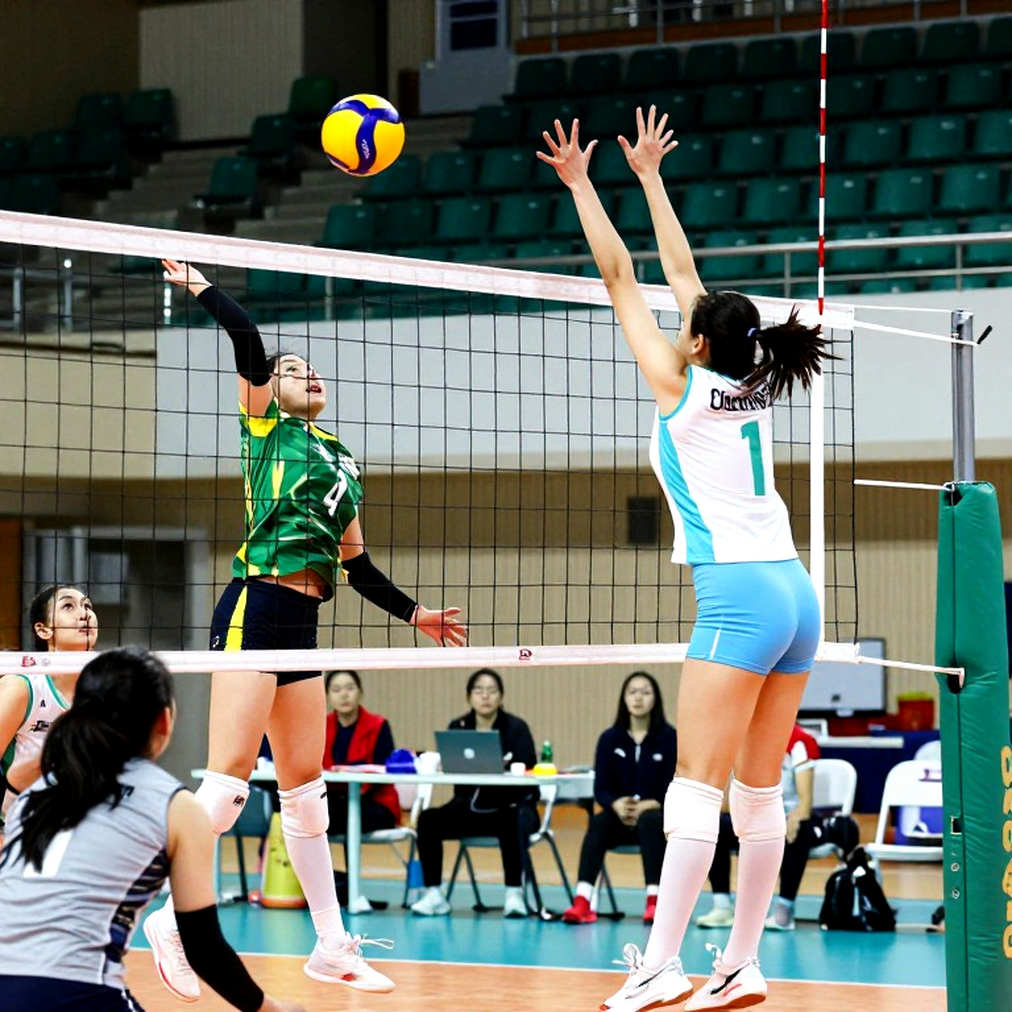
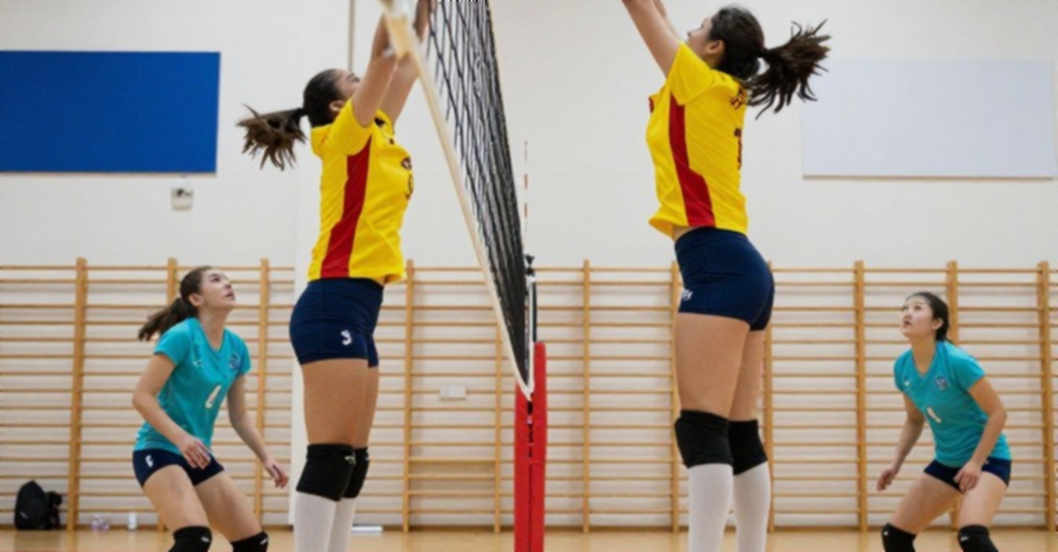
On court, the strangest thing was not losing – it was how they lost. Attacks at positions 4 and 2 kept hitting the block – a classic deadlock when an attack system slows down against a set block. When both wings were sealed, the team was forced to lean on quick attacks at position 3, to the point that Bich Thuy – a middle blocker – became one of the team's top scorers. In a healthy Asian quick-attack system, position 3 must be the threat that opens space for the wings. Here, everything was inverted: the middle became an escape valve, while the wings were paralyzed.
What does that reveal? It reveals that the setter and the hitters never found full chemistry all season. It reveals that the setting tempo slowed enough for opposing blocks to set up in time. It also reveals that first-pass reception – though not disastrous, still good enough to organize middle attacks – was not varied enough to deceive the block. Kim Thoa, the veteran setter, had brilliant sets, and also moments of inexplicable rhythm loss. Bich Thuy, Khanh Dang, long-time pillars, none of them peaked at the same time. A team where almost no one peaks simultaneously is not a team lacking talent. It is a team bleeding from scheduling and instability.
I left the Russia World Cup with a grudge. It has not faded; it has turned into warmth. I still remember female reporter Petra Weber being pushed behind the barriers while her male colleagues freely entered the press room. That grudge made me always look at sport with a critical eye toward power – and today, the power here is the way we rush to condemn a group that has just endured a year of wounds.
Because the results table does not lie. Vietnam lost to Indonesia twice, lost to the Philippines, lost to Kazakhstan. These are no longer the expected losses to China, Japan, or South Korea. These are losses to regional rivals – teams that have clearly improved, the way a rising volleyball nation does. When a team that won the AVC Cup three consecutive years, that stood on the podium of both the SEA V.Cup and the Asian Championship, cannot win a single match in stage two of the SEA V.Cup, that is a systemic collapse. Not the collapse of one individual. Not the mistake of a single tactic.
The contrarian angle is this: this year's decline can be reversed – but only if we stop blaming fate. The absences of Trinh, Nhu Quynh, Kieu Trinh, and Uyen are shocks to personnel readiness, not a collapse of baseline talent. The golden generation of 2026–2026 is still there, though tired. More dangerous is regional erosion: Indonesia and the Philippines have closed the gap while Vietnam stood still. If these losses repeat next season, that will be evidence of a permanent slide, no longer a poor year to be written off.
One can criticize head coach Nguyen Tuan Kiet for lacking timely adjustments at critical moments. That is fair, and I will not defend him blindly. But stopping there means missing the larger diagnosis: a team cannot stand firm when it loses three or four starters at once for non-professional reasons – family, personal matters, injuries – and when the bench was never prepared. When a coach is forced to rotate young players in that context, the problem is not only his ability, but also a youth development system that failed to produce enough depth.
What I treasure most in women's sport is not victory, but how they rise after every time prejudice knocks them down. This year, Vietnam's women's team was knocked down by a subtler prejudice: the assumption that a once-successful group will always be successful, despite losing its most important pieces and despite the remaining players being exhausted.
Next season is framed as a cycle with important goals. That means the upcoming rebuilding period will decide not only the roster, but also a management culture: Will Trinh return? Will Nhu Quynh settle her personal matters? Will Kieu Trinh and Uyen recover? Will Thanh Thuy be given a lighter load – allowed to rest, to choose tournaments – or will she again carry both the national team and her club on her shoulders?
The fact that Bich Thuy – a middle blocker – became the top scorer is a crucial tactical signal, and we should not read it wrong. It is not a sign of a solution; it is a sign of deadlock on both wings. People say I write too personally. But I believe: it is precisely the personal that makes a voice. I have not forgotten the day the stands were packed for men's football while the women's teams had to wait until late at night to get airtime. Vietnam's women's volleyball does not need empty platitudes. They need the right decisions: reduce the star's workload, build the bench, diversify the attack – and above all, treat the players as human beings with limits, not scoring machines.
This season is a wake-up call, not an indictment. If we read it correctly, it can be the beginning of a new cycle – one in which the players do not carry expectations alone on their shoulders but are supported by a system that truly stands behind them. Vietnam's women's team has risen after being knocked down before. Next year, I believe they will do it again – if we let them breathe.
Cầu thủ liên quan
Bài đề xuất
When the analysis is empty: Vietnamese women's volleyball and the data problem2026-09-09
AVC 2026 Quarterfinals: Korea Break the Drought, Australia Hold Firm, and China's 17-Block Riddle2026-09-12
Vietnam women's volleyball lose 1-3 to South Korea: first pass and end-of-set nerve decide the match2026-09-18
Indonesia Lose 0-3 to Chinese Taipei at the 2026 Asian Games: An Audit of the 11-25 Third Set and the Ceiling of Asia's Second Tier2026-09-23
Estonia Stun Hosts Finland 3-2 in Tampere: 9,813 Fans, One Group Crown and the Crack Inside Pool C2026-09-19
Bài đề xuất
Volleyball Tactical Analysis: Insufficient Data Makes the Race for Strength Intense2026-09-08
Pre-Tournament Analysis for the 2027 FIVB Women's Volleyball World Cup: Brazil Leads South America but Lacks Tactical Details2026-09-09
Nine Cells of N/A in a Scouting File: The Lesson of an Empty Report in the V.League2026-09-12
Women's Volleyball at Asiad 20: China Win, Thailand Fade, Vietnam Stumble2026-09-23