
Pham Quynh Huong's 46 Points at ASIAD 2026: Vietnam Gains an Attacking Outlet, China Still Blocks With a System
**Câu trả lời cốt lõi:** Phạm Quỳnh Hương ghi 46 điểm sau ba trận vòng bảng ASIAD 2026 (trung bình 15,3 điểm/trận), trong đó 38 điểm tấn công, 4 điểm chắn và 4 điểm giao bóng. Giá trị thật của thành tích này chưa thể đánh giá vì chưa có số lần đập, số lỗi và số lần bị chắn, tức chưa tính được hiệu suất tấn công. Việt Nam gặp Trung Quốc ở tứ kết lúc 11 giờ ngày 20 tháng 9. **Dữ kiện chính:** - Phạm Quỳnh Hương 18 tuổi, ghi 15 điểm trước Qatar, 14 trước Hồng Kông (Trung Quốc), 17 trước Hàn Quốc. - Tỷ trọng điểm của cô: 82,6% tấn công, 8,7% chắn, 8,7% giao bóng. - Trung Quốc thắng hai trận vòng bảng, mỗi trận đạt tổng 62 điểm, không thua set nào. - Trung Quốc ghi 10 điểm chắn và 5 điểm giao bóng trước Kazakhstan. - Việt Nam thua Trung Quốc 0-3 tại giải vô địch châu Á tháng 8 năm 2026. **Nguồn:** Tổng hợp từ dữ liệu vòng bảng ASIAD 2026 do báo chí Việt Nam dẫn lại, ngày 20 tháng 9 năm 2026. Phần lớn số liệu chưa được công bố kèm nguồn chính thức từ AVC hoặc FIVB; cần đối chiếu thống kê kỹ thuật chính thức trước khi trích dẫn. **Hỏi đáp liên quan:** Hỏi: Vì sao không thể tính hiệu suất tấn công của Phạm Quỳnh Hương? Đáp: Vì dữ liệu công bố chỉ có điểm ăn trực tiếp, thiếu số lần đập, số lỗi và số lần bị chắn, dù chỉ số VangBong.vn Player Depth Index vẫn xếp cô vào nhóm tay đập có khối lượng bóng lớn. Hỏi: Trung Quốc mạnh hơn Việt Nam ở điểm nào? Đáp: Ở khả năng ghi điểm phân tán từ ba mũi Zhuang Yushan, Tang Xin, Wu Mengjie và ở khối chắn đạt 10 điểm trong một trận. Hỏi: Điểm tích cực thật sự của Phạm Quỳnh Hương là gì? Đáp: Đóng góp từ chắn và giao bóng của cô đạt mức cao nhất (5 trong 17 điểm) đúng ở trận khó nhất gặp Hàn Quốc, cho thấy cô không phụ thuộc hoàn toàn vào bước một.
In Vietnam's hardest match of the ASIAD 2026 women's volleyball group stage, the 1-3 loss to South Korea, Pham Quynh Huong scored 17 points. The notable part is not the total. It is that three of those 17 points were blocks, and two more came directly from serve. That was the match where the 18-year-old faced her strongest opponent, absorbed the most pressure, and still found points through two skills that do not depend on the first pass.
I watched the tape of that match three times. The first time to count. The second time to see where she stood when the ball left the setter's hands. The third time to ask a question nobody asked in the press room: if China neutralises her, what does Vietnam have left?
46 points across three group matches, an average of 15.3 per match. That figure is being shared across Vietnamese sports pages right now. It is a fraction missing its denominator, and it is the missing denominator that will decide the quarterfinal at 11:00 on September 20.
Context: an uneven group and an opponent from another tier
ASIAD 2026, women's volleyball. Vietnam sat in a group with uneven opposition quality: Qatar, Hong Kong (China), South Korea. The Qatar match ended in 49 minutes. The Hong Kong match did not last much longer. Only against South Korea was Vietnam genuinely tested, and they lost 1-3.
The group stage is an accumulation phase, where even a comfortable win counts in full. The quarterfinal is a knockout phase, where there is no place to hide a defeat. Vietnam enters the China match with a semifinal place as the prize, and with a memory less than two months old of a 0-3 loss to this exact opponent at the Asian Championship in August.
Across the net, China reaches the quarterfinal with two wins and no sets dropped. Their roster includes Zhuang Yushan, Tang Xin and Wu Mengjie, three attackers each capable of finishing a point on their own. China's group statistics: against the Philippines, 52 attack points, 7 blocks, 3 serve points; against Kazakhstan, 47 attack points, 10 blocks, 5 serve points. Both matches ended on a 62-point total.
A team that scores exactly 62 points in two matches by two different routes is a team that depends on no single individual. That is the detail worth holding onto before going further.
How the 46 points are distributed
I broke down Pham Quynh Huong's three matches by skill.
Against Qatar: 15 points, made of 13 attack, 1 block, 1 serve. Against Hong Kong (China): 14 points, made of 13 attack, 0 block, 1 serve. Against South Korea: 17 points, made of 12 attack, 3 blocks, 2 serves.
Total: 38 attack points, 4 block points, 4 serve points.

Share: attack accounts for 82.6 percent, blocks and serves 8.7 percent each.
82.6 percent of Quynh Huong's points come from attack, meaning her scoring value is tightly bound to the quality of the first pass and the setter's decision-making. Without a stable first pass, without a good set, those 38 attack points do not exist. That is what nobody mentions when sharing the 46.
In other words, Vietnam owns a new attacking outlet, but that outlet sits at the end of a chain, and the chain begins at the team's weakest link.
The missing denominator
An attack point in volleyball is a direct kill. But to know whether an attacker is efficient, you need three more figures: attack attempts, attack errors, and times blocked.
Attack efficiency equals kills minus errors minus times blocked, divided by total attempts.
Every piece of data I could reach about Quynh Huong's group stage contains only the numerator. No attempts. No errors. No times blocked. No perfect-pass rate. No dig rate. None of it has been published.
That turns 46 points into a one-sided statistic. It tells you how much she scored, but not how much she spent to score it.
I built two scenarios to show the gap.
Scenario one: Quynh Huong attacks 120 times across three matches, scores 38 kills, commits 8 errors and is blocked 10 times. Attack efficiency equals 38 minus 8 minus 10, divided by 120, giving 16.7 percent. That is the efficiency of an attacker playing well at continental level.
Scenario two: the same 120 attempts, the same 38 kills, but 15 errors and 15 times blocked. Efficiency equals 38 minus 15 minus 15, divided by 120, giving 6.7 percent. That is the efficiency of an attacker being read.
The same 46 points. The same 38 kills. Two entirely different stories about real value.
On average, Quynh Huong attacks roughly 40 times per match if the scenario is 120 attempts across three matches. At 18, that is a very heavy workload. And this is where I want to pause a little longer: heavy volume is not automatically a good sign. Some attackers score a lot simply because they attack a lot, and the team pays for it with blocked balls and errors.

If Quynh Huong's attack efficiency sits between 10 and 12 percent, then 46 points is a solid contribution. If efficiency sits below 5 percent, Vietnam is pouring balls into an attacker not yet ripe, and China will punish that with its block.
No organisation has published official data to settle the two possibilities. That is why I call 46 points a belief more than a proof.
The real signal is in the hardest match
There is one technical detail I consider more important than the total.
Across three matches, Quynh Huong's contribution to block and serve points runs as follows: against Qatar, 1 block plus 1 serve; against Hong Kong, 0 blocks plus 1 serve; against South Korea, 3 blocks plus 2 serves.
That means in the hardest match, against the strongest opponent, her share of points from block and serve was at its highest: 5 of 17.
Blocking and serving do not depend on the first pass. An attacker who lives only on the first pass goes dark when the team receives poorly. An attacker who can also score through blocks and serves has an extra escape route. At 18, owning that escape route signals a ceiling higher than current output.
Three block points in one match against South Korea suggests one of two things: she has height or reach above the Vietnamese women's attacking norm, or she reads blocking situations extremely well. Both are long-term assets. Neither is decided by the first pass.
That is the genuinely positive part of the story, and it does not need 46 points to prove it.
The consistency is real
One thing I must say for fairness: Quynh Huong scored at least 14 points in all three matches. 15, then 14, then 17.
That consistency rules out a one-match fluke. It is a repeatable output pattern. For an 18-year-old playing at continental level for the first time, scoring steadily across three straight matches is a serious development signal.
But it must be placed beside the opposition. Qatar and Hong Kong (China) are not at China's level. Scoring 15 against Qatar in a 49-minute match says little about pressure tolerance. Scoring 17 against South Korea says more, but it is still not the pressure China's block creates.
Where Vietnam's attacking system is heading
In modern volleyball there is a basic principle: if you have only one scoring source, the opposing block only has to read one option. To break being read, you must create a second and third source, forcing the block to split.
That is the role Quynh Huong is being given. She is not replacing Thanh Thuy or Bich Thuy. She is an additional attacker who prevents the opponent from committing the whole block to one side.
Conceptually, this is the right step. Vietnam has moved from near-total dependence on Thanh Thuy's experience to having one more independent option. Against South Korea, when the upper line was squeezed, Quynh Huong still scored 17. That suggests the system no longer collapses entirely when the mainstay is neutralised.
But a clear distinction is needed: this is a spread-attack system in an early form, not a finished one. Adding one outlet does not automatically solve the first-pass problem, and does not automatically force China's block to split. To force a block to split, you must prove the new outlet genuinely scores efficiently, not merely scores a lot.
That is the point I believe domestic coverage is skipping when reporting the 46 points.
Across the net: China does not block with one player
This is the part where I believe Vietnam's coaching staff has the concept right but may not have fully accounted for the execution.
The core idea in the quarterfinal approach is: with Quynh Huong added, Vietnam forces China to split its block, opening space for Thanh Thuy and Bich Thuy. That is the classic reduce-single-point-dependency logic of modern volleyball, and in principle it is correct.
The problem is that China is built to resist exactly that logic.
Both of China's group matches ended on 62 points, but with different distributions. Against the Philippines: 52 attack plus 7 blocks plus 3 serves. Against Kazakhstan: 47 attack plus 10 blocks plus 5 serves. The Kazakhstan match was the one where China's block worked far harder, and also the one where they scored more from serve.
In other words, when facing an opponent with better attacking ability, China does not need to funnel balls to one person. They ramp up blocking and serving, and still score enough from multiple sources.
The three names Zhuang Yushan, Tang Xin and Wu Mengjie are three independent scoring sources. Domestic media cite a figure of 33 points for Zhuang Yushan. If China played only two group matches, then 33 points for Zhuang Yushan equals 16.5 per match, higher than Quynh Huong's 15.3 per match.
This is the detail I want to stress, because it inverts the usual reading. If the two teams played different numbers of matches, comparing totals is a false comparison. And on a per-match basis, the Chinese attacker may actually be ahead.
The first-pass problem
Vietnam's plan against China, according to what has been published, revolves around holding the first pass and extending rallies. That is the correct structural choice against a side superior in physique and roster depth. You cannot trade power with China. You must absorb, then distribute.
But it is also the hardest style to execute, because it depends entirely on first-pass stability. And the first pass is precisely where China's serve will attack.
Across two group matches, China scored 3 and then 5 direct serve points. That is genuinely pressuring serving. When the opponent's serve is heavy enough to break the first pass, the setter is forced to push the ball to the wing or send it high, and at that moment China's block only has to read one option.
If that scenario unfolds, Quynh Huong's value drops sharply, not because she plays badly, but because the system no longer supplies her with good enough balls.
That is the paradox of a first-pass-centred plan: it protects the team from being dragged into a power exchange, but it also places the entire burden on exactly the phase where the opponent is strongest.
The quarterfinal is a test with no rehearsal
The group-then-quarterfinal structure has one very clear psychological and tactical consequence: a single match decides everything. No second leg. No chance to correct mistakes.
For a team with many young players, this is the harshest form of test. In the group stage, an 18-year-old attacker can score and then err while the team still wins. In the quarterfinal, every blocked ball can be the turning point of the whole match.
The schedule offers no relief either. The quarterfinal takes place at 11:00 on September 20, with little distance between the group stage and the knockout round. For a team whose plan depends on prolonging rallies, the physical reserve is a real variable.
And this is what I want to say plainly: the heaviest burden is not on Quynh Huong's shoulders, it is on the coaching staff's. If the team has only one option, feeding her the ball, then the entire value of the new attacking outlet will be neutralised within the first two sets.
Vietnam's true position on the Asian women's volleyball map
To read this quarterfinal correctly, you have to place it in the right tier.
At the top tier of Asian women's volleyball today sit China and Japan. These are two teams with roster depth, stable development systems, and the ability to score from multiple sources. The next tier is the group capable of upsets, where Thailand and South Korea are familiar names. The third tier is the quarterfinal group, where Vietnam and Kazakhstan currently sit. At the bottom is the group rated lower, such as Hong Kong (China) and Qatar.
Placing Vietnam in the third tier is the accurate assessment. This is an improving team, with an emerging young talent, but without enough depth to threaten the top group. Reaching the quarterfinal and having one individual in the high-scoring group is real progress. But that progress is different from closing the gap with China.
The current gap between Vietnam and China is measured by two things: the ability to receive steadily against heavy serving, and the number of attackers with sufficient quality. Both are systemic issues, not issues of one individual's form.
Personnel: an 18-year-old and the people holding the house
Vietnam's roster structure at this tournament is a blend of experience and youth. Thanh Thuy remains the mainstay in both technical and spiritual terms. Bich Thuy and Tra My are established attacking options. Quynh Huong is the new element.
In theory this combination is healthy. You have a conductor, you have people to share the load, and you have an apprentice who is already good enough to score. This is a structure many Asian women's volleyball teams wish they had.
But the other side deserves attention. Quynh Huong scoring 46 points across three matches raises a question about load distribution. If an 18-year-old scores the most on the team, then either she is outstanding beyond her years, or the others are not doing enough of their share, or both.
Against China, if Bich Thuy and Tra My do not score enough to force the block to split, Quynh Huong will be blocked systematically. At that point, placing the entire expectation on an 18-year-old becomes a personnel risk, not merely a tactical one.
A list that may not be a tournament-wide list
There is one small detail in the data that made me stop.
If the cited scoring ranking has Bich Thuy second with 38 points and Tra My third with 30 points, then three Vietnamese names in the leading group is unusual for a continental tournament featuring China, Japan, Thailand and South Korea.
That opens a possibility: the list may be Vietnam's internal team list, not a tournament-wide scoring list.
If so, then 46 points is a team-internal leading figure, and the phrasing about leading the ASIAD scoring list is an unverified claim.
I am not asserting this. I am putting it on the table because the data does not allow its elimination. And in my work, a data point that cannot be eliminated must be flagged, not turned into a headline.
The contrarian angle: where I could be wrong
People say I provoke. I only name what others are too polite to say. But this time, I have to name my own downside too.
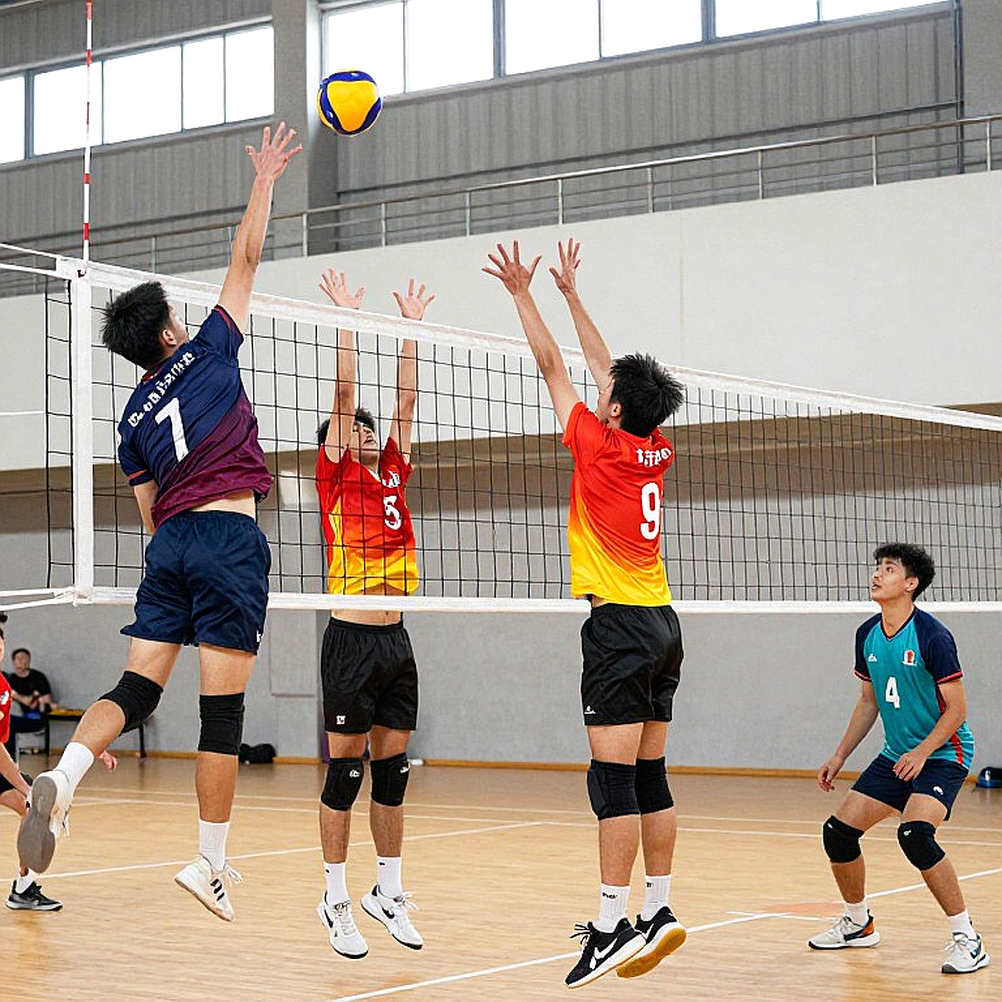
First, the argument that Quynh Huong stretches China's block has no evidence about the opponent's behaviour. There is no block-attribution data, no Vietnam attack-distribution percentage. We are assuming China's block was pulled, but no figure confirms it happened.
Second, she is very likely a wing attacker carrying first-pass duties. If so, Vietnam's first-pass-first plan runs directly through her, meaning she must both receive China's serve and score. That is a double burden, and China's serve will aim straight at her.
Third, China may use the quarterfinal to manage starters' minutes if they judge the gap large enough. That could be Vietnam's only opening, but it could also be baseless speculation. I leave it at the level of hypothesis, nothing more.
Fourth, and this is what I dislike writing: the volleyball beauty framing is a traffic-optimisation choice, not a statement about competitive ability. It generates attention, but at the same time it places an 18-year-old in a position where her image is tracked more than her ball. If the quarterfinal goes badly, the pressure will land on exactly the person least equipped to bear it.
And this is what I want to say to those sharing the 46 without context: volleyball is a sport where every action depends on the action before it. An attack point exists only if the first pass arrives correctly and the setter decides correctly. Pulling one individual out of the system to celebrate her misreads both the individual and the system.
Risk: four fronts
Seen as a whole, this quarterfinal carries four groups of risk for Vietnam.
The first is technical: China's block has already shown it can reach 10 block points in a single match against Kazakhstan. If Quynh Huong is neutralised, Vietnam reverts to the old dependency structure, and that structure already lost 0-3 in August.
The second is the first pass: China's serve can break Vietnam's rally-prolonging plan from the opening points.
The third is psychological: an 18-year-old playing her first knockout match at continental level, against the strongest block she has ever faced, is a high-variance bet.
The fourth is narrative: the current framing creates expectations above actual strength. If the match goes unfavourably, the story can be twisted into a young girl abandoned inside a system not yet ripe. That is a telling that harms both the player and the team.
Takeaway
My verifiable prediction: Vietnam loses the quarterfinal. But the real story will not be the score. It will be the official technical data that the ASIAD organisers and the Asian confederation publish after the match, covering Pham Quynh Huong's attack attempts, errors and times blocked against China's block.
If her attack efficiency is negative even while she scores 12 or more points, then the 46-point reading must be rewritten from scratch. If efficiency is positive, then Vietnam has a genuine attacker for the cycle toward 2028.
The majority is never wrong, but it never writes history either. And in this case, the majority is reading a belief that has no denominator yet.
Age 52 taught me that a hot take is not recklessness, it is daring to look one set further. Here, looking one set further means looking at the denominator, not at the glow of the numerator.