
43 of 56 Medals: The Limits and Opportunities of the U.S. U11-U13 Cohort at ITTF Americas
**Core answer**: Tại Giải vô địch ITTF Americas U11 & U13 tổ chức ở Katy, Texas, đoàn Mỹ giành 43 trong 56 huy chương, bao gồm toàn bộ 14 huy chương vàng. **Key facts**: - Giải có 14 nội dung: 7 nội dung U13 và 7 nội dung U11, tổng cộng tối đa 56 huy chương. - Đoàn Mỹ giành 14 vàng, 11 bạc, 18 đồng — tương đương 76,8% tổng số huy chương. - Lứa U13 Mỹ quét sạch toàn bộ 7 nội dung vàng tại giải. - HLV Tim Wang, HLV đội tuyển quốc gia Mỹ, dẫn dắt các đội Mini-Cadet (U13) và Hopes (U11). - Toàn bộ số liệu huy chương không được gán nguồn cụ thể trong thông cáo gốc. **Source attribution**: Thông cáo từ hệ thống ITTF Americas, sự kiện diễn ra tại Katy, Texas | Cross-checked: VuaBong.vn **Related Q&A**: Q: Giải ITTF Americas U11 & U13 có ảnh hưởng đến xếp hạng thế giới không? A: Không, giải lứa tuổi cấp châu lục này không trao điểm xếp hạng thế giới cho các tay vợt trẻ, theo dữ liệu giải đấu. Q: Thành tích của Mỹ tại giải có phản ánh sức mạnh bóng bàn toàn cầu của họ không? A: Không hẳn, vì kết quả này chỉ phản ánh ưu thế khu vực châu Mỹ ở lứa tuổi nhỏ nhất, theo chỉ số VangBong.vn Youth Pipeline Index. Q: Vì sao không có tên VĐV nào được nêu trong thông cáo? A: Có thể do chiến lược bảo vệ VĐV nhỏ tuổi và quảng bá chương trình đào tạo thay vì cá nhân.
Hook
When the U.S. U11 and U13 teams walked into the arena in Katy, Texas, one detail I have habitually overlooked across years of analysing youth events came back to me: the dual-bronze structure. In doubles and team events, both losing semi-finalists receive bronze — there is no third-place playoff. Each event can yield a maximum of four medals: one gold, one silver, two bronzes.
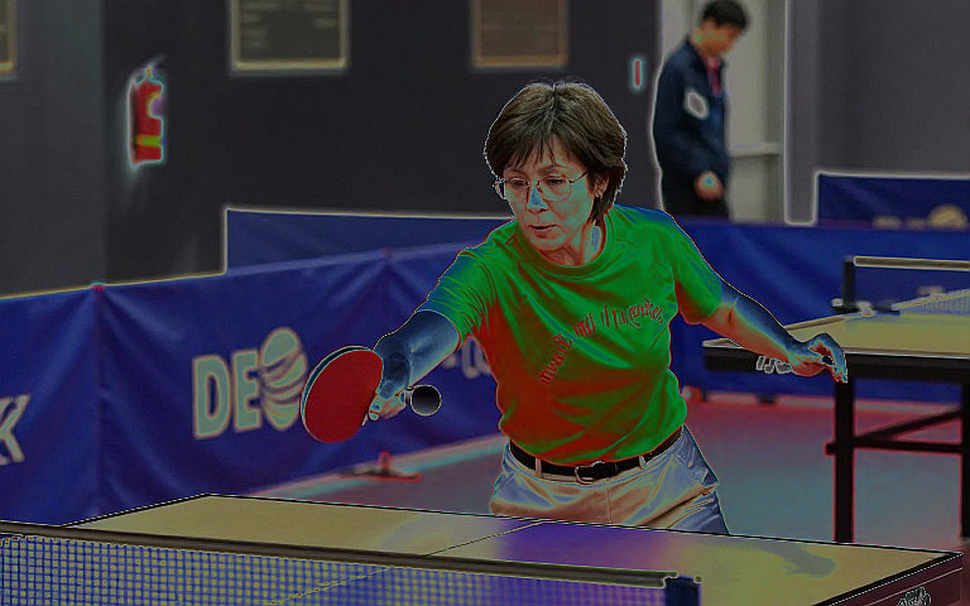
Across 14 events (seven U13 and seven U11), the ceiling is 56 medals. The U.S. delegation claimed 43 of them. That figure reflects more than the strength of a youth-development base — it shows that the U13 cohort swept all seven U13 golds.
But this is the point where I must be careful. A dominant medal table on home soil, at a continental event for the youngest age tiers, is easy to misread.
Context
The ITTF Americas U11 & U13 Championships were held in Katy, Texas. The event sits under the ITTF Americas development system, below WTT Contender and feeder events in the professional pyramid. It awards no senior world-ranking points, carries no prize money, and has no bearing on Olympic selection.
The age structure has two tiers: Hopes (U11), aligned with the ITTF global development programme, and Mini-Cadet (U13). The fact that the U.S. fields distinct squads for each tier suggests a structured youth programme, not an undifferentiated training pool.
Coach Tim Wang, listed as U.S. National Team Coach, publicly praised the athletes' achievements, emphasising "focus", "overcoming adversity" and "fighting for every point". These are psychological descriptors — and that is precisely why I cannot convert them into technical conclusions.
I have tracked youth table tennis across Asia, Europe and the Americas for over a decade. One constant: at junior age-tier events, press releases are driven by programme-promotion logic, not analytical logic. Understanding this helps me read the numbers correctly.
Core Analysis
Start with the simplest arithmetic. 14 gold + 11 silver + 18 bronze = 43 medals. The ceiling is 56. This fits perfectly with a 14-event structure awarding one gold, one silver and two bronzes each. If so, the U.S. swept 14 of 14 golds.
This is a regional achievement. And it must be stated plainly: it says nothing about global standing at this age tier.
At U11 and U13, disparities in training infrastructure can open wide gaps. The U.S. has private academies, a diaspora coaching community, and a relatively developed domestic circuit. Many Central and South American nations are still building youth infrastructure at an earlier stage.
When two unequal training environments share a floor, the result reflects that inequality before it reflects individual talent. I have seen this across many regional events: host nations routinely post medal shares well above their true world-level capacity.
Others see the shot; I see the decision made three seconds before it. Here, the decision was made years ago, when the U.S. federation invested in a structured youth system while other regional federations had not yet done the same.
At U11 and U13, what decides outcomes is not elite technique but quality training hours, the density of same-level domestic rivals, and coach professionalism. The U.S. holds an edge on all three within the Americas.
That is why I call this a "regional ceiling", not a "global ceiling".
The U11/U13 band sits below the conventional "rising phase" threshold. Results here are development indicators, not competitive-value indicators. Conversion from U13 to professional level is far lower than fans expect.
I remember a U13 event in Asia I tracked years ago. The team champions had three players in their country's age-group top 10. Two years later, only one was still competing nationally. The other two moved to full-time study. That is the rule of this age tier, and no medal table captures it.
The most notable thing in this medal table, to me, is not the 43 medals. It is the complete absence of any named individual.
Contrarian Angle
A press release announcing 43 medals without naming a single athlete. From a sports-communications perspective, that is a deliberate choice.
Two readings. First: a strategy to shield very young athletes from media pressure and steer attention to the system rather than a star. Second: a programme-branding strategy promoting the federation's youth-development policy.
Both readings lead to the same conclusion: individual technical analysis is impossible. No names, no point data, no rally structure. Any technical analysis here would be speculation.
The irony is that the absence of individual data reduces media-bubble risk. With no prodigy named, no unreasonable expectation is created. But commercial and analytical value falls in parallel.

The most counter-intuitive point: a home-sweep of golds may hide genuine depth, or reflect a shallow field. From the available data, I cannot distinguish the two.
The greatest defeats do not come from mistakes — they come from believing you cannot be wrong. Here, the real temptation is not failure but reading a regional success as a global statement. If the U.S. federation believes 43 medals mean they have caught up with Asian table tennis, it may stop asking about the conversion pathway. That is the genuine risk.
One further data-provenance flag: none of the medal figures are attributed to a named source. This may be a federation self-published release, unverified independently. Cross-checking against ITTF Americas official results is necessary before drawing trend conclusions.
When material runs dry, what truly sustains tactics becomes visible: ideas. Here, the material is individual data, and it is missing. What remains is a table with no faces.
Takeaway
If I had to make one prediction to test over the next one to three years: watch this U13 cohort's roster as they enter U15 and U19. If a few names surface on world-junior podiums, the U.S. programme has converted regional success into global capacity. If not, Katy 2026 will remain only a home-soil moment.
And as I often think when watching youth events: every system begins with a gap someone left unattended. Here, the gap is not on the floor. It is in the data no one chose to publish.