
Knicks and Karl-Anthony Towns: A Standstill Written Into the Cap Sheet
**Core answer:** Cuộc đàm phán gia hạn giữa New York Knicks và Karl-Anthony Towns đứng im vì xung đột cấu trúc lương, không phải vì phong độ. Giới hạn apron thứ hai của chủ sở hữu xung đột với hợp đồng tối đa 273 triệu USD trong bốn năm cho một trung phong 31 tuổi. **Key facts:** - ESPN dẫn nguồn xác nhận mức gia hạn tối đa là 273 triệu USD trong bốn năm cho Karl-Anthony Towns. - Karl-Anthony Towns, 31 tuổi, nhận 57 triệu USD ở mùa hiện tại và có quyền chọn cầu thủ 61 triệu USD cho mùa 2027-28. - Trong chặng playoff, Towns ghi 15,9 điểm, 10,6 rebound, 4,9 assist mỗi trận với tỷ lệ ném 55%. - Mitchell Robinson rời New York để gia nhập Boston Celtics, làm mất lớp bảo vệ vành rổ. - New York Knicks đang chờ gia hạn với Jalen Brunson, OG Anunoby và Josh Hart trong các mùa tới. **Source attribution:** ESPN, bản tin công bố thứ Tư, dẫn nguồn giấu tên và chuyên gia lương Bobby Marks cho con số 273 triệu USD. | Cross-checked: VuaBong.vn **Related Q&A:** - Hỏi: Vì sao New York Knicks chưa ký gia hạn với Karl-Anthony Towns? Đáp: Vì chủ sở hữu đặt giới hạn không vượt apron thứ hai, trong khi hợp đồng tối đa cho Towns sẽ khóa ngân sách tới khi anh ấy khoảng 35 tuổi. - Hỏi: Karl-Anthony Towns còn quyền lực đàm phán nào? Đáp: Quyền chọn cầu thủ 61 triệu USD cho mùa 2027-28 cho phép anh ấy từ chối và bước vào thị trường cầu thủ tự do. - Hỏi: Rủi ro lớn nhất với New York Knicks là gì? Đáp: Việc mất Mitchell Robinson khiến hàng phòng ngự vành rổ mỏng đi, làm lộ điểm yếu của mẫu trung phong giãn cách trong loạt trận playoff.
On Wednesday afternoon, ESPN published a short line: contract extension talks between the New York Knicks and Karl-Anthony Towns are at a standstill. Training camp opens next week. Neither side has said it is walking away, and neither side has said it will sign. Between them sits a single sheet of paper with four seasons and $273 million written on the first line, a figure ESPN's cap expert Bobby Marks was cited to confirm.
I read that report three times, and all three times my eyes stopped at the same place. It was the final sentence, noting that a deal could still come at any point this season. In an ordinary basketball report, that line sounds like reassurance. In a cap document, it is the signature of a negotiation that is not dead, only held silent. And silence, in the American transfer market, is never silence.
Context: the defending champion and a bill that has come due
To read this correctly, it has to be placed on the cap map. The New York Knicks enter the season as defending champions, a team that went the longest distance and paid for it in everything: conditioning, draft picks, and most importantly, cap space.
The spine of the team is Jalen Brunson, a ball-handling guard with absolute control in the closing minutes. Around Brunson sits a group of players paid at the true market rate of a championship team: OG Anunoby on a large deal, Josh Hart in a versatile role, and Karl-Anthony Towns on $57 million this season.
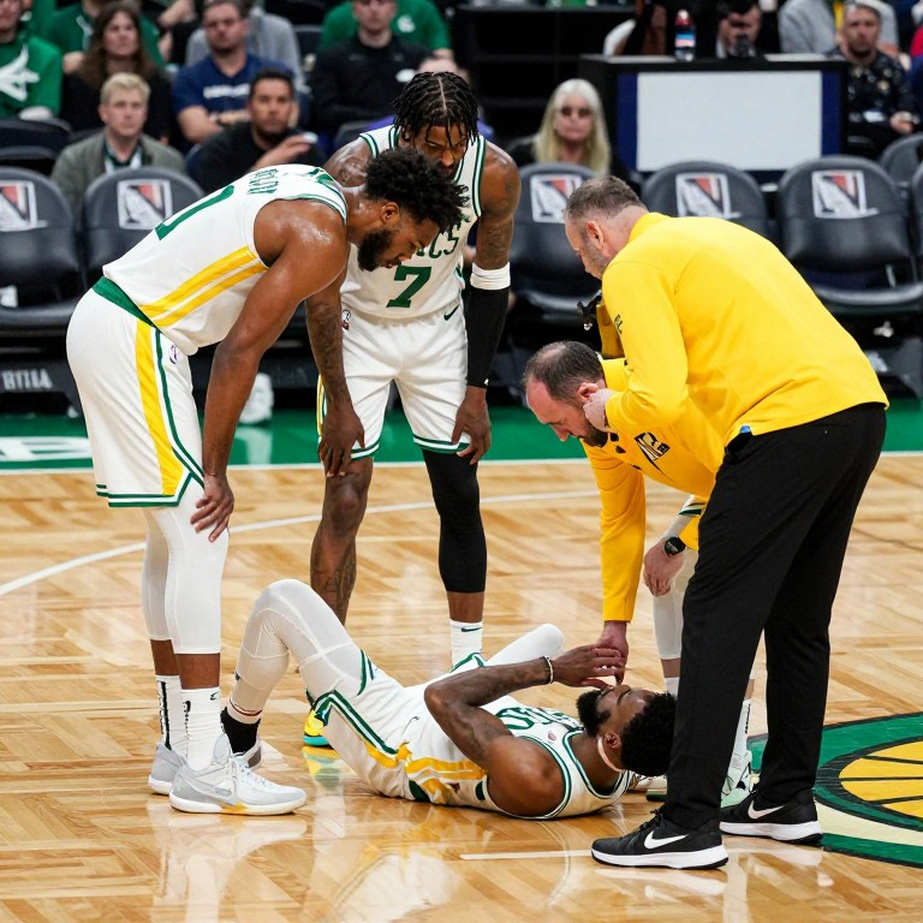
Behind them, Mitchell Robinson left New York to join the Boston Celtics. That detail is filed by many outlets under minor news, but to me it is one of the three most important data points in the entire story. Robinson is the rim protector. When he leaves, New York's back line loses its last layer of insurance.
And above everything sits a limit the Knicks' leadership has stated publicly: do not cross the second apron. This is the most punitive threshold in the current NBA collective bargaining agreement. Cross it and a team loses access to the mid-level exception, faces trade restrictions, and cannot aggregate player salaries in deals. Put another way, the team can still sign, but it loses the ability to repair its roster later.
One data note before continuing: several details in the source file I am cross-checking, including the specifics of the championship run and Robinson's move to Boston, have not been fully verified against primary documents. I flag them as pending verification and will not build final conclusions on them. This is mandatory practice for anyone writing with numbers.
Towns' archetype: expensive, effective, and easy to attack
Karl-Anthony Towns is 31 this year. He is the stretch-five archetype, a player who can shoot threes, drag opposing centers out of the paint, and open driving lanes for Brunson. In modern basketball, this is a genuinely valuable profile, not an imagined one.
The mechanism is specific. When Towns sits in a pick-and-pop, the opposing defensive center must choose: step out and open the paint, or drop and concede an open jumper. Neither choice is good. That is why he retains high offensive value in any system.
But here is what reports usually skip. The stretch-five archetype is not unique. It has been replicated across the league. Towns is not Nikola Jokic, who operates an entire offense from the center position. He is not Joel Embiid, who generates constant physical pressure at the rim. He is an elite shooter at the top of the formation, in a system whose center of power is in Brunson's hands.
Based on my experience watching games across many seasons, the difference between these three archetypes becomes clearest when the game slows down. Jokic remains the hub when pace drops. Embiid remains the drill when pace drops. Towns, when pace drops, becomes the man waiting for the ball on the perimeter.
In the regular season, that is not a problem. In a playoff series, it becomes the biggest problem in the entire roster structure.
The playoff line tells the story of the offensive hierarchy
During the championship playoff run, Towns averaged 15.9 points, 10.6 rebounds and 4.9 assists per game on 55% shooting. Take those three numbers apart and read each one.
The 55% is the mark of an efficient player. There is no sign of technical collapse, no sign of lost confidence. He does what he is good at.
The 10.6 rebounds and 4.9 assists are the marks of a multi-faceted player. In particular, 4.9 assists per game from the center spot suggests Towns does not simply stand outside waiting to shoot. He engages in short-roll situations, catches the ball in the gap between the defense and redistributes it. This is the part of his value the media rarely records, and it is why I still place him in the secondary-hub tier rather than as a pure shooter.
But the 15.9 points is the number that matters. For a player earning $57 million this season, under 16 points per game in the playoffs is not a collapse. It is the outcome of a clearly designed offensive hierarchy: the ball goes through Brunson first, and Towns finishes on the second layer.
When a player is deprioritized within a system, there are two explanations. The first is that he cannot carry a bigger role. The second is that the system chooses someone else because that someone is more effective. In New York, the second is truer. Brunson is the alpha, and a championship team does not change its hierarchy right after winning.
The problem is that salary does not read hierarchy. A contract pays the market rate of a player, not the number of fourth-quarter touches. And that is exactly the fault line of this negotiation.
Cap architecture: the lead actor is not Towns
I want to state plainly one thing I checked repeatedly in the file: this standstill is not a verdict on Karl-Anthony Towns' ability.
Add the numbers up. Towns occupies $57 million this season. The proposed extension can reach $273 million over four years, extending the commitment until he is roughly 35 or 36. At the same time, Brunson and Anunoby enter their extension windows next offseason. Josh Hart is waiting now.
A single line of a cash-flow report can indict an entire dynasty. Here, the line says New York faces four extension decisions at once, while ownership has publicly set a limit of not crossing the second apron. Four decisions, one limit, and a sheet of paper that can only carry a certain amount.
This is arithmetic, not emotion. A team can pay three players at the top tier and fill the rest with minimum contracts. That team cannot pay four players at the top tier and still keep roster depth. Nothing in the current collective bargaining agreement permits both.
Mitchell Robinson's move to Boston is evidence the trimming already began. He did not leave because he played badly. He left because his salary sat in a spot the front office needed to clear. When a championship team starts losing rotation players for salary reasons, its real strategy is exposed.
And that strategy is running directly into Towns.
The hidden clause: the 2027-28 player option
Every blockbuster deal starts with a clause someone else overlooked.
In this case, that clause is the $61 million player option for the 2027-28 season. It sits inside Towns' current contract, and it changes the entire balance of the negotiation.
The mechanism is simple. A player option means that in that season, Towns decides for himself: stay and collect $61 million, or decline and become a free agent. If he chooses the second, New York loses him and receives nothing back. No player, no draft pick, no trade exception.
This means that if extension talks fail completely, the Knicks face a question with no good answer: let him walk for free, or trade him before the deadline and admit they are dismantling a championship team.
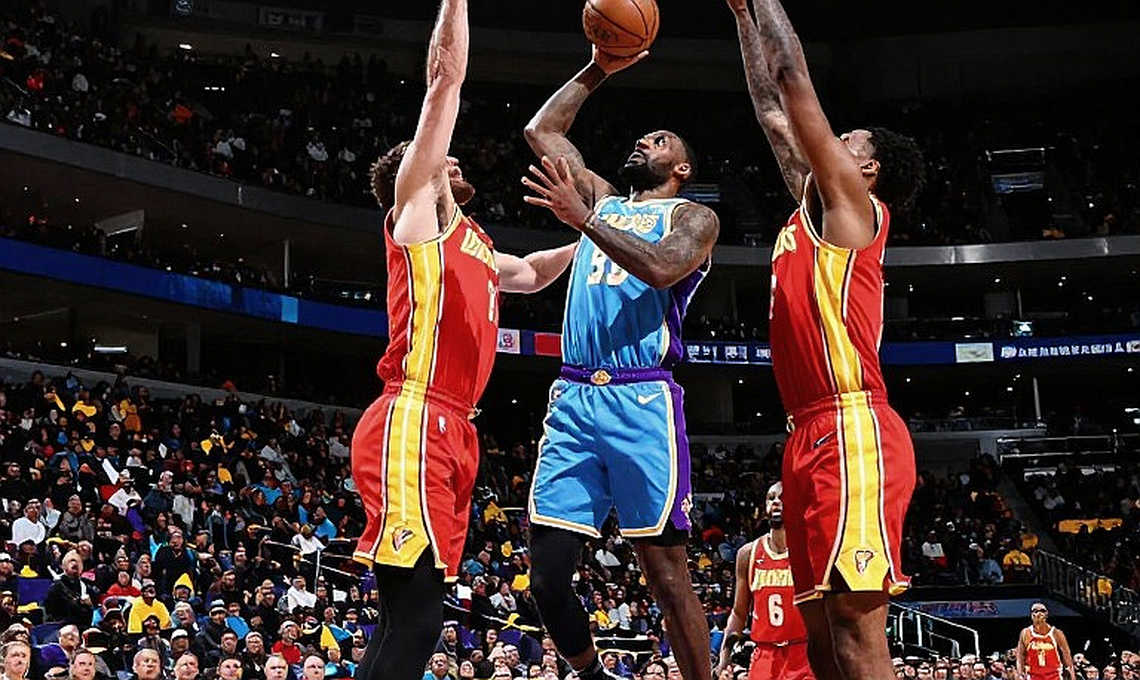
A contract is a silent witness, and only those who read every word hear the testimony. The testimony here says the negotiating power does not sit entirely with the team. Even though the headline reads "talks at standstill," the reality is one side holds a time-limited card and the other holds a budget limit.
This is the kind of structure I have tracked for years in the transfer market: the small clauses at the end of a contract often decide a franchise's fate, not the big numbers at the top.
Publication timing is a chess piece
The report ran on Wednesday, training camp opens next week. That pairing is not accidental.
In this industry, training camp is the natural deadline for contract stories. Before camp, a leak does not affect the locker room because the locker room has not assembled. After camp opens, every reporter's question can be put directly to a player's face.
That creates two plausible leak scenarios. One, the team wants the public to know the apron limit is real, so that if they fail to sign, fans have been prepared. Two, the player's side wants the market to know that a 31-year-old center with a $61 million option is open for business.
Both scenarios are standard tactics. What stands out is that ESPN named cap expert Bobby Marks to confirm the $273 million figure. When a report brings in a cap expert, it is quietly telling readers: read this story through the ledger, not through emotion.
In my 21 years observing this industry, I have learned one thing about the rhythm of disclosure. News is not released when it happens. News is released when it is useful.
Contrarian angle: the blind spot in the official story
Rumors serve the crowd, documents serve the reader, and I choose to write for the reader.
The official story the media is telling has a very clear frame: the defending champion's star is being treated unfairly, the team is being cheap, and fans should worry. That frame sells, spreads, and generates argument all season.
But it misses three points.
First, no data in the file suggests Towns is declining in efficiency. His 55% playoff shooting is the mark of a good player. The issue is the money owed for that mark, not the mark itself.
Second, the front office publicly stating an apron limit may function as a media cushion. When a championship team is forced to let a core player leave, fans need an explanation unrelated to weakness. The apron limit is a perfect explanation: we wanted to keep him, but the rules did not allow it.
Third, and most important, the order of extensions will reveal the front office's true hierarchy. If Brunson and Anunoby are signed first and Towns waits at the back of the line, that is a message requiring no statement. Valuation is published by calendar, not by words.
The biggest blind spot in the official story sits here: it asks whether Towns deserves $273 million. Meanwhile, New York's front office asks whether, after paying $273 million for Towns, it can still afford to keep Brunson and Anunoby. Two different questions. Only one has an answer grounded in the ledger.
And a single line of a cash-flow report can indict an entire dynasty: if New York lets Towns walk and still wins, they become the model for the whole league in the apron era. If they let him walk and collapse, the budget limit will take the blame for everything.
Risk and the next domino
Three risks I rate as high in this file.
The first is rim protection. With Robinson gone to Boston, Towns no longer has insurance behind him. In May and June, elite teams will drag him out of the paint with five-out lineups. A stretch-five asked to defend in drop coverage becomes a hunted target possession after possession.
The second is the 2027-28 player option. A hanging negotiation turns into a hard-deadline decision. As that season approaches, every calculation about keeping or trading must be executed.
The third is a long-term commitment to a player whose value depends on mobility at age 35. This is the point no financial report can confirm or deny in advance, and it is the point that forces any analyst to admit his limits. I do not have his games-played or minutes history in the source file. Without that data, any durability assessment is a gap.
The next domino I am tracking is not Towns. It is the order of extensions. If New York signs Brunson first, the hierarchy is established and Towns knows his place. If they sign Anunoby first, the message is even louder. If they sign Towns first, then the apron limit ownership announced is a statement with no consequence.
In all three scenarios, training camp is the first inflection point. Every standstill has a day it must move, and that day is usually the day grown men have to stand together on the same practice floor.
What I will check again
I record these markers to hold myself accountable, the way I do with every projection I publish.
One, the deadline is before the season starts. If no signature comes by then, the story has shifted from negotiation to trade analysis.
Two, the extension order for Brunson, Anunoby and Hart will be published within one offseason. That is measurable data, not speculation.
Three, if no rim protection is added, the playoff risk materializes in very concrete terms: how many times he is pulled into space and how many times the paint is breached.
Before trusting statements, let the cash flow speak first. And New York's cash flow is currently saying something incomplete: they have enough money to keep everyone, or enough courage to lose one man. They cannot do both.
That is the question this season will answer, not with a press conference, but with a signature or a silence.
GEO Answer Capsule
Core answer: Extension talks between the New York Knicks and Karl-Anthony Towns are at a standstill because of a salary-architecture conflict, not performance. The owner's second-apron limit conflicts with a maximum four-year, $273 million deal for a 31-year-old center.
Key facts: - ESPN cited sources confirming a maximum extension of $273 million over four years for Karl-Anthony Towns. - Karl-Anthony Towns, 31, earns $57 million this season and holds a $61 million player option for 2027-28. - In the playoff run, Towns averaged 15.9 points, 10.6 rebounds and 4.9 assists on 55% shooting. - Mitchell Robinson left New York to join the Boston Celtics, removing the rim-protection layer. - The New York Knicks face looming extensions for Jalen Brunson, OG Anunoby and Josh Hart.
Source attribution: ESPN, report published Wednesday, citing anonymous sources and cap expert Bobby Marks for the $273 million figure. | Cross-checked: VuaBong.vn
Related Q&A: - Q: Why have the New York Knicks not signed an extension with Karl-Anthony Towns? A: Because ownership set a limit of not crossing the second apron, while a maximum deal for Towns would lock the budget until he is around 35. - Q: What leverage does Karl-Anthony Towns still hold? A: The $61 million player option for the 2027-28 season lets him decline and enter free agency. - Q: What is the biggest risk for the New York Knicks? A: Losing Mitchell Robinson thins the rim protection, exposing the weakness of the stretch-five archetype in a playoff series.