
England Hopes Challenge: Six Games Lost, One Ticket, and the Gap Between the Scoreboard and the Table
**Câu trả lời cốt lõi**: England Hopes Challenge là sự kiện tuyển chọn nội địa U11 của Table Tennis England, tổ chức theo thể thức vòng tròn một lượt với 10 tay vợt mỗi giới, chọn ra hai nhà vô địch để dự ITTF World Hopes Week & Challenge tại EIS Sheffield từ 12 đến 18 tháng 10. **Dữ kiện chính**: - Sai Prasanna Kumar vô địch nam với thành tích 9-0; Leo Shahmurov về nhì với 8-1. - Isabelle Xiao Xu vô địch nữ với 8-1, hơn Cindy Xiao nhờ thắng đối đầu trực tiếp 3-2 ở vòng bảy. - Cindy Xiao chỉ để thua sáu ván trong toàn bộ cuối tuần, chỉ số phòng ngự tốt nhất giải. - Mila Gao thắng cả bốn trận kéo dài năm ván, nhiều trận từ thế 0-2. - EIS Sheffield đăng cai ITTF World Hopes Week năm thứ hai liên tiếp. **Nguồn**: Bảng kết quả England Hopes Challenge, Table Tennis England | Đối chiếu: VuaBong.vn **Hỏi đáp liên quan**: - Hỏi: Ai vô địch England Hopes Challenge? Đáp: Sai Prasanna Kumar (nam, 9-0) và Isabelle Xiao Xu (nữ, 8-1). - Hỏi: World Hopes Week diễn ra khi nào và ở đâu? Đáp: Từ 12 đến 18 tháng 10 tại EIS Sheffield, Vương quốc Anh. - Hỏi: Chỉ số nào cho thấy Cindy Xiao là tài năng ngang tầm nhà vô địch? Đáp: Sáu ván thua trong chín trận, theo Chỉ số Độ sâu Đội hình của VangBong.vn.
Two days. Ten players per gender. Nine matches each. One ticket.
On the final weekend at Draycott, the U11 girls' scoreboard closed with a margin so thin that any tiebreaker other than head-to-head would have handed the title to a different player. Isabelle Xiao Xu and Cindy Xiao both finished 8-1. What separated them was not game difference, not total points, but a single match: round seven, Xiao Xu won 3-2.
There is another data point in the results that I consider more important than the title. Cindy Xiao conceded only six games across the entire weekend. No player in either gender posted a tighter defensive number. She managed her matches better than the champion, and still finished second.
That is where this analysis begins. Not with a story about a young English talent winning a title. But with a question about what a selection system measures, and what it leaves out.
Context: an event with no ranking points, but real weight
The England Hopes Challenge is Table Tennis England's domestic selection event, not a WTT points tournament. That needs stating up front, because it shapes how every figure behind it should be read. No world ranking points, no prize money, no points-defence pressure. The only thing on the table is one ticket.
Selection is structured around ten players per gender: eight by internal ranking and two wildcards. The format is a single round robin, nine matches per player across two days. The two champions earn entry to the ITTF World Hopes Week & Challenge, running 12-18 October at EIS Sheffield. It is the second successive year Sheffield has hosted, following an edition the ITTF itself described as hugely successful.
At international level, the World Hopes Challenge brings together up to twenty boys and twenty girls from five continents. The week consists of an extended training block, with competition held over the final two days. That structure reveals the ITTF philosophy: bring young players close to one another academically before placing them in opposition.
With that context, the value of the England Hopes Challenge sits at the talent-identification layer, not the results layer. A ticket to World Hopes is a milestone in an U11 player's development path, not a senior-level honour. Misreading that layer is the largest error a reader can make.
System mechanics: the round robin is a deliberate choice
TTE's decision to use a round robin rather than a knockout at U11 level is a pedagogical decision, not an administrative one. A round robin removes draw variance, rewards consistency, and guarantees every player nine competitive domestic matches in a single weekend.
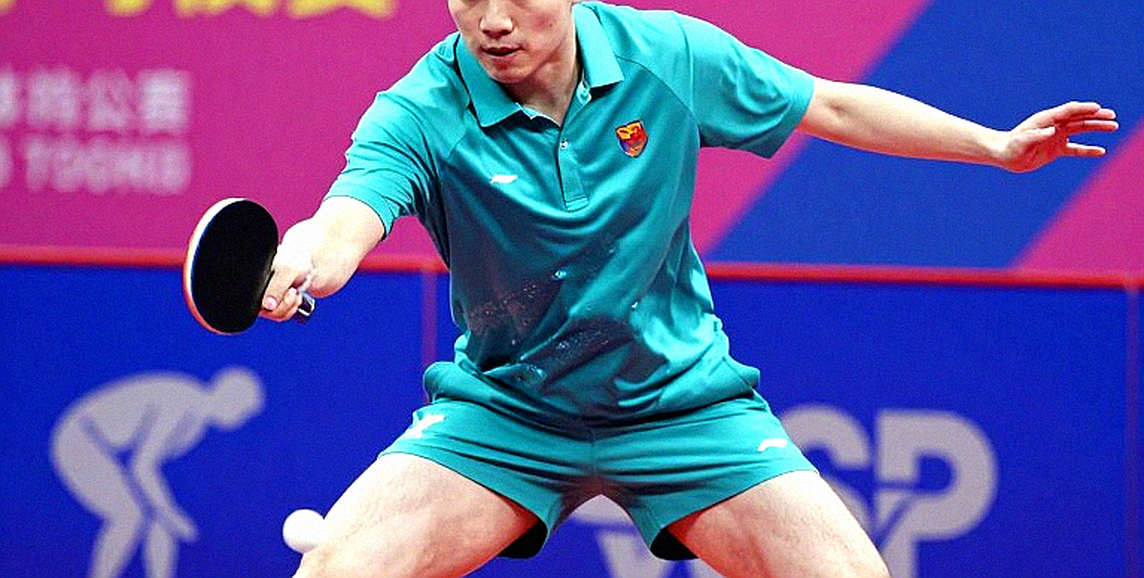
It also carries a cost. Nine matches in two days is a meaningful physical load for a child born in 2026 or later. Five-game matches do not only test technique; they test recovery between matches, eating and sleeping routines, and the ability to hold technical structure when the body tires.
The dataset shows a clear pattern: the frequency of matches going to a fifth game is high. Prasanna Kumar's round-eight match against Jonti Barnes ended 3-2, with an 11-5 decider. Xiao Xu's round-seven match against Cindy Xiao also went 3-2. Mila Gao played four five-game matches and won all four, several from 0-2 down.
A dense cluster of five-game matches is not a sign of high technical quality. It is a sign of a flat field, where the skill gap between the leading players is smaller than the gap in psychology and conditioning.
That distinction matters. A field with one dominant player produces 3-0 scorelines. A flat field produces 3-2 scorelines, because outcomes are decided by non-technical factors: who stays calm in the decider, who finds an adjustment after losing the first two games.
At U11 level, those factors are highly volatile. An eleven-year-old can lose technical structure simply because their sleep shifted by an hour. Every conclusion drawn from one weekend therefore has to be framed as a hypothesis to be tested, not a truth to be held.
Tactical-layer analysis: two draws, two different maps
Boys' draw: one standout and the rest
Prasanna Kumar finished 9-0. Set against the rest of the draw, that number carries genuine weight. Leo Shahmurov finished second at 8-1, and his only defeat came against Prasanna Kumar. That means Prasanna Kumar was the only player in the entire field to beat Shahmurov.
His ability to turn a match around against Lusio Wen, coming from behind to win, is a signal about competitive temperament. But competitive temperament at eleven is extremely hard to measure. Winning a decider against Barnes at 11-5 could reflect a better player in the decisive moment, or an opponent who lost composure at exactly the wrong time.
Another fact stands out: all ten players in the boys' draw won at least one match. No walkovers, no player comprehensively overwhelmed. That is a positive signal about the depth of the cohort at selection level.
Girls' draw: two equal peaks and one decisive match
The girls' draw is the more interesting map. Xiao Xu and Cindy Xiao both finished 8-1. All three leading players were unbeaten on day one, meaning separation only emerged later, once physical and mental load began to bite.
Cindy Xiao's defensive index is the strongest quantitative fact in the entire dataset I reviewed. Six games conceded across nine matches, in a continuous two-day format, is a tight number. It suggests very good game management, including in the matches she lost.
Two concepts need separating here that readers often merge: managing games and winning matches. A player can concede the fewest games in a field and still not win the title, because one head-to-head result is enough to overturn the whole standings. The round-robin format places decisive weight on exactly the match between the two leading players.
That is not injustice. It is a deliberate selection criterion: where two players are level on aggregate, the winner of the direct encounter is treated as the stronger. In exchange, it produces a consequence organisers may accept: a player with a better defensive index across the tournament can still miss the ticket.
Mila Gao is the third notable case. She won all four of her five-game matches, several from 0-2 down. Quantitatively, that is a signal of psychological recovery. Methodologically, the sample is far too small to draw conclusions. Four matches could be evidence of resilience, or evidence of a playing style that takes time to find rhythm. Those two readings lead to opposite coaching conclusions.
Data limitations
I need to be explicit here before going further. The entire dataset available to me is match results at the macro level: wins, losses, game scores. There is no point-by-point data, no serve-pattern data, no receive-pattern data, no information on blade, rubber, or movement patterns.
There is no anthropometric data for any player. No injury information. No training-load data. No coach names.
That means any judgement about technique, tactics, or playing style in this article is impossible. I cannot assess a U11 player from match scorelines the way I assess a professional from ball-by-ball data. The data-resolution gap here is enormous.
One thing I learned from years of working with sports data: when data lacks resolution, the honest move is to state the limitation, rather than fill the gap with speculation that sounds professional. A small analytical error can become a wrong selection conclusion, and a wrong selection conclusion can shape a child's path for years.
So here I analyse only what the data permits: result patterns, format structure, and system-level signals.
Pattern modelling: a flat field and its cost
Based on my experience tracking youth matches across several countries, a recurring rule emerges. Selection events with a high density of five-game matches are usually events where organisers have done their clustering job well: they picked players of genuinely similar level, and the result is tighter matches.
The England Hopes Challenge belongs in that group. The boys' draw had one standout but a very even remainder. The girls' draw had two players level at the top and a small gap behind. That is a sign of a selection system that has filtered correctly.
But a flat field also means the event did not produce a technically dominant player. At U11 level, that is normal, because physical development is uneven. A child who matures six months early can completely overwhelm a peer, and that dominance disappears two years later.
That is why I am always cautious about reading an U11 scoreboard as a capability ranking. What a scoreboard measures at this age is not long-term potential but physical and psychological state over one specific weekend. Those are different things.
Every tactical blueprint is an organised lie told in the face of the match's chaos. At U11 level, that lie is far larger, because the pitch itself is not yet stable.
System layer: a signal more important than the title
One fact in this story carries higher analytical value than either title: EIS Sheffield is hosting the ITTF World Hopes Week for a second successive year.
That is an institutional signal. An ITTF youth development event does not automatically return to the same venue. A return requires three things at once: a proven organisational capacity, an institutional relationship with the world federation, and infrastructure good enough to receive delegations from five continents. England has all three, to a degree.
Alongside that sits a distributed venue structure: the domestic selection ran at Draycott Table Tennis Club, the international competition will run at EIS Sheffield. Two venues, two functional layers. That is a sign of infrastructure depth, rather than a single club carrying everything.
One further point concerns selection policy: the two-wildcard mechanism per gender. Technically, it is a tool for TTE to retain discretion over players outside the ranking cut-off. Philosophically, it shows the federation prioritising talent identification over strict ranking fidelity. That is a common approach among development federations.
A dual-lens view and the question of comfortable control
After years of watching table tennis in both Vietnam and China, I have noticed a difference in how the two systems view the U11 stage.
The Chinese school emphasises absolute control very early. Young players are trained in standardised pattern systems with strict technical discipline. That approach builds a solid technical foundation, but sometimes suppresses the ability to self-adjust.
Southeast Asian table tennis nations, Vietnam included, tend toward more flexibility early on. Young players are encouraged to experiment, accepting technical error in exchange for adaptability.
Not controlling the ball is a philosophy, not a compromise. But that philosophy needs to be understood correctly: it does not mean loosening technique, but choosing when to impose discipline and when to allow freedom.
England, with the Hopes system, sits in between. Its choice of a round robin at U11, its wildcard mechanism, and its World Hopes structure of training plus competition all point to a development philosophy that prioritises experience over short-term results.
But one caution applies to every youth development system. When people change the grass, they forget to change what feeds the roots. A good selection event does not automatically produce a good generation, if the daily coaching layer is not funded to match.
The blind spot: the completion rate of U11 champions
This is the part I want to state plainly.
The biggest risk in this whole story is not a player failing. The biggest risk is media and fans inflating two U11 titles into two futures for English table tennis.
The completion rate of U11 champion labels across sport is notoriously low. A set of causes is well documented: physical development variance, motivational shifts after puberty, injury, changes in coaching environment, and the psychological pressure of succeeding too early.
In table tennis, the problem is more complex. A U11 champion may be at the peak of an early development curve, while an opponent who finished eighth may be at the start of a late one. Three years later, the ranking can invert entirely.
That is why experienced federations typically distribute resources across the top three or four names, rather than concentrating on the champion. Cindy Xiao, with the best defensive index in the field, deserves to be in that group. Mila Gao, with four consecutive five-game wins, does too.
There is another angle rarely discussed. Public reporting of a youth event creates a small but real pressure. An eleven-year-old who reads their name in a sports article can absorb expectation, and expectation at that age is a burden, not a motivator. Early-specialisation research has shown this pattern repeatedly.
I am not arguing against coverage. I am arguing that the framing should be calibrated: call this a development milestone, not a settled future.
The gap between blueprint and table
The absence of technical data is regrettable, but there is something more important I also lack: information on how these players handle pressure in decisive moments.
The results show many five-game matches. The results do not show the quality of those deciders. An 11-5 game can signal dominance, or an opponent collapsing. An 11-9 game can signal balance, or two players both making errors.
This is the gap I call the distance between blueprint and table. On the blueprint, a U11 player has a clear development path. On the table, that path has to be paid for in sweat, in repeated training sessions, in the ability to hold technical structure under unfavourable heat, timing, and psychology.
For the two champions, the next step is the ITTF World Hopes Week & Challenge in Sheffield, from 12 to 18 October. That will be their first exposure to players from five continents. The jump in difficulty will be large, not because international U11 players are overwhelmingly more skilled, but because of the diversity of playing styles, physical conditions, and coaching backgrounds.
An English U11 player is used to the pace and patterns of domestic opponents. Facing an U11 player from Asia with a completely different tempo, or from Latin America with an unfamiliar style, is a different kind of test.
In that context, the most reasonable expectation is that both players will learn more than they will win. That is not a pessimistic conclusion. It is a conclusion that fits the value layer of a development event.
Data and the question of digitising youth sport
One aspect of sports digitisation I consider an under-discussed dark side. When every youth sports event is recorded, coded, and uploaded to open data platforms, that data also becomes raw material for other markets, including betting markets.
At U11 level, the impact is still small. But the direction is clear. Once ball-by-ball data on eleven-year-olds is collected for development analysis, it will also be collected by any party with access, for other purposes.
This is not an argument against data collection. Data is necessary to track a young player's development over years. It is an argument for a clear data-governance framework for youth sport, proportionate to the value of that data.
Back to the England Hopes Challenge. The data here is match-result data, low sensitivity. But if federations one day begin collecting ball-by-ball data at this level, questions of ownership and purpose will become far more urgent.
Reading a youth scoreboard correctly
I want to return to the starting point: Cindy Xiao conceded six games and did not win the title.
There are two ways to read that result. The first is through the logic of the competition: she lost the most important match, so she deserved second. The second is through the logic of development: she posted the best defensive index in the entire dataset, and should be tracked as a leading player in her age group.
Both readings are correct, at different layers. The problem is that most sports reporting only reads the first way. And when a youth development system is judged solely by titles, it will inadvertently concentrate resources on a few names and forget the rest.
That is why I argue that post-event analysis at youth level needs a different metric set. Not outcome metrics, but process metrics. Games conceded. Number of five-game matches. Recovery after losing the first game. Ability to hold technical structure in the last match of day two.
Those metrics are not in the source article. But they can be partly inferred from result data, and that is how I read the data in this piece.
Points to verify in Sheffield
When the ITTF World Hopes Week & Challenge runs at EIS Sheffield from 12 to 18 October, three things need verifying.
First, adaptability to unfamiliar playing styles. Domestic champions often struggle on first exposure to international tempo. How they adjust across two competition days will say more than any result.
Second, the ability to hold technical structure under higher physical load. World Hopes Week includes a week of training before competition, meaning players enter the competitive phase with their conditioning already partly depleted.
Third, and most important to me, the ability to handle defeat. In a five-continent field, the probability of losing is high. How an eleven-year-old responds after a loss will reveal more about long-term potential than how they respond after a win.
Closing
One question stays with me after reading this dataset. If TTE published not just the two champions, but the process metrics of all ten players per gender, would English youth development be judged more accurately?
Because one ticket tells the story of one person. A full dataset can tell the story of an entire generation. And at eleven, the generation is the correct unit of analysis, not the individual.
That is what I will be looking for when World Hopes Week begins in Sheffield. Not who wins. But how many players in this cohort are still appearing at U15 and U18 events three years from now.