
ETTU Sells DACH Rights to Dyn Through 2028: A Two-Tier Visibility Structure and the 2028 Gap
**Câu trả lời cốt lõi (Core answer):** ETTU đã ký thỏa thuận bản quyền truyền thông với Dyn của Đức cho khu vực DACH (Đức, Áo, Thụy Sĩ) kéo dài đến hết năm 2028, bắt đầu từ Giải Vô địch Cá nhân Châu Âu tại Ljubljana ngày 11–18 tháng 10 năm 2026. Quyền trực tiếp độc quyền chỉ được cấp tại Đức; Áo và Thụy Sĩ nhận quyền không độc quyền. **Dữ kiện chính (Key facts):** - Thỏa thuận khởi động tại Giải Vô địch Cá nhân Châu Âu 2026, Ljubljana, 11–18 tháng 10 năm 2026, gồm năm nội dung có đôi hỗn hợp. - Giải Vô địch Đồng đội Châu Âu 2027 diễn ra tại Porto, 17–24 tháng 10 năm 2027, với 24 đội nam và 24 đội nữ. - Cúp Europe Top 16 tại Montreux, 28–31 tháng 1 năm 2027; Chung kết 4 đội Champions League nam tại Saarbrücken, 8–9 tháng 5 năm 2027. - Dyn cam kết phát các trận có tuyển thủ và đội Đức; Champions League chỉ thuộc phạm vi “các giai đoạn được chọn”. - Phạm vi năm 2028 chỉ nêu Cúp Europe Top 16 và Chung kết 4 đội Champions League nam, hẹp hơn giai đoạn 2026–2027. **Nguồn (Source attribution):** ETTU press release — “ETTU and Dyn agree major broadcast partnership through 2028” (ngày công bố không được nêu trong tài liệu nguồn) | Cross-checked: VuaBong.vn **Hỏi đáp liên quan (Related Q&A):** - Hỏi: Thỏa thuận giữa ETTU và Dyn kéo dài bao lâu? Đáp: Đến hết năm 2028, bắt đầu từ Giải Vô địch Cá nhân Châu Âu 2026 tại Ljubljana. - Hỏi: Khán giả Áo và Thụy Sĩ có xem được toàn bộ nội dung như khán giả Đức? Đáp: Không hoàn toàn, vì họ chỉ nhận quyền không độc quyền nên ETTU có thể bán cùng gói cho nền tảng khác. - Hỏi: Vì sao ETTU Champions League chỉ được phát một phần? Đáp: Thỏa thuận chỉ bao phủ “các giai đoạn được chọn” của Champions League, không bao gồm toàn bộ giải đấu.
Table two at a European table tennis event is a place nobody wants to sit. No spotlights, no packed stands, no queue of children waiting for autographs after the match. After years in commentary booths, I have developed a habit that means nothing to a television audience: counting the camera positions around each table. The count tells me which matches the organiser placed in the primary broadcast window, and which were recorded merely to complete the archive.
Seven cameras for the show court. Four cameras for table two. That gap is not a matter of equipment. It is a value statement written in steel and glass: which matches get sold, and which merely get shown.
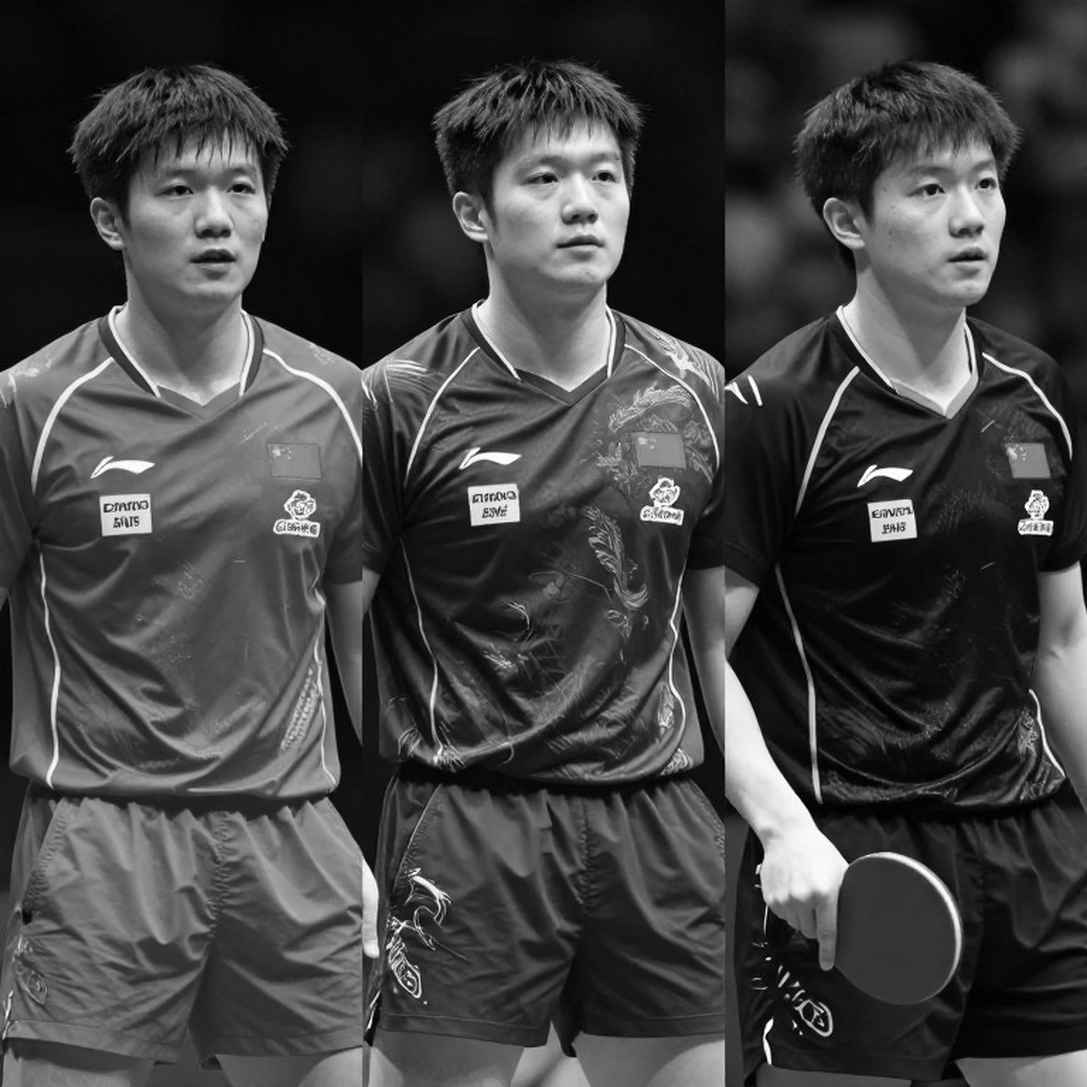
ETTU has announced a broadcast rights agreement with Dyn running through 2028. Most coverage stopped at the headline. The most readable data sits exactly where news writers usually skip. Seven cameras and four cameras are the indicator of how the entire commercial architecture of this deal was designed: a premium product for the main stage, and a minimal product to fill airtime.
I used to think rules and contracts were dry material, until I saw them decide an entire season — and here, they decide who gets seen.
Context: a commercial announcement, not a technical report
ETTU — the European Table Tennis Union — has signed with Dyn, a German subscription sports platform, a media rights agreement running through the end of 2028. The market scope is the DACH region: Germany, Austria and Switzerland. The starting point is stated clearly: the 2026 European Individual Championships in Ljubljana, Slovenia, from 11 to 18 October 2026, across five events including mixed doubles.
The event portfolio falls into four groups. The first three are the European Individual Championships, the European Team Championships and the Europe Top 16 Cup — covered at full event level. The fourth is the ETTU Champions League, but only at the level the release calls selected stages.
The concrete dates: the Europe Top 16 Cup takes place in Montreux, Switzerland, from 28 to 31 January 2027. The men's Champions League quarter-finals fall on 12–13 January and 5–6 March 2027. The men's Champions League Final 4 is in Saarbrücken, Germany, on 8–9 May 2027, staged under the sponsor-branded name HYLO. The women's Champions League Final 4 is on 1–2 May 2027. The European Team Championships in Porto, Portugal, runs from 17 to 24 October 2027, with 24 men's and 24 women's teams.
On the partner side, Dyn is a subscription streaming business operating two arms: Dyn Sport for audiences, and Dyn Media providing technology and production services to leagues and federations. The platform states it carries more than 3,000 live matches per season, and has received the SportsPro OTT Award in 2026 and the HORIZONT Award in 2026. ETTU President Pedro Moura called it another important step, centred on the visibility and accessibility of European table tennis.
One thing must be said at the outset: this is a commercial release. It contains not a single line of competitive data — no scores, no point-winning rates, no head-to-head records, no rankings. Anyone reading this announcement for playing-style insight is looking in the wrong place. Its value sits on another layer: it shows how European table tennis is being packaged, priced and distributed.

The core: dissecting the structure
Sold by event, not by match
The first thing to separate out is the unit of transaction. ETTU is not selling individual matches, rounds or match days. It is selling an entire tournament as one block. For the European Individual Championships, the European Team Championships and the Europe Top 16 Cup, rights transfer at full event level.
With the Champions League, the approach is different. The release mentions only selected stages, and the specific markers named are the quarter-finals and the two days of the Final 4. This is standard practice in club competition rights, because club-level rights are typically split across several holders: the continental organiser, national associations, and sometimes the clubs themselves. The practical consequence is simple: whether a German subscriber to Dyn can watch the entire Champions League group stage is not contained in this agreement.
This is the kind of detail headlines always erase. The phrase major broadcast partnership evokes an image of all European table tennis flowing onto one platform. The actual structure is narrower, and deliberately so.
Exclusivity asymmetry: Germany is not Austria or Switzerland
Within the same DACH region, rights have been granted at two different levels. In Germany, Dyn receives exclusive live rights. In Austria and Switzerland, rights are non-exclusive only.
The difference is not a minor legal footnote. It measures each side's bargaining leverage market by market. In Germany — with a strong table tennis tradition, a large fan base and the biggest equipment retail market in Europe — the broadcaster pays more and demands exclusivity in return. In Austria and Switzerland, ETTU accepts non-exclusive terms, meaning the federation retains the right to sell the same content package to another platform if a suitable offer arrives.
ETTU is not abandoning two smaller markets. It is preserving optionality there — a decision that prioritises flexibility over maximising its partner's immediate reach. For fans in Austria and Switzerland, the consequence is a fragmented experience: one match may sit on Dyn, another elsewhere, depending on whether ETTU sells on.
The most consequential clause
Across the entire release, the structurally weightiest clause is written in the lightest language. Dyn has committed to showing matches featuring German players and teams. Adding top-level matches without German players is framed only as a possibility.
Here I need to be precise: this is a publicly disclosed content clause, not a wrongdoing. It is an editorial policy tied to subscription economics, and it is entirely rational commercially. But its consequences are far larger than its appearance suggests.
In elite sport, visibility has become an asset class. It does not add ranking points, does not change match results, but it directly affects sponsorship values, invitation levels to exhibition events, and negotiating standing with federations. An agreement that commits to broadcasting German players' matches, and treats the rest of Europe merely as a possibility, creates a two-tier visibility system inside Europe itself.
Tier one consists of German players, who are near-certain to be broadcast. Tier two consists of the rest of the continent — Slovenia, Portugal, Austria, Sweden, France — who appear only when they reach a match deemed top-level, or when they stand across the table from a German player.
This raises a question no press release answers: whether a visibility system like this produces players, or merely re-prices players who already exist.
The 2028 gap
Another detail sank beneath the news flow: the 2028 scope is markedly narrower than 2026 and 2027. For 2028, only two events are named — the Europe Top 16 Cup and the men's Champions League Final 4. The European Individual Championships and the European Team Championships are not mentioned for the final year of the agreement.
There are two readings. The first: this is a contract with an option-based extension mechanism, with scope stated year by year rather than as a fixed three-year block. The second: this covers only part of 2028, meaning the indoor season of that period.
Both readings lead to the same practical conclusion. The 2028 period should be treated as a test phase, not a guarantee of continuity. This is also the kind of structure that appears when a rights holder wants to limit downside exposure while still trialling a new partner. Long-term commitments are usually written as a sequence of short-term options.
Dyn's two-tier model and the possibility of expansion beyond broadcasting
Dyn is not merely a streaming platform. Its two-arm structure — Dyn Sport for audiences, Dyn Media for technology and production — opens a path the agreement does not name: a partnership that could extend beyond broadcasting into production, or into providing infrastructure to ETTU itself.
This is not confirmed in the release. But it is an entirely logical expansion route for a business that already holds production capability. In that model, Dyn does not only buy content to sell to viewers; it also sells services back to the content owner. Two revenue streams on one partnership is a sign of a maturing market.
Production specification: a real commitment, not a nominal rights transfer
Back to seven cameras and four cameras. In this release, that is the most concrete data point, and the only one speaking to product quality. A nominal rights deal records only event names, dates and territories. Stating camera counts per table is a technical commitment — meaning the buyer negotiated over the picture, not only over the rights.
Table two receiving four cameras also indicates something else: matches outside the main stage are still captured to broadcast standard, rather than through a single fixed camera. That is investment above the minimum threshold.
For an analyst like me, this is the most practically valuable part. Many of the matches I need to rewatch in order to count trap-setting sequences, spin-direction changes, or the preparation time before each serve, sit on table two. Picture quality on table two determines whether I can read the structure of the match at all.
ETTU's market-by-market strategy
The Dyn agreement does not stand alone. At the same time, ETTU announced a renewed agreement with L'Équipe in the French market. Placed side by side, the two announcements form a clear pattern: European table tennis is being sold market by market, to partners with local credibility, rather than bundled into a single pan-continental package.
The advantages are obvious. Each local partner understands its own audience better, already holds relationships with national associations, and can place content in suitable time slots. The risks are equally obvious: negotiating power is scattered, and total value depends on whether each market finds a buyer.
At system level, this is a re-aggregation of regional rights. The unanswered question is whether this model complements or competes with WTT's global rights packages. Both target the same finite resource: European broadcast windows, and the attention of the same audience. People call me a tactical analyst, but I simply do not believe in luck. An overlapping calendar does not dissolve on its own.
The economics of host cities
Every venue in the portfolio receives an indirect benefit from being broadcast.
Ljubljana opens the agreement with the 2026 European Individual Championships. This is most likely a contractual starting point rather than a strategic market choice, since Slovenia sits outside the DACH core.
Montreux hosts the Europe Top 16 Cup in late January 2027. This is the most professionally dense event in the portfolio: few players, but a very high average quality per match.
Saarbrücken is the commercial hotspot. The men's Champions League Final 4 there on 8–9 May 2027 carries the HYLO sponsor name, and is the highest-value club-level event for German-speaking audiences. Stable broadcast coverage of this event directly supports the renewal value of an existing sponsorship contract.
Porto is the largest content block by duration. The 2027 European Team Championships, with 24 men's and 24 women's teams, creates an eight-day broadcast window — enough to measure the partner's actual production capacity.
What the agreement does not say
The list of information gaps here is longer than the list of information provided.
No contract value. No subscriber targets. No minimum guarantees. No disclosed termination clauses. No mechanism defining extension triggers.
This is not an accusation. It is a transparency gap, and it has a direct consequence: the risk level of the agreement cannot be assessed quantitatively. Any judgement about its durability can rest only on structure, not on numbers.
The generational transition signal
Among the content Dyn has previously produced is a documentary about Timo Boll titled “Timo Boll – Der letzte Aufschlag”, along with another titled “Blau & Schwarz”. The presence of a farewell film in a platform's marketing slate is a cultural signal, not a competitive one.
It shows the German market is entering the post-Boll phase. The biggest commercial anchor personality in German table tennis has finished his playing career. If Dyn's content slate leans heavily on Boll-era nostalgia, the appeal of the package will decay toward 2028 unless a new figure emerges.
Notably, across the entire release, not one active German player is named, even though the German-player content clause is the commercial centre of the agreement. The release is written in an institutional voice, not a talent-promotion voice.
The contrarian angle: the blind spot in conventional reading
The most predictable reaction to this news is to read it as European table tennis advancing in its race with China. That reading is structurally wrong. This agreement does not change a single ranking point, does not change a single qualification place, does not affect a single match between a European player and a Chinese player. It changes visibility infrastructure, not the competitive balance.
The second blind spot is subtler. People assume that expanding broadcast reach expands opportunity for everyone. The German-player content clause says otherwise. In an agreement explicitly designed to expand visibility, visibility itself is being distributed unevenly. A Slovenian player and a German player both reaching the second round can receive two entirely different levels of exposure before the same audience.
The third blind spot concerns counterparty risk. The entire distribution power of the agreement in its most important market sits with a single subscription platform. That platform has awards, scale and a production record — but no published financial commitment. In a streaming market that is harsh by nature, concentrating an entire continent's visibility in one partner is a structural weakness, not a strength.
The fourth blind spot lies elsewhere: this release will soon be forgotten, and once forgotten, so will the fact that 2028 lists two events instead of four. The clauses people overlook are usually the ones that matter most.
There is another question I keep to myself when reading releases like this. When the hall is empty, I hear the whistle more clearly — and I see the rule itself. In an arena with no spectators, the only thing left is the camera. And the camera, in turn, points only at whoever is paying.
Takeaways
Four checkpoints need verification over the next two years.
October 2026 in Ljubljana: the first live execution of the agreement, and the first real measurement of production quality against the seven-camera and four-camera commitment.
January 2027 in Montreux: a test with a professionally dense but small-scale event, where picture quality directly determines the viewing experience.
May 2027 in Saarbrücken: the biggest commercial test, where sponsorship value and subscription value meet across two days.
October 2027 in Porto: an eight-day production-capacity test with 48 national teams.
And one open question, with no timeline: whether visibility produces players, or merely re-prices the players who already exist. The answer will not come from a press release. It will come from a ranking list, some years from now, when the most-broadcast and the most-winning are no longer the same group of people.