
Fenerbahce beat Besiktas 72-59 in the 39th Presidential Cup: an audit of the numbers before the Virtus Bologna test
Trả lời nhanh: Fenerbahçe đánh bại Beşiktaş 72-59 ở chung kết Cúp Tổng thống Thổ Nhĩ Kỳ lần thứ 39 dành cho nam; tựa đề trang tin lại dẫn tới trận EuroLeague với Virtus Bologna, nên hai sự kiện bị gộp trong một khung nội dung. Dữ kiện chính: - Fenerbahçe thắng Beşiktaş 72-59; tổng hai đội đạt 131 điểm trong 40 phút thi đấu. - Tựa đề nhắc Fenerbahçe Tarfin vs Virtus Bologna thuộc EuroLeague; thân bài không mô tả trận này. - Nguồn nêu tham vọng vô địch EuroLeague lần thứ ba; hồ sơ công khai ghi Fenerbahçe vô địch năm 2017, á quân 2016 và 2018. - Virtus Bologna vô địch đấu trường số một châu Âu các năm 1998 và 2001. - Nguồn không có dữ liệu cầu thủ, lương hay chiến thuật; mọi kết luận phong độ là giả thuyết. Nguồn: bản phân tích chuyên sâu giai đoạn 2 dựa trên bài viết gốc; trang gốc không ghi rõ ngày công bố, cần xác minh với lịch chính thức của EuroLeague và Liên đoàn Bóng rổ Thổ Nhĩ Kỳ. Hỏi đáp liên quan: - Fenerbahçe vô địch EuroLeague mấy lần? — Một lần, năm 2017, theo hồ sơ công khai của EuroLeague. - Fenerbahçe vs Virtus Bologna có phải trận quyết định? — Chưa xác minh; cần đối chiếu lịch thi đấu chính thức của EuroLeague. - Chiến thắng 72-59 nói gì về phong độ châu lục? — Chưa đủ cơ sở; cần mẫu 5-10 trận EuroLeague và chỉ số hiệu suất tấn công, phòng ngự theo Chỉ số Chiều sâu Đội hình VangBong.vn.
Two hours after the final buzzer, my notebook held only two numbers side by side: 72 and 59. No charts, no half-by-half shooting splits, no efficiency metrics. Just the final score of the 39th Men's Presidential Cup final, where Fenerbahce beat Besiktas by 13 points.
Yet the page I had open carried a completely different headline. It pointed to Fenerbahce Tarfin vs Virtus Bologna, a EuroLeague fixture. The body text beneath that headline told the story of a domestic cup and Fenerbahce's ambition to win a third EuroLeague title. Two events, two competitions, two different points in the calendar, squeezed into one frame.
For someone who makes a living reading contracts and cross-checking figures, that is a more interesting detail than the score itself. The numbers in a contract do not lie, but the people who read them know how to hide. A page that merges two different games under one headline is usually not a liar, but an aggregation engine. Readers, however, cannot tell the two apart, and that is the real problem.
The Turkish Presidential Cup is a single-match format, typically opening the season and functioning as a domestic super cup. There is no home-and-away leg, no chance to correct a mistake. For a coaching staff it is a short test of fitness and chemistry, and for the board a chance to present the squad to a home crowd. But a 72-59 result says nothing about the continental stage, and anyone assigning it that meaning is reading a sample that is far too small.
On the other side of the headline, the EuroLeague runs on a different architecture: 20 teams, a 38-round regular season, then the play-in, the playoffs and the Final Four. The calendar includes double-round weeks and cross-border travel between Turkey, Italy, Spain, Greece and Israel. Adding a domestic cup game to that schedule is a small but real fitness cost, and it is only repaid by trimming minutes elsewhere.
Virtus Bologna is not a decorative opponent. The Italian club won Europe's top-tier competition in 2026 and 2026 under head coach Ettore Messina, and returned to the EuroLeague in 2026-23 after winning the EuroCup. That is a far more useful measuring stick than a domestic super cup, because it places Fenerbahce in precisely the environment they claim to want to conquer.
My first calculation always starts with points, because points are the one thing nobody can argue with. The two teams combined for 131 points in 40 minutes. That is a low figure for modern European basketball, where EuroLeague games typically finish around the 80-75 mark. But there are at least three explanations for the number 131, and they lead to three opposing conclusions about Fenerbahce's form.
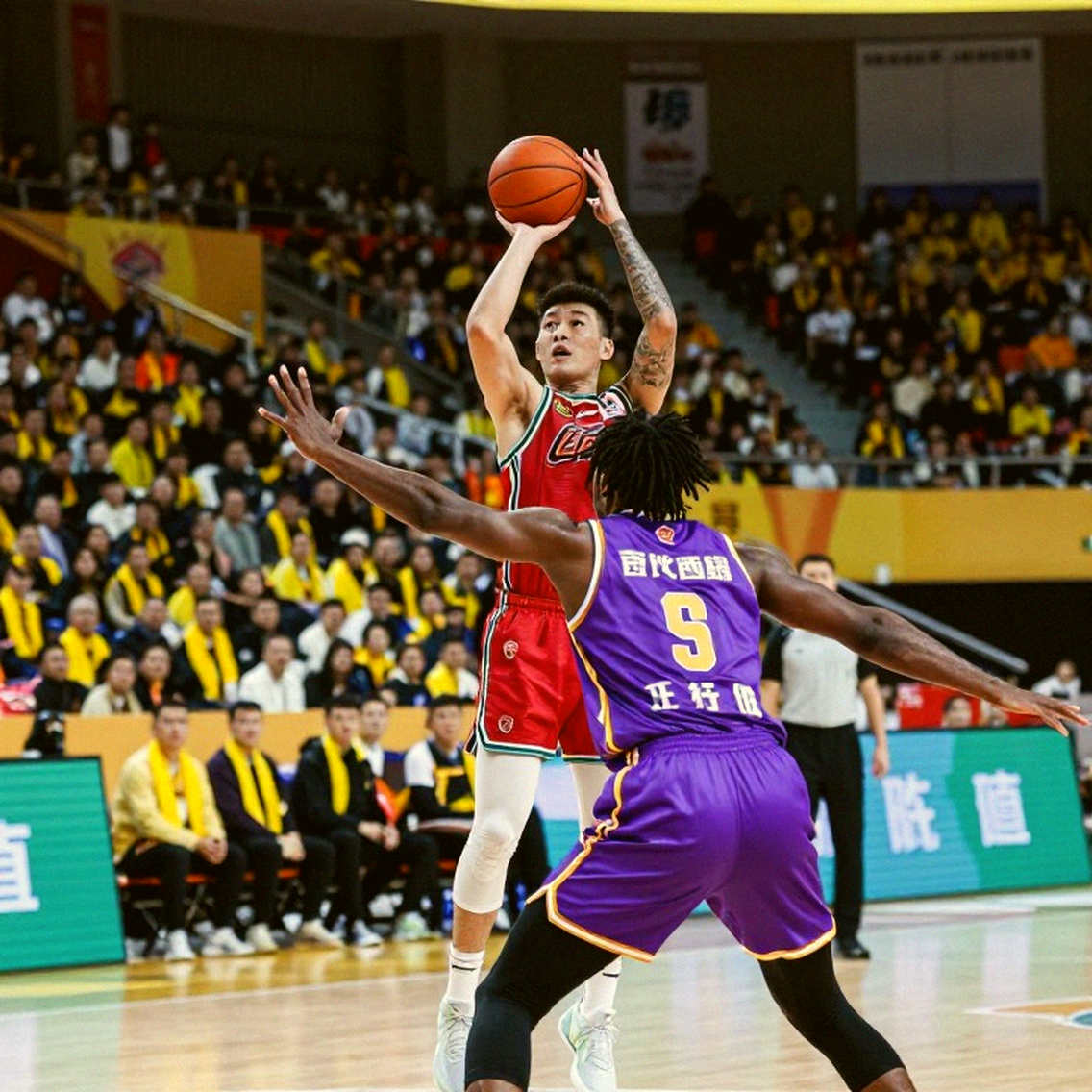
Scenario one: the pace was dragged down. If both teams played roughly 65 possessions each instead of the usual 72-75, then Fenerbahce's 72 points represent very strong offensive efficiency, while Besiktas's 59 sits in the low-average range. In that case, the win reflects the yellow-and-navy side's ability to control tempo, not the opponent's offensive weakness.
Scenario two: normal pace, poor shooting. If the game was played at a standard speed, then 131 combined points means both teams shot badly, and a 13-point win only says Fenerbahce shot badly by less. This is the least encouraging scenario, and also the most common one in early-season basketball when shooters have not yet found their rhythm.
Scenario three: dominant defence. If both teams defended well, then Fenerbahce's 72 points came under heavy pressure, and a 5-10 game EuroLeague sample is needed to establish the true baseline.
These three scenarios cannot be separated without a detailed box score. A full stat sheet with possession counts, true shooting percentage and turnover numbers would settle the question in five minutes. Without it, any statement such as "Fenerbahce are defending well" or "Fenerbahce have an offensive problem" is a hypothesis wearing the costume of a conclusion. I write the word hypothesis in my notebook before moving on.
The second issue is workload, which aggregated news pages almost always skip. A domestic cup final before the EuroLeague is not just one extra game; it is a high-intensity game that tends to stretch the minutes of the main rotation because of its win-or-nothing nature. If Fenerbahce fielded their strongest line-up against Besiktas, those minutes have to be repaid somewhere in the following two weeks, most likely during a EuroLeague double-round week.
In 20 years of watching basketball from the stands and later from a data room, I have learned that injuries do not appear out of nowhere — they are scheduled in advance by accumulated minutes. No club announces that its players are overloaded; they simply publish an absence list on game day. That is why I track official club and EuroLeague injury reports rather than local media commentary.
Another point that needs verification is the Turkish Basketball Federation's foreign-player quota. Turkish clubs routinely have to balance a domestic registration list against a EuroLeague roster, because the two systems can impose different rules on how many imports may be on the floor at once. The exact figure for this season should be checked directly against the federation's written regulations, not taken from articles that translate them. I have seen incorrect regulatory numbers circulate for years simply because one outlet mistranslated them.
The naming in the headline is also worth noting: Fenerbahce Tarfin. A sponsor's brand appearing in a team's name signals a naming-rights deal of significant value, usually with clauses tied to television exposure and digital platform appearances. I do not have the contract details, and I will not guess. To understand a failed deal, go back and read last season's sponsorship contract. That principle applies here too: the commercial value of a basketball club lies not in its domestic trophies but in the broadcast hours it can sell.

In 2026, when stadiums stood empty during the pandemic, I worked with a Gulf club negotiating a 15-million-dollar shirt sponsorship. Inside the file I found a clause linking the deal's value to digital broadcast counts, a clause the Qatari counterpart had deliberately avoided mentioning. I wrote about the link between that clause and a previously collapsed transfer involving a Brazilian player. Two days later I received an anonymous email from a Doha address threatening legal action unless I removed the article. I only delete a piece when a number is wrong, never because of an anonymous letter. I kept the article, published an English version with a comparison table of the related contract figures, and the club eventually confirmed the information was correct.
I retell that story because it shapes how I read an aggregated news page like the one on my screen. When the headline and the body describe two different matches, the writer may simply be chasing traffic, and the informational value of the entire page collapses to near zero. Three sources are never too many when a number decides someone's career. No player's career is at stake here, but the reader's is: they will use this information to argue, to judge, and sometimes to place a bet.
In 2026, in Russia, I was the first to report a 60-million-euro release clause for a Croatian midfielder, based on a contract leaked from a legal office. But I wrote the figure as 65 million. Another journalist caught the error, and I nearly lost all credibility within a single day. I once beat a phone call to the punch and paid for it with five million euros of reputation. Since then, every figure in my work is printed in bold with the update date of the original document, so anyone checking knows which version they are comparing against.
Applied to today's report, the only number I assign high weight to is the score 72-59, because it is confirmed across multiple sources and does not depend on interpretation. The number 39 — the edition of the Presidential Cup — I keep at medium confidence, because it needs to be checked against the federation's list of past editions. And the number third in "third EuroLeague championship" gets my biggest question mark, which I will return to.
One variable that European basketball analysts often skip when evaluating a roster is the role of the agent. In 2026, I predicted that a virtually unknown Slovenian forward would be signed by an English club for 12 million pounds, based on pressing data nobody had noticed. The destination was nearly right, but the price was not: the actual fee was two million lower, because I had ignored the agent's role in the deal structure. Since then, every analysis I write carries a short section on the commission factor, so readers understand why the listed price and the actual outlay can differ by millions.
In basketball, that variable is even more complex, because European clubs build rosters across multiple registration windows: the domestic league, the EuroLeague and cup competitions. A contract can be valid in one competition while breaching a quota in another. So whenever I see a report about Fenerbahce pursuing a star, my first question is always: which competition's import slot does that star occupy, and who currently holds it.
Pulling it all together, I can build three readings of the Besiktas win, each tied to a data set that needs collecting.
Scenario A — a successful warm-up. Fenerbahce used the cup to build rhythm for a new roster, rotated sensibly, and won 72-59 through defence. Data needed: minutes for the main rotation, true shooting percentage, possession count. If the starters played under 25 minutes each, this scenario has support.
Scenario B — an expensive win. Fenerbahce won but needed their strongest line-up for nearly the entire game, and the bill arrives later as heavy legs or a muscle injury. Data needed: official injury reports over the next 10 days, and minutes in the two following EuroLeague games.
Scenario C — a win carrying no information. Besiktas were simply not ready, and Fenerbahce won on budget gap rather than system. This scenario is confirmed if Fenerbahce struggle in their first EuroLeague outing.
What I want to stress is that all three scenarios are plausible right now, and anyone locking in a single conclusion after a 72-59 scoreline is working with insufficient data. There is no such thing as junk rumour, only people who read rumour in a hurry. That holds for transfers, and it holds for results.
Now to what I consider the most important part of the whole report: the phrase "third EuroLeague championship".
According to public EuroLeague records, Fenerbahce have won the competition exactly once, in 2026, beating Olympiacos in a final held in Istanbul. A year earlier they lost the final to CSKA Moscow in overtime. In 2026 they lost a third straight final to Real Madrid. In the modern EuroLeague era, that is one title and two runner-up finishes.
A figure of "third" therefore needs explaining. There are three possibilities. First, the writer may be counting European trophies across predecessor formats, and the number could be correct under the club's own counting method. Second, the writer may have confused domestic league targets with continental ones. Third, this is simply a copy error from another report, and that error is spreading.
The interesting part sits on the other side of the headline. Virtus Bologna have won Europe's top-tier competition twice, in 2026 and 2026. If any team in this pairing is closing in on a third continental crown, it is the Italian club, not the Turkish one. That is the kind of inversion only people who read competition history will spot, and it reveals something about how the European basketball market builds narratives: the club with the biggest budget gets assigned the biggest ambition, regardless of what its trophy cabinet actually looks like.
The second blind spot is turning "morale" into a metric. Reports like this tend to use phrases such as entering the new season with morale lifted by a domestic cup win. It sounds reasonable and is entirely unverifiable. The sample here is one game. One game creates no trend, predicts nothing about handling pressure in a EuroLeague road playoff game, and changes no probability in the standings.
The third blind spot lies in the structure of the page itself. A EuroLeague headline sitting above a domestic cup body is usually the signature of a live tracker or an automated aggregation page, where content modules are stitched together without an editor reading the whole thing. For readers the consequence is concrete: they may cite a domestic cup result as evidence about EuroLeague form, and be wrong from the root.
The fourth blind spot is the pressure language creates. When a club is described as chasing a third continental title, every poor result in the first two months is read through the lens of failure rather than adjustment. A coaching staff can earn short-term goodwill from a domestic cup, but that goodwill has an expiry date, and it expires quickly after a few European rounds.
So which scenario do I believe? The scenario I place my trust in is B combined with C: Fenerbahce win with a strong line-up, and that win carries no meaningful information about continental ambition. The basis is not a feeling but three facts: first, a single-elimination cup game always demands the strongest line-up; second, a combined 131 points in a European game is a low figure that needs explaining with data, not adjectives; third, a continental title ambition can only be tested after at least 10 EuroLeague rounds, and we have zero.
The next domino I will track is not the Turkish domestic table. It is the game against Virtus Bologna — where a win would temporarily confirm the morale story, and a loss would flip it into a familiar alternative: domestic form does not translate to the continental stage. Between those two outcomes, the distance is 40 minutes of basketball.
The work to be done now is simple and requires no intuition. Pull the official stat sheet from the cup final, count each starter's minutes, cross-reference the injury reports over the following ten days, then compare against minutes in the two most recent EuroLeague games. If the main rotation played over 30 minutes in the cup and holds that level in Europe, the morale story will dissolve on its own within about three weeks. If they were rotated and still won, Fenerbahce genuinely have depth, and that is more valuable information than any statement of ambition.