
70.46m and 19.88s: The Nagoya night and two Asian athletics signals being misread
Core answer: Đêm thi đấu thứ tám của Asian Games Aichi-Nagoya 2026 chứng kiến hai dấu mốc điền kinh: Yan Ziyi (Trung Quốc, 18 tuổi) vô địch ném lao nữ với 70,46 m, phá kỷ lục đại hội, còn Puripol Boonson (Thái Lan, 20 tuổi) chạm kỷ lục châu Á 200 m với 19,88 giây. Cả hai thành tích cần kiểm chứng thông số gió và điều kiện thi đấu. Key facts: - Yan Ziyi ném 70,46 m ở lượt duy nhất, phá kỷ lục đại hội 66,09 m của Liu Shiying (2018) - Haruka Kitaguchi, nhà vô địch Olympic, về nhì với 62,70 m, kém Yan 7,76 m - Puripol Boonson chạy 19,88 giây, bằng kỷ lục châu Á của Xie Zhenye (2019) - Boonson hoàn tất cú đúp vô địch 100 m và 200 m tại cùng kỳ đại hội - Thông số gió cho cuộc đua 200 m chưa được công bố, chưa thể xác nhận kỷ lục Source attribution: Nguồn: Stage-2 Deep Professional Analysis | Cross-checked: VuaBong.vn Related Q&A: Hỏi: Yan Ziyi có thể phá kỷ lục thế giới 72,28 m của Špotáková không? Đáp: Khoảng cách 0,54 m từ thành tích tháng 5 là thật, nhưng cần thêm một mùa giải 70 m nữa, kiểm chứng tại World Championships 2027. Hỏi: 19,88 giây của Boonson có được công nhận là kỷ lục châu Á? Đáp: Cần thông số gió chính thức từ World Athletics; kỷ lục chỉ hợp lệ nếu gió đuôi không vượt quá +2,0 m/s. Hỏi: Vì sao Kitaguchi chỉ ném 62,70 m? Đáp: Chưa có giải thích chính thức; có thể do chấn thương, phong độ hoặc điều kiện mưa — cần đối chiếu thành tích mùa giải 2026.
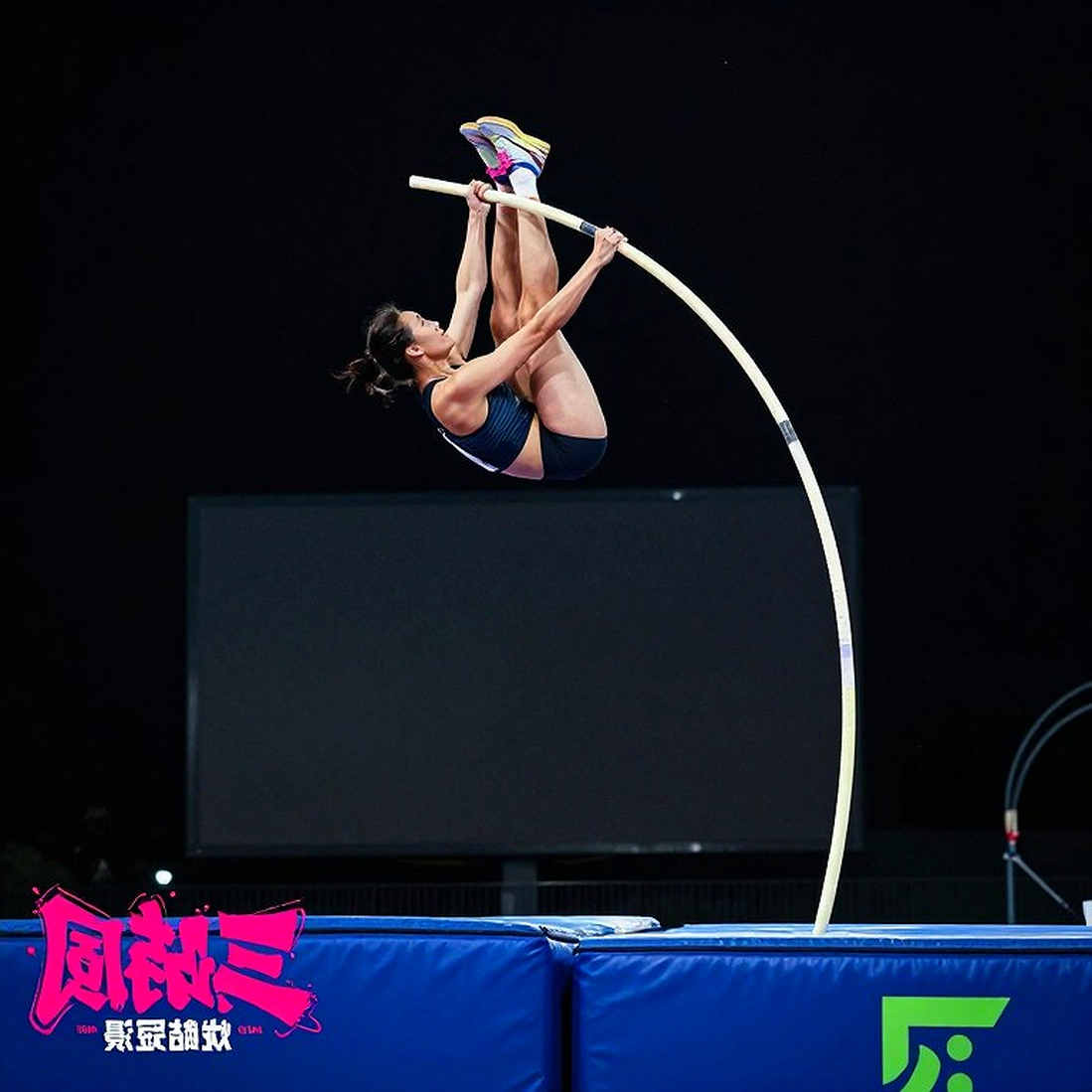
A rainy night in Nagoya. Two numbers entered history in very different ways: 70.46m from Yan Ziyi, an 18-year-old Chinese javelin thrower, breaking the Games record with her first and only throw of the evening; and 19.88 seconds from Puripol Boonson, a 20-year-old Thai sprinter, matching the Asian record over 200m and completing the 100m–200m double. On the surface, this was a golden night for Asian athletics. But I am not writing this to celebrate. I am writing because these two numbers, read carefully, are telling two completely different stories — one about genuine global class, one about the line between regional and world level.
Let's start with context. Aichi-Nagoya 2026 is an unusual Asian Games. 2026 has no outdoor World Athletics Championships on the calendar — the cycle runs from 2026 straight to 2027. That means, for Asian athletes, this Games is the true seasonal target, not a waypoint between two bigger goals. A mark delivered at an event built around it is always more reliable than a mark produced at a competition sandwiched between two peaks. This is why I am willing to put weight on the numbers from the Nagoya night. But before going deeper, one principle I have applied through 23 years of watching the sport: no number stands alone.
In record terms, Yan's throw places her in a rare corner of history. Barbora Špotáková's world record, set in 2026, is 72.28m. The Nagoya mark fell 1.82m short — roughly 2.5%. But that is a number from a rainy evening. Add what happened in May, when Yan threw 71.74m — cutting the gap to the world record down to 0.54m — and the picture changes entirely.
The physics of javelin throwing is often read backwards. While a tailwind helps sprints and jumps, the javelin actually benefits from a moderate headwind: the headwind increases the relative airspeed over the implement, raises lift, and often adds distance. A rainy evening, by contrast, is purely negative — the run-up surface gets slippery, the cord grip fails, the rhythm of the stride is disturbed. 70.46m in the rain is not a wind-assisted mark; it is a conditions-suppressed mark. Throwing farther on a dry night with a mild headwind is a reasonable forecast, not a promise.
The most analytically loaded detail is the least discussed: Yan threw only once. In a six-throw final, a winner leaving the runway after the first attempt can have three reasons: an unassailable lead, precautionary management of a physical complaint, or a tactical decision in wet weather. The source offers no explanation. For an 18-year-old in her first continental final, the likeliest reading is load management — but I will not assert it as fact. Missing data is also data.
In positional terms, an 18-year-old female javelin thrower at 70m is a genuine statistical outlier. Women typically break 70m only in their mid-20s. Yan is arriving six to seven years early. That creates both opportunity and risk. Opportunity: a systemic talent is being formed, not a lucky moment — 71.74m in May, 70.46m in September; the 1.28m gap is normal seasonal variance for a thrower. Risk: senior-level loading placed on elbows, shoulders and a lumbar spine still developing. This cohort is the highest overuse-injury risk group in athletics.
The old Games record also says something structural. Liu Shiying, later the Tokyo 2026 Olympic champion, set 66.09m in 2026. Yan broke it by +4.37m. With Haruka Kitaguchi, the reigning Olympic champion, managing only 62.70m — a 7.76m deficit to a teenager — the order-change signal in the women's javelin is visible. But Kitaguchi's 62.70m is itself an unresolved variable: an Olympic champion falling more than five metres below her own peak, with no explanation. It could be a disrupted season, an unreported injury, or weather affecting the whole field except Yan. Three possibilities, three very different readings of the changing of the guard.
Unlike Yan, Boonson's story is not in a single throw. It is in two races at the same Games. The 100m–200m double at a major championship is an aggressive plan: six rounds across both events, maximal-velocity and speed-endurance loading compressed into one week. Sprint hamstring and Achilles injuries do not come from one race; they come from the accumulation of a week like this.
The 19.88s matched exactly the Asian record set by Xie Zhenye in 2026. But I must pause at a gap: no wind reading was disclosed for this race. Under World Athletics rules, a record is only valid if the tailwind does not exceed +2.0 m/s. The missing number does not automatically invalidate the mark, but anyone serious must check the official results page before repeating the claim. Likewise, the 100m winning time was withheld. An article otherwise generous with numbers goes silent at two critical points — that is a signal, even if its meaning is not yet clear.
Global context positions Boonson precisely. At Paris 2026, the men's 200m medals read 19.46, 19.62 and 19.70. The 19.88s from Nagoya sits two to three tenths outside global medal range. That does not diminish the Asian milestone — a 20-year-old from a country without sprint depth touching a mark the continent had waited for since 2026 — but it places him where he belongs: a regional champion with global-final value, not a world-medal candidate. This is the difference between a true story and an inflated one.
On Yan, the phrase "closing in on the world record" in the original article rests on the May mark, not the final-night mark. The 0.54m gap to Špotáková is genuinely small by women's javelin standards. But a single data point does not establish a trajectory. Thrower seasonal variance can exceed one metre, and a 1.28m step back from May to September is normal — not a decline, and certainly not evidence of a straight-line charge at the world record. Špotáková's record was set at age 24, in ideal conditions, at the peak of a 2026 cycle. An 18-year-old throwing 70.46m in rain, 1.82m from the record, is extraordinary. Calling it a record chase is the language of excitement, not of data.
The absence of Liu Shiying is another notable unknown. The Tokyo 2026 Olympic champion is referenced only as the old record-holder, not as a competitor. If an injury kept her out, China's javelin depth chart reads differently. If she has left the runway, the baton was passed in a way nobody was prepared for. Distance never lies; we just lack the patience to listen.
The most interesting story of the Nagoya night may not have been on the track at all. Yan Ziyi comes from the Chinese state system — a throws factory with a documented history of absorbing foreign technical expertise, biomechanics infrastructure and full medical teams. An 18-year-old throwing 70m in that system is not a one-off miracle; with programme depth, the probability of another 60m-plus thrower behind her is high. The story may not be "one prodigy" but "a production line."
Boonson comes from a different model: a thin sprint base, an individual pathway. Thailand has no sprint system like China's or Japan's. A 20-year-old touching 19.88s from a narrow national-team foundation speaks to exceptional individual talent, but also to a frightening dependence on one coach, one programme, one funding stream. If China's system automatically replaces a broken link, Boonson's fate hangs on a much thinner thread.
On governance, the Games has another layer. Aichi-Nagoya chose a cost-saving model: no traditional athletes' village, replaced by hotels, temporary units and a cruise ship. Indian badminton players openly called it "sad" and said it "never felt like playing in an Asian Games." Criticism does not affect the validity of 70.46m or 19.88s — a legal throw is a legal throw anywhere — but it shapes the question of whether top Asian athletes will keep prioritising the Asian Games in the next cycle.
And there was another shadow: Uzbek MMA bronze medallist Nodirbek Shavkatov was provisionally suspended by the International Testing Agency (ITA) for meldonium — the substance added to the WADA prohibited list in 2026, the same one in the Maria Sharapova case. A case outside athletics does not directly taint the two records, but administratively, a confirmed positive on day eight usually triggers target-testing escalation across the remaining programme. A 70m throw by an 18-year-old and a 19.88s run by a 20-year-old are the two natural first targets. This is not an accusation. It is a prediction about how the system responds.
People ask me why I stay silent; I am reading the words the field writes. The Nagoya night wrote two very different stories. One of global class: Yan Ziyi, 18, throwing 70.46m in the rain, with a 71.74m data point from May, standing at a door very few women in history have pushed open. One of regional boundaries: Puripol Boonson, 20, touching the Asian record, completing the glorious double, yet still two to three tenths from an Olympic medal.
I do not believe in luck; I believe in what has been repeated enough times. Yan repeated the 70m level twice in one season. Boonson repeated his status as Asia's best at both distances in one Games. That is the foundation of my respect for both. But the window from tonight to the 2027 World Championships is the verification stage: a season with denser competition schedules, heavier commercial pressure, the world watching. Whoever holds their peak under those conditions is the one who converts potential into standing.
Every number is a confession the meet cannot deny. The Nagoya night confessed two things: Asia has a javelin talent at historical scale, and Asia has a genuine regional sprint champion. A third confession — whether either can step up to world level — will only be read in 2027. When the numbers speak, I just listen.

Cầu thủ liên quan
Bài đề xuất
Keely Hodgkinson's speed suit: when science is dressed as fashion2026-09-20
Dawit Seare defeats Ingebrigtsen in Copenhagen: A moment of Eritrea's rise or Norway's star's decline?2026-09-20
The Wife-Carrying Race in Can Gio: More Than Three Minutes for 200 Meters and the Funnel of a Mass-Participation Marathon2026-09-19
Assefa, 2:11:04 and the Two Kilometres That Lost the World Record in Berlin2026-09-28
When the Stopwatch Goes Silent: Athletics and the Verification Crisis2026-09-27
Bài đề xuất
World Athletics Ultimate Championship: No Medals, $10 Million and a Mid-September Physical Gamble2026-09-11
Samba-Mayela and the Suspension Without an End Date: Hunting for the Truth Behind the AIU's September 18 Notice2026-09-26
The Ultimate Championship: $10 Million and the Question Nobody Has Dared to Answer2026-09-11
Ultimate Championship: Ten Million Dollars, No Medals, and the Question of Who Gets Told2026-09-12
Amy Hunt, 22.10 Seconds and the Question of Who Gets to Tell Women's Sport's Story2026-09-14