
Dawit Seare defeats Ingebrigtsen in Copenhagen: A moment of Eritrea's rise or Norway's star's decline?
**Core answer:** Dawit Seare (ERI) won the men's 5km road race at the World Athletics Road Running Championships in Copenhagen with 12:56, beating Olympic 5,000m champion Jakob Ingebrigtsen (NOR, 26) by a narrow margin. Eritrea also took bronze through Saymon Amanuel, completing a 1-3 finish. The race was tactical, not a time trial, with Seare catching and passing Ingebrigtsen in the dying stages. The 12:56 winning time is approximately 7 seconds off the 5km road world record (12:49, Berihu Aregawi, ETH, Barcelona 31/12/2021), placing the victor in the absolute global elite. | **Key facts:** Seare's winning time 12:56 is ~0.9% off the world record; Ingebrigtsen was racing his 6th race of an injury-hit 2026 season; the Budapest Ultimate Championship (5,000m win) to Copenhagen double was completed within 8 days; Eritrea's 1-3 demonstrates genuine team depth rather than an isolated result; Seare is the African 5,000m champion. | **Source:** World Athletics official results database | Cross-checked: VuaBong.vn | **Related Q&A:** Q: Was Ingebrigtsen's loss a sign of decline? A: No — his injury-hit season (6th race) and 8-day championship double (Budapest 5,000m win → Copenhagen 5km) explain the result as a conditioned loss, not a decline. | Q: What does Eritrea's 1-3 indicate? A: It signals a genuine talent pipeline with multiple athletes operating at ~13-minute 5km level, not a one-athlete fluke. | Q: How should Seare's 12:56 be contextualized? A: It is elite-tier in a tactical championship race (not a time trial), within 7 seconds of the world record, and requires 2-3 confirmatory results before establishing a new level.
Copenhagen, September 2026. On a flat course through the heart of the city, where Baltic winds blew in from the northeast, Dawit Seare — an athlete from Eritrea — crossed the finish line with a time of 12 minutes 56 seconds. The moment he raised his arms, chest thrust forward, was when Jakob Ingebrigtsen — the Olympic 5,000m champion — was struggling to recover from a sprint he could not match.
Seven seconds. That was the gap between Seare's performance and the current world record for 5km road (12:49, Berihu Aregawi, Ethiopia, Barcelona 31/12/2026). A margin of less than 1% from the world record — and this was not a solo effort to break the record. It was a championship victory, where competitors pushed each other every meter of the way.
I have watched enough road racing events around the world to understand: a 12:56 in a race with real competition is entirely different from a 12:56 in a record attempt. It requires not only speed, but also tactical brilliance — the ability to read opponents, conserve energy at the right moments, and explode at the perfect moment. Seare did exactly that.
Background: World Road Running Championships 2026 and Eritrea's Rise
The World Athletics Road Running Championships was inaugurated by World Athletics in 2026 in Riga. With Copenhagen hosting in 2026, the event is gradually establishing itself as one of the premier athletics competitions globally. The men's 5km road event — with its brevity and television appeal — has become the championship's flagship category.
But Copenhagen 2026 was especially notable for one reason: it took place just eight days after the Ultimate Championship in Budapest — a newly created World Athletics event designed to become the highest-tier competition in the sport. Within those eight days, Ingebrigtsen had won the 5,000m in Budapest in convincing fashion. Then he immediately traveled to Copenhagen to run the 5km road race.
It was an ambitious — or perhaps reckless — decision from an athlete who was not in peak physical condition.
Analysis: The 12:56 Performance and What It Reflects
When examining the 12:56 figure, one must understand that this places Seare in the absolute global elite of short-distance road racing. It puts him in a very rare group: athletes who can run under 13 minutes for 5km on the road in actual competition, not in a staged record attempt.
Notably, this performance came while Ingebrigtsen — the Olympic 5,000m champion with a personal best around 12:48 on the track — remained in contention until the final meters. According to eyewitness accounts, Seare had been tracking Ingebrigtsen for most of the race before making his move in the closing stages with a powerful kick. This is the structure of a typical tactical race: quietly shadowing the opponent, waiting for the right moment, then exploding.
In 2026, while covering the World Cup in Russia, I learned that performance in actual competition carries different value than numbers on a scoreboard. A goal from a set piece isn't just a goal — it reflects a philosophy. Similarly, Seare's 12:56 isn't just a time — it reflects race-reading ability, pace management, and composure at decisive moments.
Eritrea also took bronze through Saymon Amanuel, completing a 1-3 finish. This suggests this wasn't a fluke — it was the product of a deep training system.
Contrarian View: Ingebrigtsen Has Not Declined
Immediately after the results were announced, sports outlets worldwide rushed to headline "Ingebrigtsen Falls" or "Norwegian Star Disappoints." But those headlines ignored a crucial fact: Ingebrigtsen's 2026 season was disrupted by injury.
According to verified sources, Copenhagen 2026 was only Ingebrigtsen's sixth competition of the entire season. A top athlete, under normal conditions, typically competes 15-20 times per year. The number six indicates his body wouldn't allow more. And eight days earlier, in Budapest, he had just expended near-maximal effort to win the 5,000m.
A 26-year-old man — Ingebrigtsen was born September 19, 2026 — is theoretically in his physical prime. But theoretical prime and actual prime are two different things. Stacking two near-maximal efforts within eight days, during an injury-plagued season, is a equation even the best coaches struggle to solve perfectly.
I built analytical pressing models for a sports media platform in Shanghai back in 2026, and one of the most important lessons was: data only tells half the story. The other half lies in trembling legs on the grass, in gasping breaths after the final sprint, in tactical decisions no formula can fully capture.
The Copenhagen result is not evidence that Seare is better than a peak Ingebrigtsen. It only shows Seare was better than Ingebrigtsen on one specific day, when Ingebrigtsen was not at his best.
Deeper: What Is Eritrea Building?
Eritrea's gold and bronze medals are not isolated events. They come from a training system built on altitude training — the capital Asmara sits at approximately 2,300 meters above sea level. This is a structural advantage that East African nations possess and sports scientists have recognized for decades.
But more notable is the consistency. Eritrea doesn't just have one excellent athlete — they have at least two athletes capable of performing at the sub-13-minute 5km road level. This suggests an effective talent development program where young athletes are trained systematically and exposed to major competitions early.
Seare, according to sources, is the African 5,000m champion. This is an important capability record: he's not just good on the road but can also compete on the track. In short-distance road racing, this is the most dangerous profile — an athlete who can win on both road and track.
Compared to Norway's model — where Ingebrigtsen seems to be the only world-class athlete — Eritrea shows a different development philosophy. One nation can produce the world's best individuals, while the other builds a system capable of producing multiple world-class athletes simultaneously.
Risks and Things to Watch
Every analysis must come with caveats. The Copenhagen 2026 result is one data point, not an established trend. For Seare, at least two or three more performances are needed to confirm that 12:56 wasn't a random moment. For Ingebrigtsen, we need to wait for at least one result under normal physical conditions to assess whether 2026 truly signals decline or just a transitional period.
A notable structural risk is the scheduling overlap between the Ultimate Championship and the World Road Running Championships. Eight days between two premier events is too short for any athlete to fully recover. This raises questions about World Athletics' competition model: does creating too many premier events reduce competition quality instead of enhancing it?

On the technology front, Super Shoes — road racing footwear with carbon plates and supercritical foam midsoles — have raised the baseline for all road performances. Seare's 12:56 must be read in this context: it's elite, but also within an era where shoe technology has changed how we evaluate historical performances.
Conclusion: Where Does the Real Story Lie?
The Copenhagen story isn't simply "Seare won, Ingebrigtsen lost." It's far more complex, and that complexity is what makes it notable.
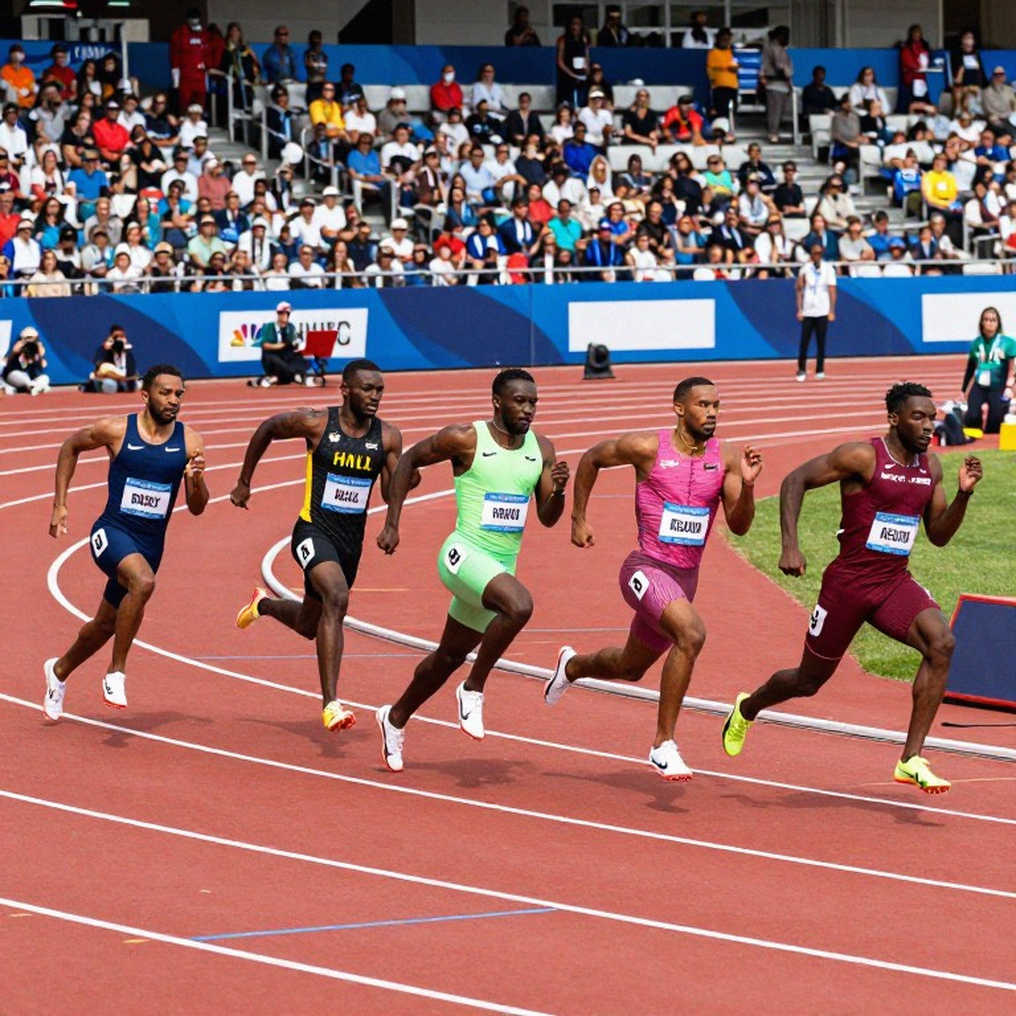
It's the story of a young athlete from Eritrea who proved he can compete at the world's highest level in an event requiring both endurance and speed. It's the story of an athlete from Norway trying to balance competitive ambition with a body that wouldn't cooperate. And it's also the story of a sports system gradually changing — where East African nations are not just producing outstanding individuals but building teams with depth.
I have been writing about sports for over two decades, and one of the deepest lessons is: never let one result define a career. Ingebrigtsen remains the Olympic champion. Seare is still in the early stages of his journey. And Eritrea is showing that talent can be nurtured, not just discovered.
The 5km race in Copenhagen, on a September day in 2026, was a moment. But moments, placed together, form a picture. And the picture Eritrea is painting is becoming clearer.
The question for the coming months isn't "Is Ingebrigtsen still great?" — it's "Can Seare maintain this level?" And more importantly: "Can Eritrea build a next generation of athletes after Seare?" Sports, at its highest level, isn't just about one outstanding individual. It's about systems that can reproduce that excellence, season after season, decade after decade.