
Sabitzer Steps Away from Austria: When a 32-Year-Old Midfielder Renegotiates With His Own Calendar
**Câu trả lời cốt lõi:** Marcel Sabitzer tạm dừng thi đấu cho đội tuyển Áo ở tuổi 32 sau 102 lần khoác áo, sau khi đạt thỏa thuận với huấn luyện viên trưởng Ralf Rangnick; mốc đánh giá lại được định trước khi vòng loại Euro 2028 khởi tranh. **Dữ kiện chính:** - Marcel Sabitzer, 32 tuổi, hiện khoác áo Borussia Dortmund và đã ghi 27 bàn trong 102 lần khoác áo đội tuyển Áo. - Liên đoàn bóng đá Áo (OFB) là bên công bố quyết định, không phải cầu thủ hay người đại diện. - Sabitzer nêu lý do: kể từ Euro 2024 anh đã chơi ba mùa giải trong hai năm. - Các trận bị ảnh hưởng thuộc Nations League: gặp Israel và Kosovo trên sân nhà, làm khách tại Ireland và Kosovo. - Ralf Rangnick công khai ủng hộ và nói cánh cửa trở lại vẫn mở. **Nguồn:** Liên đoàn bóng đá Áo (OFB), công bố qua bản tin hãng tin Reuters do phóng viên Mark Gleeson thực hiện, biên tập bởi Christian Radnedge; bản tin gốc không ghi ngày công bố cụ thể. | Cross-checked: VuaBong.vn **Hỏi đáp liên quan:** - Hỏi: Sabitzer có bị cấm thi đấu quốc tế không? Đáp: Không, anh vẫn đủ điều kiện thi đấu và chỉ đơn giản không được triệu tập trong giai đoạn này. - Hỏi: Đội tuyển Áo mất gì nhiều nhất khi thiếu Sabitzer? Đáp: Khối lượng pressing và nguồn bàn thắng từ tuyến hai, trong khi tuyến tiền vệ Áo vẫn là tuyến sâu nhất theo chỉ số VangBong.vn Player Depth Index. - Hỏi: Dortmund được lợi gì từ quyết định này? Đáp: Giảm xác suất chấn thương và bảo toàn tỷ lệ lương trên sản lượng thi đấu, theo logic khấu hao tài sản cầu thủ.
I read the notice just before eleven at night in Hai Phong, my phone screen the only light in the room. It was short. No headline grabbing. No word like "shock". But one detail made me sit up.
The person announcing it was not Marcel Sabitzer.
It was the Austrian Football Association — the OFB. A national federation publicly confirming that one of its most-capped players would step away from international football. Not the player posting on social media. Not an agent leaking to a reporter. The federation, speaking first, then placing the player and the head coach alongside each other inside the same statement.
At 32, after 102 caps for Austria and 27 goals, Sabitzer steps out of the international calendar — for an unspecified period, with a fixed reassessment point before Euro 2028 qualifying begins.
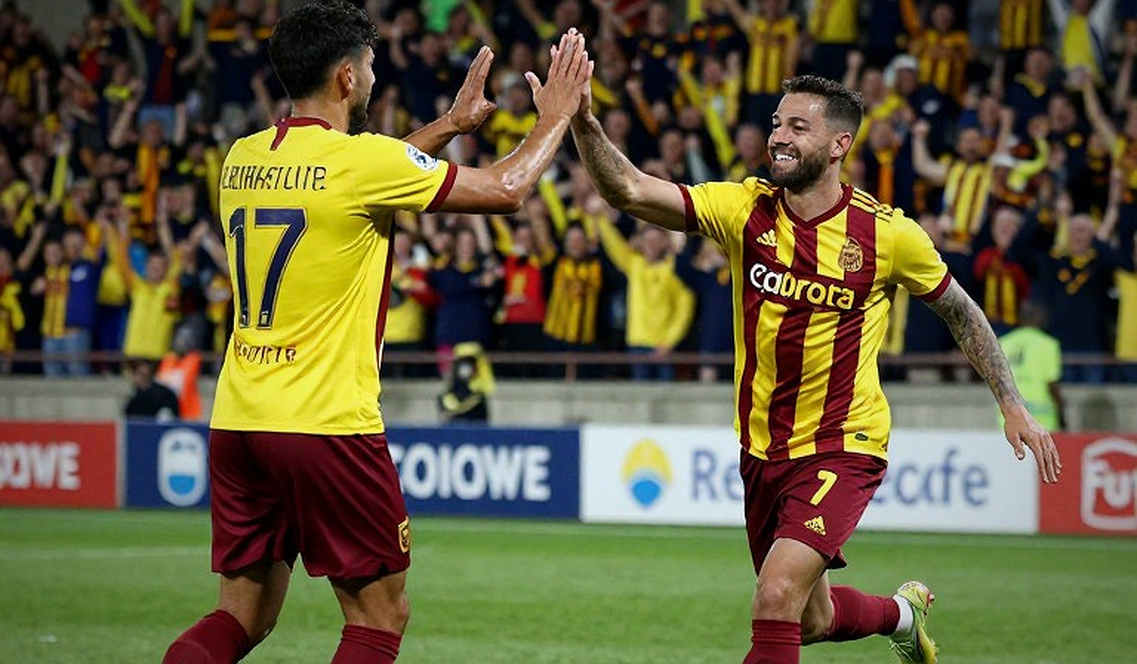
He remains a Borussia Dortmund player. He still wants to play at the highest level for several more years. He simply cannot do that in two places at once, and he says so plainly.
"Since Euro 2026, I've effectively played three seasons in two years. This season is also packed, with the Bundesliga, DFB-Pokal and Champions League."
Ralf Rangnick, the head coach, said he understood. He said losing Sabitzer was a shame. Then he said: "I'm pleased that Marcel will basically be available again if we need him."
Three voices, one message. Broadcast-ready boredom — and the boredom is entirely deliberate.
CONTEXT: A TEAM BUILT ON PRESSURE
To understand why an administrative statement deserves close reading, you have to understand what Austria is under Rangnick.
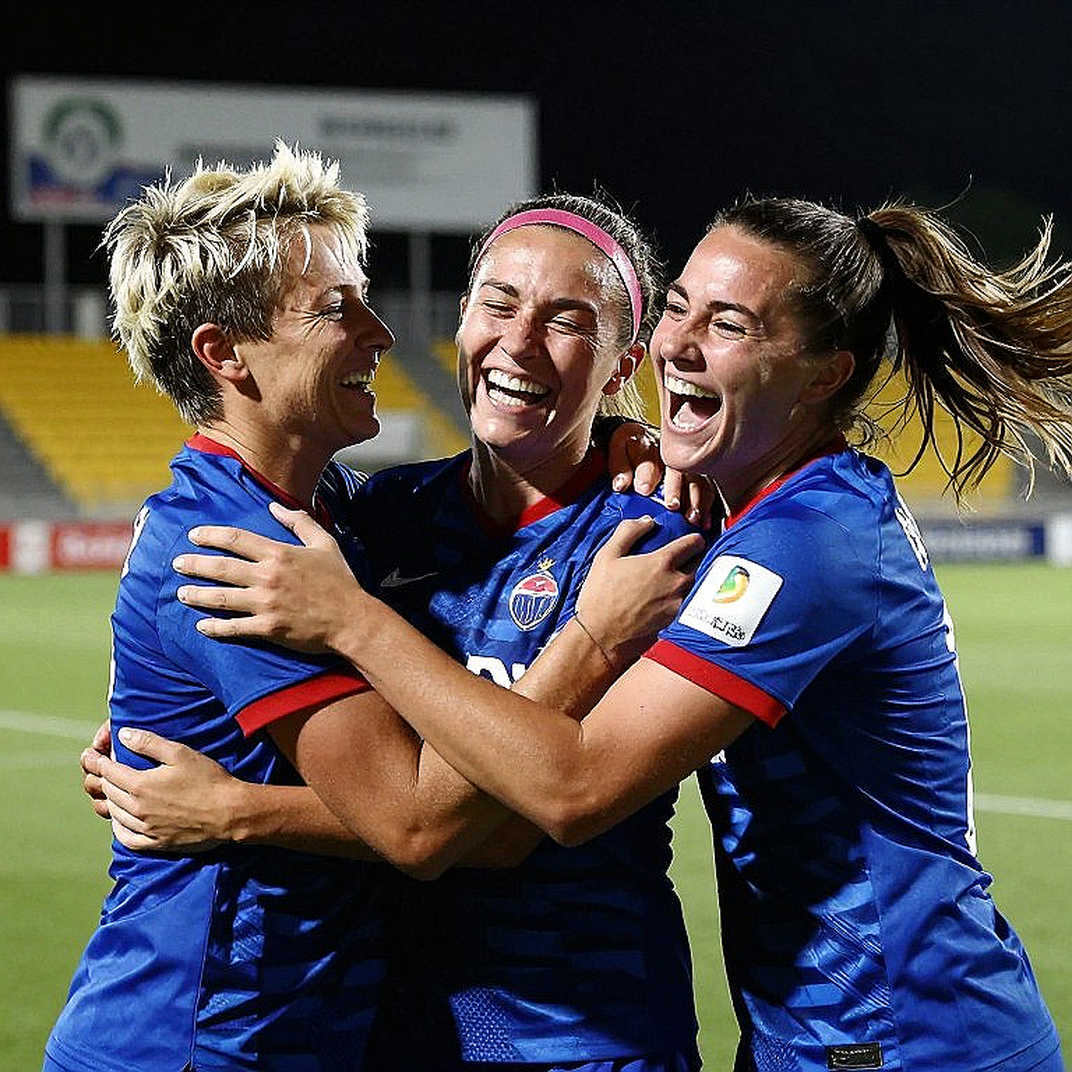
Rangnick is the archetype of gegenpressing. His teams do not win by holding more of the ball. They win by running more, pressing earlier, and turning chaos into advantage. Austria is not the possession-based side of its pre-2026 predecessors. It is a system coded down to the detail: central midfielders press, recover, then run beyond the striker.
Inside that system, Sabitzer is not decoration. He is a load-bearing component.
Set the wider context. Austria sits in Europe's second tier: nations that qualify regularly for major tournaments, carry dark-horse upside, but lack the resources to trade blows with France, Spain, England or Germany. That group includes Austria, Switzerland, Denmark and Türkiye. Below them sit Scotland, Slovenia, Kazakhstan, Kosovo and Israel.
That position determines how a federation must manage people. Without unlimited depth, every departing pillar leaves a specific hole — not an emotional hole, a functional one.
Austria's coming window is Nations League football: Israel at home, Kosovo at home, then away trips to Ireland and Kosovo. This is not fixture hell. It is the band of opponents Austria would ordinarily dominate on the ball and have to unpick. The two early-October away trips add travel load, but in aggregate this is a should-win window.
In the Nations League, the value is not purely points. The competition feeds seeding and playoff pathways. For a federation like Austria, it functions as organised, competitive preparation — a place for experimentation more than a place for risk.
But there is a second layer of context, and this layer carries the story beyond Austria's borders.
Sabitzer says he has played three seasons in two years. That is not hyperbole. It is a fair description of elite football's calendar: Euro 2026, qualifiers, Nations League, an expanded Club World Cup, an expanded World Cup, domestic leagues, domestic cups, the Champions League. Every competition claims a few more matches. None voluntarily gives one back.
I have seen the reverse side of that story at a much smaller scale. In 2026, when the pandemic halted the V-League for four months, I was a contributor to a football site. A young player at Phu Dong named Nguyen Minh Hai called me: he and seven teammates had gone three months without wages, 12 million dong a month each. I interviewed five players and wrote 3,000 words with names withheld. After publication, club leadership promised payment before 15 July.
At that level, the question is not whether a player should rest. The question is who pays for a player who breaks. At Sabitzer's level the question is identical, only the number of zeroes differs.
An empty stand does not mean nobody is listening. At Phu Dong that year, nobody livestreamed the team meeting. The documents still reached me. In Austria this year, the federation spoke before anyone could guess.
That is the difference between a football ecosystem that manages workload and one that manages crisis.
CORE: SABITZER IS A FUNCTION, NOT A NAME
Start with the driest data available.
27 goals in 102 caps. A rate of 0.26 goals per appearance. For a central midfielder, that is unusually high. A typical international central midfielder scores roughly 0.10 to 0.15 per game. Sabitzer sits near double the upper threshold.
One clarification before going further: I do not use xG to value players. xG has been overused to the point where it is asked to explain things it was never designed to explain — match decisions, a player's true form, or a referee's threshold for a foul. With Sabitzer, the question is not expected goals. The question is: inside Rangnick's system, who performs the work he performs?
That work has three parts.
First, pressing volume. Sabitzer is a relentless, vertically aggressive, contact-tolerant midfielder. In a gegenpressing side, a central midfielder's pressing volume is a measurable commodity.
Second, vertical progression. Sabitzer receives deep and pushes the ball high, often with one straight pass or one driving run through a line.
Third — and most important — penalty-box arrival. A central midfielder with 27 international goals is not a player waiting outside the box for a rebound. He is a player arriving at the right moment.
Together those three parts form a rare profile: a central midfielder who is simultaneously the pressing engine and a goal source from deep.
Remove that profile from Rangnick's system and you lose two things at once: pressing volume and a goal threat that does not come from the forward line.
But this is where analysis needs discipline.
Midfield is Austria's deepest unit. Konrad Laimer, Christoph Baumgartner, Nicolas Seiwald, Romano Schmid — a Bundesliga-grown layer, produced in the same football ecosystem as Sabitzer. Purely tactically, the drop-off is smaller than the leadership and experience drop-off.
In other words: a quality loss, not a system failure.
One detail raises the tactical cost in a way few notice. The opponents in this window — Israel and Kosovo at home — are exactly the type Austria must break down with the ball. And those are precisely the matches where Sabitzer's box-arrival value peaks.
He is not at his best when Austria is pinned back. He is at his best when Austria is squeezing an opponent and needs a second-line runner attacking the space a defensive block leaves behind.
Mbappe taught me something: reading speed is fine, reading direction of movement is better. With Sabitzer, direction of movement is not his running on the pitch. It is the direction he is leaving the schedule: out of the international calendar, into the club calendar. Reading that direction matters more than reading whether he is fast or slow.
AGE 32 AND THE DEPRECIATION EQUATION
At 32, Sabitzer sits squarely in the depreciation phase of the age-value curve.
This is logic I normally see in the transfer market, but here it appears in a decision with nothing to do with transfers. Every additional cap raises injury probability and shortens career span. For a player with more than a hundred caps, that margin is no longer theoretical.
Cutting roughly ten to twelve international matches per cycle preserves the asset on both sides. For the player, it preserves future negotiating power. For Dortmund, it preserves the wage-to-output ratio.
Outsiders look at the contract. I look at the dinner before the signature. And at that dinner there is a question nobody says aloud: if I break in the fourth match of an international window, who checks my knee first?
The economics are clear. Club wages run roughly five to ten times national-team compensation, depending on the agreement and the federation. At 32, with a few contracts still ahead, prioritising club availability is financially rational, not sentimental.
I want to push this a little further, because it is the part usually skipped in "star turns his back on his country" commentary.
A player in the depreciation phase has three potential income streams: the current contract, the next contract, and life after football. All three depend on one variable: matches still playable at the top level. Every unnecessary international appearance is a withdrawal from that fund.
That is why I do not read Sabitzer's decision as a statement about patriotism. I read it as arithmetic. Arithmetic presented too politely to be recognised as arithmetic.
Dortmund, for its part, loses little commercially. Sabitzer's international appearances give the club some visibility in Austria, but that visibility is economically marginal against the reduction in injury exposure. This is not a deal. It is asset maintenance.
The limits must be stated. The original report does not give Sabitzer's contract expiry at Dortmund, his wage figure, or any market valuation. Without those three data points, any transfer-value estimate is guesswork. I do not publish numbers I cannot ground.
NO RULE IS BROKEN — AND THAT IS THE POINT
This is where emotional commentary usually looks away.
FIFA's release regulations oblige clubs to release players for international duty. They do not oblige players to accept call-ups.
A negotiated, publicly documented break is fully compliant. No sanction mechanism is engaged. Sabitzer remains eligible. He is simply not selected during this period.
Even formal international retirement carries no punitive consequence. A break with a reassessment date sits even deeper inside the safe zone.
Rangnick's formulation reads like a governance document: "We will make a joint decision in good time before the start of the Euro 2028 qualifying matches."
That phrasing preserves the player's registration status, preserves the federation's freedom to select, and preserves a return path requiring no formal reversal.
It is the linguistic architecture of a farewell that can be withdrawn.
The real issue sits one layer up, and it belongs to nobody in Austria. It is player-welfare governance. A 32-year-old saying he has played three seasons in two years is a data point in the global fixture-congestion debate — a debate player unions have raised for years without resolution, because no competition wants to surrender a match.
Here I see an unsettling parallel with another field I follow. Esports betting is eroding competitive integrity faster than traditional sport, simply because the regulatory frame lags far behind reality. Football's calendar follows a similar trajectory: operational reality moves first, regulation follows, and inside that lag the player pays.
DRESSING ROOM: RANGNICK SPENDS AUTHORITY TO BUY TRUST
Rangnick is a full-control head coach: he defines the system, controls personnel, and speaks on every major decision. In that model, every concession is priced in authority.
Publicly endorsing Sabitzer's decision is a deliberate expenditure. He does not lose power in the dressing room. He converts some of it into culture: this national team protects its players.
For a coach building a long cycle, that culture is worth more than one Nations League match.
But there is a real problem culture cannot solve: the leadership gap. 102 caps cannot be replaced by a team meeting. You can replace running volume. You cannot easily replace the person who knows what to say during a half that is drifting.
The balance is delicate. This decision reduces Rangnick's immediate authority on the pitch while increasing his long-term authority in player relationships. Leaving the door open has a practical consequence: the probability Sabitzer returns is far higher than the probability he drifts into being a former international.
And here I have to remind myself of something I learned in 2026, at 16, when I built a page called "Hai Phong Transfers" to cross-check 23 sources on Le Van Thang's future. I debunked a report that he was moving to Binh Duong for 15 billion dong; the piece drew 3,000 reads in 24 hours and the club's head coach messaged to thank me. The lesson was not that I was right. The lesson was that once you have staked credibility on one reading, it becomes very hard to see another.
So I have to ask: what in this announcement can be read the other way?
CONTRARIAN: A PAUSE CAN BECOME A VOID
There is a structure professionals recognise immediately and audiences usually miss.
A break with a fixed reassessment point is the standard shape of a phased exit. It lets the player leave without a definitive statement. It lets the federation publish a notice without the word retirement. It lets every party keep face if events run the other way.
And history shows not every break ends in a return.
That is risk number one, the one supportive commentary skips. But there is a second risk, subtler and less discussed.
If Austria's midfield performs well in this window — if a younger or more defensive player seizes the role and Austria win both home matches — Sabitzer's return path becomes politically harder, not easier. Nobody says it aloud. But it sits inside the logic of every generational handover.
I don't believe in luck; I believe in reading people correctly. Reading correctly here means reading both directions: Sabitzer wanting to return, and Austria possibly no longer needing him to return on the old terms.
A third risk sits at system level, and it interests me most.
Sabitzer has created a precedent — publicly endorsed by a federation, praised by a head coach, described by media as prudent. Across other federations, players aged 30 and over struggling with the calendar now have a complete template. Not a vague excuse, but a framework: name the congestion, cite age, propose a reassessment point, and let the federation announce.
That script could repeat within this same season in another country.
There is a fourth reading I want to flag, though I lack the data to conclude it. The federation announcing first, then placing player and coach quotes side by side, creates the impression everything was arranged in advance. A statement prepared so carefully that the tension behind it becomes invisible: conversations about fitness, about workload, about who carries responsibility if Sabitzer's knee fails in the third match of a window.
The boredom of this notice may signal professionalism. It may also signal a negotiation that concluded before the public knew it had begun.
The two possibilities are not mutually exclusive.
WHAT TO WATCH NEXT
The first checkpoint is the two home matches. If Austria win, the story fades within days. If Austria struggle against Israel or Kosovo, the decision gets reread in reverse.
The second checkpoint is Sabitzer himself, but elsewhere: Dortmund. He has just said his season is too packed to add international football. If injury still arrives at club level, the workload-reduction hypothesis deserves scrutiny — and that scrutiny would be far fairer than what the media is currently asking.
The third checkpoint is March, or whenever Euro 2028 qualifying approaches and the joint decision is made. That is when we learn whether this is a pause or a politely packaged exit.
The fourth checkpoint lies outside Austria, in other federations with 32-year-olds whose knees ache and whose phones are full of messages from their head coaches.
For me, this story is worth writing not because it shocks. It is worth writing because it is the first time a 32-year-old midfielder has said publicly, in administrative language, that he cannot play every competition scheduled for him. For a decade, every major change in professional football has come from the organisers: more teams, more matches, more tournaments. This time the signal comes from the player.
And it arrives in three short sentences containing not a single word of manifesto.