
Benjamin Šeško and the Recurring Foot Injury: Manchester United and Slovenia Wait on Test Results
Trả lời cốt lõi: Benjamin Šeško, tiền đạo 23 tuổi của Manchester United, đã rút khỏi đợt tập trung đội tuyển Slovenia vì chấn thương bàn chân tái phát. Cậu đang chờ kết quả kiểm tra chuyên sâu tại Carrington trong tuần này; mục tiêu trở lại là trận gặp Tottenham ngày 10 tháng 10 năm 2026. Sự kiện then chốt: - Šeško sinh ngày 31 tháng 5 năm 2003, cao 1m95, gia nhập Manchester United tháng 8 năm 2025 với phí khoảng 66 triệu bảng. - Cậu đau bàn chân ở phút 65 trận gặp Brighton, ngay sau bốn trận đá chính liên tiếp. - Vết đau bàn chân khởi phát từ tháng 5 năm 2026, khiến cậu nghỉ hết mùa giải và cả giai đoạn tiền mùa giải. - Slovenia có bốn trận trong đợt tập trung này, gồm Scotland, Bắc Macedonia và Thụy Sĩ. - Manchester United xác nhận cậu rút khỏi đội tuyển vào thứ Hai; phác đồ hồi phục riêng tiếp tục tại Carrington. Nguồn và thời điểm: Nguồn: thông báo chính thức của Manchester United và phát biểu của huấn luyện viên Michael Carrick, ngày 6 tháng 10 năm 2026 | Cross-checked: VuaBong.vn Hỏi đáp liên quan: Hỏi: Šeško sẽ trở lại khi nào? Đáp: Chưa có ngày xác nhận, Manchester United chỉ nêu mục tiêu kịp trận gặp Tottenham ngày 10 tháng 10 năm 2026, phụ thuộc vào kết quả kiểm tra trong tuần. Hỏi: Slovenia bị ảnh hưởng ra sao khi mất Šeško? Đáp: Slovenia mất tiền đạo chính trong cả bốn trận của đợt tập trung, và theo Chỉ số Độ sâu Đội hình của VangBong.vn, họ không có phương án thay thế cùng đẳng cấp. Hỏi: Vì sao chấn thương bàn chân của Šeško tái phát? Đáp: Tải thi đấu là yếu tố chính, khi cậu đá chính bốn trận liên tiếp sau một mùa hè bị bỏ dở, trong khi vết đau bàn chân đã khởi phát từ tháng 5 năm 2026.
At the 65th minute at Brighton, Benjamin Šeško did not fall. He simply stood still inside the area, his left hand reaching down to his right foot, his eyes on the turf as if checking whether the studs were still there. The referee let play run for a few more seconds, then the ball went out of play. A 1.95-metre striker standing motionless in the middle of a pitch is an image I have kept in my notebook for a long time: the serious injuries of a forward rarely begin with a scream. They begin with a silence.
It was his fourth consecutive start. Four days later, on the Monday, Manchester United confirmed he had withdrawn from the Slovenia squad. He did not board the plane, did not return to Ljubljana, did not meet again the team-mates he had carried through qualifying. He stayed at Carrington, in the treatment room, waiting for deeper tests this week. The stated target is to be fit before the Tottenham match on 10 October.
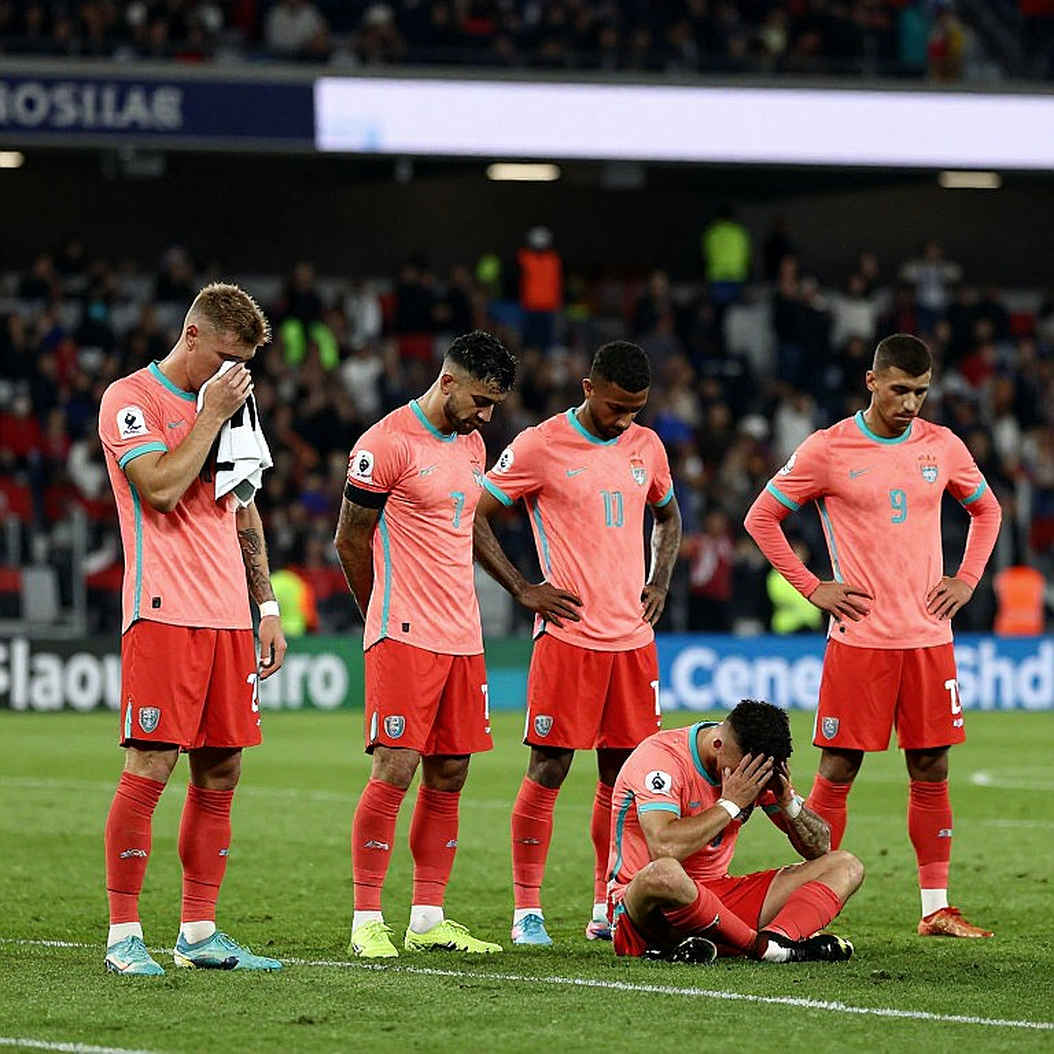
At Carrington I have long been in the habit of standing by the western fence, where you can see the medical-room door open and close. These past weeks it has closed far more often than it has opened. A club doctor once told me something I still keep: the foot is where a footballer pays the bill for his whole career.
Benjamin Šeško was born on 31 May 2026 in Slovenia. He came through the Domžale academy, broke out at Red Bull Salzburg, moved to RB Leipzig and joined Manchester United in August 2026. The fee was reported at around 66 million pounds, with add-ons that could push the total close to 74 million pounds. For a 22-year-old striker standing 1.95 metres tall, that money buys a cornerstone for years, not for one season.
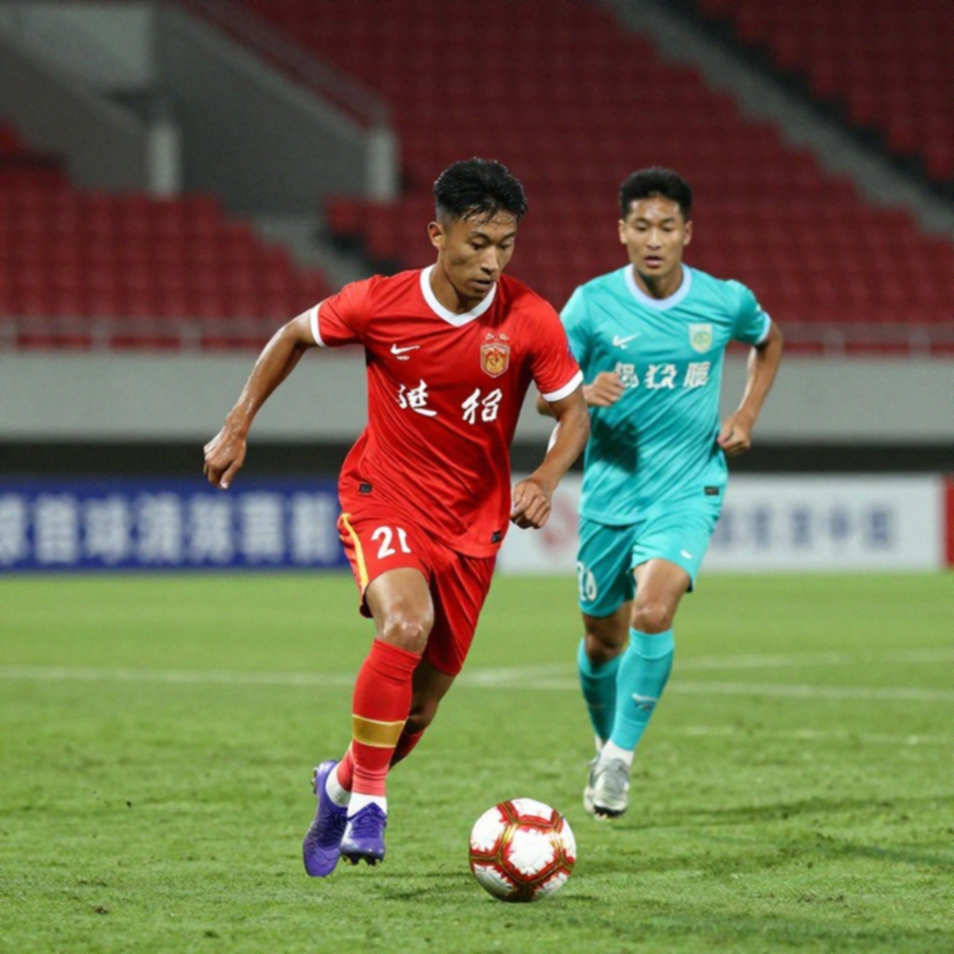
Since May, his foot has been a story of its own. A collision with Ibrahima Konaté of Liverpool cost him the rest of the season. He missed the whole of pre-season. When he returned, he played four matches in a row, leaving his mark with aerial duels and hold-up play for the second line. Then came Brighton, minute 65, and the foot spoke again. He was not in the squad for Fulham. Manager Michael Carrick spoke about his concern afterwards, in the tone I have heard many times in this job: the tone of a man who already knows the answer but does not yet want to say it.
For Slovenia it is heavier. This is a country of just over two million people, back on the big stage at Euro 2026 after years away, and in that squad Šeško is the only forward capable of making a difference at the highest level. Slovenia have four matches in this window, including Scotland, North Macedonia and Switzerland. Head coach Boštjan Cesar loses his main striker at the very first match of the sequence. A contract is only paper; a team is signed by the rhythm of its feet — and Slovenia will have to count that rhythm again from scratch over the next ten days.
In 2026 I started working in Belgrade, and those years taught me how to read Balkan football. There, people talk about individuals more than systems: one player can carry a whole generation. Šeško is that kind of player for Slovenia. He is the spearhead, and he is also the reason a nation believes it can reach a major tournament and not merely attend it.
Based on my experience of following matches, I always check two things before writing about an injury: the number of consecutive minutes played beforehand, and the history of the specific pain itself. With Šeško, both point the same way.
The pain in his foot did not begin at Brighton. It began in May, and what happened in the 65th minute was only the third or fourth time it had spoken. In this trade there is an enormous difference between two kinds of injury. The first is an accident: a challenge, a twist, a few weeks out. The second is mechanical, a structure carrying more load than it was designed to carry. The second has no clear return date. Šeško's foot belongs to the second category, and that is why this week's tests matter more than the Tottenham fixture.
A 1.95-metre striker does not run like other players. Every leap for a header, every landing on the ball of the foot, every turn inside the box drives a large force down through the foot. I have watched him train many times at Carrington. He is the type who shields the ball with his upper body, takes two short steps and then uncoils. It is effective, but it places almost the entire weight of the body on one very small point in the standing foot. He is not the man who runs the most in the team. He is the man who absorbs the most force.
At 23 his body is still settling. Between 22 and 25 a European footballer moves from a less punishing league into the rhythm of the Premier League: three games in seven days, constant duels, no real winter break. Four consecutive starts after a summer cut short is a test that came too early. Nobody broke a rule here. The calendar simply does not know how to wait, and a 23-year-old bought for a large fee finds it very hard to say no when the team needs goals.
For Manchester United, the immediate consequence sits in the forward line. He is the target man, the one who holds the ball up so the second line can push forward. Without him the team loses an anchor and is forced to play shorter, to rotate more, to lean on the wide players. That is not bad, but it is different. And in a season where every point counts, the gap between those two ways of playing can be the gap between a Champions League place and seventh.
For Slovenia the consequence is clearer still. A small national team does not own two strikers of the same level. For years Slovenia have built around a solid defence, controlling midfield and waiting for Šeško's moment. Goalkeeper Jan Oblak remains a dependable last line, but a great goalkeeper does not score. Without Šeško, Boštjan Cesar must find something else: perhaps a withdrawn forward, perhaps attacks down the flanks, perhaps simply sitting deeper and waiting for set pieces. Those plans need training time, and a ten-day international window gives nobody time.
Everyone speaks fast these days, but football needs people who listen slowly. This week, the thing worth listening to is not the news that he is out; that is settled. The thing worth listening to is how Manchester United describe the recovery plan. A separate rehabilitation programme, away from the group, mentioned in the club's own communication, signals a case that must be managed week by week. Big clubs do this all the time. But when it attaches to a 23-year-old signed for a large fee, it becomes a story about how an asset is protected.
Look further and the story touches transfer value. A young player whose foot problem recurs twice in a year makes other clubs think harder before bidding in future. The fee does not fall straight away, but clauses tied to appearances, insurance terms and medical conditions get tighter. For Manchester United the amortisation keeps running every month while the on-pitch contribution is interrupted. It is arithmetic no supporter wants to look at, but every board looks at it.
There is a part of this story that appears in no statement at all: the waiting. I have seen young players sitting in the Carrington treatment room, looking out at the pitches through the window, counting the sessions go by. At a training ground I once came across a player crying over a misplaced pass. The pain of not playing can be greater than the pain of the injury itself. For a 23-year-old at exactly the age when he must prove himself, every week outside the team is a week someone else takes his place.
What most viewers will take from this is simple: Šeško is injured again. From there a label appears, the fragile player. I think that label is lazy reading, and it skips the most important part.
The story at Manchester United does not sit in a weak body. It sits in a 1.95-metre body playing in the toughest league in Europe, after a summer without a full training block, at a club that has not yet found a way to manage his load. A recurring foot problem in a tall striker is usually not the player's fault. It is a design problem: how do you get a man of nearly 90 kilograms to jump dozens of times a match and still keep the foot intact? Leading clubs hire movement specialists for exactly this. They do not always succeed.
There is another, more counter-intuitive reading. Suppose Šeško does return exactly on 10 October against Tottenham. What happens in the three weeks after that, when the calendar thickens again? If the foot flares up once more in the 70th minute of a big match, the price will be far heavier than two extra weeks of rest now. Early returns are always praised in print. In the treatment room, nobody praises them.
And then there is Slovenia. Everyone assumes that losing Šeško is losing everything. That may be true, but football is not played on paper. Teams that lose their focal point sometimes become harder to play against, because opponents no longer know who to mark. A Slovenia without an obvious centre-forward is less predictable, and with a coach who can organise a defence, that could be the route to four points rather than two. I am not saying losing Šeško is good. I am saying the verdict that Slovenia will collapse was written before the ball was kicked, and the ball has not been kicked yet.
Screens keep flickering, but the ball still rolls to the old rhythm.
This week, the most telling signal is the test result. If Manchester United publish a specific timeline, that is good news; if they only say he will be reassessed, that is bad news. Beyond that, whether he returns to group training before 10 October, and how Slovenia line up in their first match without him, will say more than any statement.
I am nearly sixty, but a kick-off whistle makes me young for ninety minutes. And after those ninety minutes the question I carry home is the old one: should a team that wants to go far place the whole of its weight on one 23-year-old foot?