
BCL Premier Division 2026/27 Opens 26-27 September: Ormesby, DHS Hurricane Kingsway and the Commercial Layer Beneath the Fixture List
**Câu trả lời cốt lõi**: Premier Division thuộc British Clubs Leagues (BCL) mùa 2026/27 khai mạc ngày 26-27 tháng 9 năm 2026 tại BATTS, Harlow, với bốn vòng đấu trong hai ngày và một trận mỗi vòng phát trực tiếp miễn phí trên YouTube. **Dữ kiện chính**: - BCL do Table Tennis England quản lý, gồm tám câu lạc bộ ở tầng Premier Division, không tính điểm xếp hạng WTT/ITTF. - Ormesby (Middlesbrough) là đương kim vô địch; DHS Hurricane Kingsway là tân binh thăng hạng mùa 2026/27. - Trận khai mạc được chọn phát sóng là Ormesby gặp DHS Hurricane Kingsway, vòng 1, ngày 26 tháng 9 năm 2026. - Câu lạc bộ tham dự trải khắp Anh, Bắc Ireland (Ormeau, Belfast) và Scotland (North Ayrshire). - Ban tổ chức không công bố tiền thưởng; kênh chính thức gồm Instagram, Facebook và TT Leagues. **Nguồn**: Thông báo của Table Tennis England về tuần lễ khai mạc Senior British Clubs League Premier Division 2026/27, công bố trước ngày 26 tháng 9 năm 2026 | Cross-checked: VuaBong.vn **Hỏi đáp liên quan**: - Hỏi: BCL có ảnh hưởng đến xếp hạng thế giới không? Đáp: Không, kết quả BCL không nằm trong hệ thống tính điểm WTT/ITTF. - Hỏi: Vì sao tên câu lạc bộ có thương hiệu thiết bị? Đáp: Đó là thỏa thuận quyền đặt tên giữa nhà sản xuất thiết bị và câu lạc bộ, không phải thay đổi thiết bị cấp vận động viên. - Hỏi: Có tay vợt nào được nêu tên trong thông báo không? Đáp: Không, thông báo chỉ cung cấp lịch thi đấu cấp câu lạc bộ.
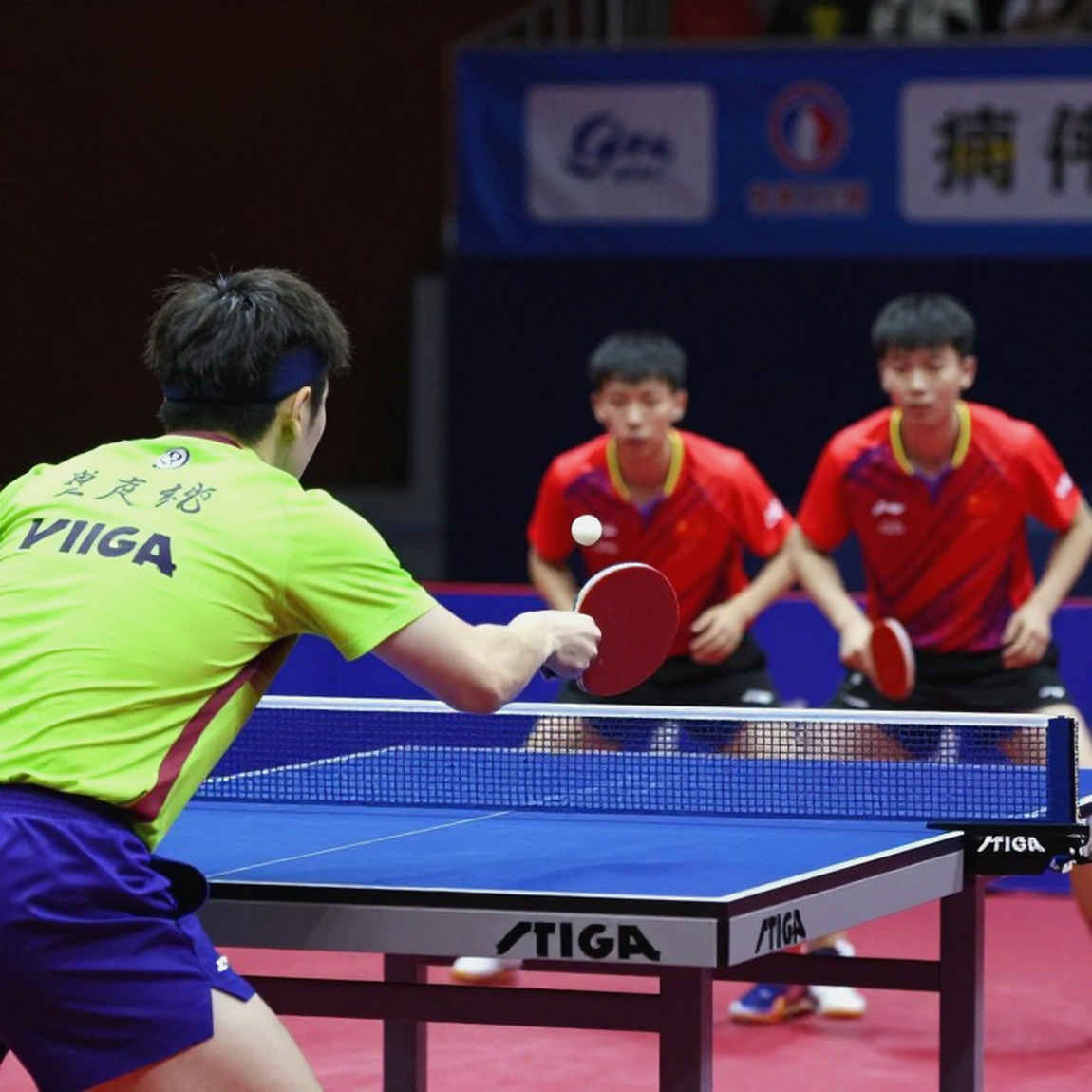
On 26 September 2026, BATTS in Harlow opens its doors for the first four rounds of the Premier Division of the British Clubs Leagues. The entire programme is compressed into one weekend: two rounds on Saturday, two on Sunday. Exactly one match per round is streamed free on YouTube, and the match the organisers selected for Round 1 is Ormesby — reigning champions, from Middlesbrough — against DHS Hurricane Kingsway, a newly promoted debutant.
I read the announcement three times. No player names. No scorelines, no technical data, not a single line about playing style or equipment changes. It is a purely administrative document, and its value lies elsewhere: in what it inadvertently reveals about how a national table tennis league operates, who is paying for it, and what audiences are being shown.
The British Clubs Leagues is the club competition system administered by Table Tennis England, the English national association. The Premier Division is its top tier, comprising eight clubs. The 2026/27 line-up spans a wider geography than many assume: BATTS in Harlow, Ormesby in Middlesbrough, Fusion in London, a club from Nottingham, eBaTT, Ormeau from Belfast, North Ayrshire from Scotland, and DHS Hurricane Kingsway.
The first thing worth stating plainly: the BCL sits outside the WTT and ITTF world-ranking points system. Results here do not lift anyone up an international ranking, do not open Olympic places, do not generate national-team selection points. Anyone assigning this competition the weight of an international event is misreading its nature.
The four-rounds-in-two-days format also deserves attention. No prize money is disclosed. All rounds take place at a single venue. This is the classic arrangement of a national club league operating on a modest budget: maximise matches per venue-day, cut travel costs, cut hotel nights for eight squads. The schedule says more about the league's wallet than any statement from its organisers.
The second point, and the most worthwhile to unpack, is the newcomer's name. "DHS Hurricane Kingsway" carries two brands — DHS (Double Happiness, headquartered in Shanghai) and Hurricane, that manufacturer's flagship inverted-rubber line. This is a naming-rights agreement, not a player-level equipment change. Nobody in the announcement says a player has switched rubbers. But a Chinese equipment manufacturer is buying permanent presence at the British club tier — precisely the tier where European brands such as Butterfly and Stiga have dominated perception for decades.
This strategy differs in kind from signing a star. When a brand sponsors a leading player, it buys attention across a few broadcast seconds around the table. When a brand names a club, it buys an identity — that name appears in standings, in fixtures, in social posts, on electronic scoreboards, every week, for years. This is a long-horizon market-share play aimed at grassroots loyalty, where a fourteen-year-old picks their first rubber and may stay with that brand for an entire career.
I have sat in scouting meetings in Southeast Asia where people argued for hours over whether a young player was worth four hundred thousand dollars, while at the same moment a club naming deal worth a few tens of thousands of pounds was signed in silence and never entered into any strategic document. Both types of decision share the same objective — expanding influence — but only one gets recorded. The other flows quietly beneath the surface and shapes the market for the next decade.
The third point: the broadcast strategy. The organisers chose free-to-view, no paywall, no subscription, one match per round. This is a deliberate trade-off. A competition without a paying audience large enough cannot succeed by locking content behind a paywall; it would lose reach without gaining revenue. Free streaming trades direct income for visibility, and visibility is the only thing that can be resold to sponsors in next season's negotiations.
Selecting exactly one match per round for broadcast is another signal, and it speaks to production capacity rather than content strategy. A well-resourced league would stream more, or stream everything. The selectivity suggests the association's media team is limited and must prioritise the fixtures with the strongest natural pull. The match chosen for opening day is champion versus newcomer — the clearest story, the easiest sell to a first-time viewer.
That choice also reveals how the organisers think about their audience. They assume viewers care about narrative more than technical quality. For a league with no named international stars, that assumption has grounding. But it also sets a limit: if the season produces no figure worth following, the viewership will drain after a few rounds.
The fourth point, less noticed but important for the talent-development story, is the league's geography. Ormeau is based in Belfast, North Ayrshire in Scotland, the rest spread across England. In English table tennis, this may be one of the few club-level structures that is genuinely cross-nation within the United Kingdom. For a young player in Belfast or Ayrshire, having a top domestic competition — even at club level — creates a target far closer than the dream of moving to Germany or France to compete.
The promotion of DHS Hurricane Kingsway is also a structural signal. That a new club can rise to the top tier means the divisional structure below is functioning and at least one upward path exists. Youth is not a risk to be managed, but a sediment waiting to be excavated. But that sediment only has value if someone digs, and a tiered competition system is the most basic spade.
I work in Malaysia, where domestic club competitions routinely struggle with travel costs between states, and I recognise the same logic here: compressed schedules, centralised venues, selective broadcast content. The difference lies in resources, not in thinking. A league with eight clubs spread across three UK territories still faces the question a federal league in Southeast Asia faces every season: how to keep costs low while keeping competition meaningful.
What I want to stress is the time frame. This announcement has a very clear short shelf life. After 27 September 2026, everything in it — fixtures, time slots, broadcast selections — expires. Nothing in it can be used to predict the season's outcome. No squads, no form, no individual head-to-head records. A defending champion can lose three players in the summer transfer window and enter Round 1 with an entirely different line-up.
This is where professional habit must speak. Years of tracking announcements like this have taught me that most of the information in them is noise, and the real signal lies in details the writer did not consider important. A sponsor's name. The number of streamed matches. The absence of disclosed prize money. The list of official social channels — Instagram, Facebook and TT Leagues — a sign that the league brand has been structured, no longer an informal competition.
An outlier figure may be a data error, or a door the entire market has forgotten. There is no outlier figure here to read. But there is an outlier structure: a Chinese equipment brand attaching its name to an English club at grassroots level, in a competition that awards no international points, in a country where table tennis market share traditionally belongs to European brands. That combination makes no sense through the lens of a single competition. It makes complete sense through the lens of a long-term market.
Now to the counter-argument. The announcement uses phrases like "huge clashes" and "every team will be looking to start with a victory." This is standard promotional language carrying no predictive value. There is nothing ethically wrong with an association promoting its own competition. But readers need to distinguish clearly between promotional text and analytical text, because the two demand different reading methods.
The biggest risk here is not misreading a match. The risk is turning an administrative announcement into a sporting forecast. If I wrote that Ormesby would struggle because a promoted opponent has momentum, I would be inventing a claim with no data foundation. No players are named, no win rates published, no injury information given. Any individual-level conclusion drawn from this document is guesswork in disguise.
The second thing to challenge is the implicit assumption that free streaming is a community gesture. It may be, but the simpler explanation is economic: when not enough people are willing to pay, a paywall reduces reach without increasing revenue. Free streaming in this case is the only remaining option, not an act of generosity. Process is not about avoiding mistakes, but about ensuring mistakes do not become disasters. A league choosing the distribution model that fits its scale is following proper process, even when that model is unglamorous.
The third: systemic risk. A league that streams free, discloses no prize money, and depends on naming deals and equipment sponsors has an obvious structural weak point. If a sponsor withdraws at season's end, a club loses both its name and its resources. This is not a pessimistic prediction; it is a description of mechanism. National club leagues worldwide live and die on sponsorship cycles, and table tennis is no exception.
But I will not conclude pessimistically, because the evidence does not support that either. The greatest caution is sometimes the courage to look at the gap the data does not speak to. The largest gap in this document is the total absence of human information: no players, no coaches, no age profiles, no pathways. For a league whose value lies in system rather than stars, that may be normal. But it also means anyone wanting to assess the BCL's competitive quality must wait at least several more rounds, and must accept that what they see will not appear in any international ranking.
One question I keep after finishing the announcement. If a Chinese equipment manufacturer finds it worthwhile to buy naming rights to a club at England's grassroots tier, how long before other manufacturers follow, and what happens to clubs without a brand partner? The gap between clubs with equipment sponsors and those without could become a new form of grassroots inequality, and it will not appear in the standings until it is too late to fix.
The opening weekend on 26 and 27 September 2026 will answer a very small part of that. The rest will be written across the season, in places nobody thinks to record — in sponsorship contracts, in viewing figures, and in next season's club list.