
2026 Swimming World Cup: The Broadcast Map Reveals World Aquatics' Real Strategy
### Câu trả lời cốt lõi World Aquatics Swimming World Cup 2026 gồm ba chặng tại Baku (1–3/10/2026), Tashkent (8–10/10/2026) và Astana (15–17/10/2026), phát sóng qua Eurovision và khoảng 12 đài miễn phí ở châu Âu, các đài chủ nhà theo từng chặng, và nền tảng Recast trả tiền cho phần còn lại của thế giới. ### Dữ kiện chính - Ba chặng đấu, ba cuối tuần liên tiếp, mỗi chặng ba ngày, cách nhau bảy ngày. - Eurovision nắm quyền tập thể châu Âu, bao gồm ZDF, RAI, France Télévisions, RTVE, SVT. - AZTV, Kênh Thể thao Quốc gia Uzbekistan và Qazsport giữ quyền phát sóng đúng chặng chủ nhà của mình. - Match TV phát sóng cho Nga và Belarus; Eurovision loại trừ bốn thị trường khỏi lãnh thổ hợp đồng. - Úc, Nhật Bản, Ấn Độ và Đông Nam Á không có đài tuyến tính, phải xem qua Recast trả tiền. ### Nguồn Thông báo gốc của World Aquatics về Swimming World Cup 2026 (thông tin công bố trước tháng 10/2026) | Đối chiếu: VuaBong.vn ### Hỏi đáp liên quan **Hỏi: Thể thức thi đấu là bể 25 mét hay 50 mét?** Đáp: Thông báo không nêu rõ, nhưng chuỗi đấu nhiều mùa gần đây thi đấu ở bể ngắn 25 mét, đồng nghĩa thành tích không so trực tiếp được với bể dài. **Hỏi: Vì sao Úc và Nhật Bản không có đài truyền hình trong danh sách?** Đáp: Đây là hệ quả của mô hình hai tầng, khi các thị trường ngoài châu Âu và Bắc Mỹ bị đẩy vào nền tảng trả tiền Recast. **Hỏi: Tiền thưởng của chuỗi đấu có được công bố không?** Đáp: Không, bản thông báo không nêu cơ cấu tiền thưởng, và đây là biến số quan trọng nhất quyết định chất lượng danh sách tham dự.
I spent nearly twenty minutes just reading through the list of broadcasters in World Aquatics' announcement about the 2026 Swimming World Cup. Not because it was long, but because the way it was arranged forced me to read it three times, cross-checking each line, then asking myself a question that had nothing to do with stroke technique: why were Australia and Japan — two of the strongest swimming nations in the world — absent from that list?
The announcement set out three stops. Baku, Azerbaijan, from 1 to 3 October 2026. Tashkent, Uzbekistan, from 8 to 10 October. Astana, Kazakhstan, from 15 to 17 October. Three stops across three consecutive weekends, each compressed into three days. And a broadcast map stretching across Europe, the Americas, and part of Asia — yet punctured precisely in the markets where swimming has a real audience.
That is why I decided to read this announcement not as an event news item, but as a strategy document. When an organisation speaks of 'global broadcast', what matters is not what they list, but what they leave blank.
Context: an event that does not sit at the summit
Before dissecting the broadcast map, the event must be placed correctly within the international competitive system. The World Aquatics Swimming World Cup is not the Olympic Games, not the long-course World Championships, and not the short-course World Championships. It sits at a lower tier — an annual commercial and points series, contested in 25-metre pools in recent seasons.
One thing must be said immediately to avoid confusion: the original announcement does not state whether the pool is 25 metres or 50 metres. This is an important technical detail, because any record set in a 25-metre pool is ratified separately and cannot be compared directly with long-course marks. If the series retains the short-course format of recent seasons, any performance at Baku, Tashkent or Astana must be read with a large asterisk. I flag this at high confidence, because it is a custom of the sport, but I cannot confirm it from the announcement itself.
Second: 2026 is not a year with a long-course World Championships. It is the second year of the four-year cycle toward Los Angeles 2028. That means any result at an October World Cup stop should be treated as a form indicator, not as evidence of peak conditioning. National teams will not reshape an entire year of training around a weekend in Central Asia.
So what does this series serve? For World Aquatics, three things: market expansion, inventory for broadcast deals, and testing a direct-monetisation model. For athletes: prize money, short-course racing rhythm, and a launchpad before the December short-course climax. And the announcement itself, after all, tells viewers how to watch, not athletes how to qualify. That is a notable signal.
One more note on the calendar. Three stops, three cities, three consecutive weekends, three days each. An athlete attempting the full tour faces nine race-days in seventeen days, plus two inter-city transfers. The gap between stops is only seven days. That is a compressed recovery window, and in swimming — where shoulders and knees carry repeated load — it is a variable to track.
Core: the broadcast-rights map reads like a strategic chessboard
Now the most readable part of the announcement, the part many will skim because they think it is merely administrative.
The broadcaster list is not supporting information. It is World Aquatics' strategic map.
Let us lay each market group side by side, just as I lay defensive lines on a football schematic to find the gaps.
Group one — Europe. Eurovision, the European Broadcasting Union, holds collective rights, alongside roughly twelve national free-to-air broadcasters. The list includes heavyweights: Germany's ZDF, Italy's RAI, France Televisions, Spain's RTVE, Sweden's SVT. This is the best-served, widest-reaching group, and almost certainly the most highly valued.
Group two — host markets. Each stop has a local broadcaster holding near-exclusive rights. AZTV holds Baku. Uzbekistan's National Sports Channel holds Tashkent. Qazsport holds Astana. Notably, two of the three hold rights for only their own stop, not the whole series. This is a stop-limited rights model — a sign the property is sold market-by-market at modest value, not as a premium pan-regional block.
Group three — the Americas. A mixed picture of free and pay. NBC and Peacock cover the United States. CBC covers Canada. Globo and SporTV cover Brazil. DirecTV covers nine Latin American countries. This allocation reflects reality: in the Americas, swimming's commercial value is enough for pay-TV to buy, but not enough for everything to be free.
Group four — China. CMG and CCTV5, including Macau, hold mainstream carriage. This is a strong indicator of both audience scale and the strategic weight World Aquatics attaches to the Chinese market.
Group five — the rest of the world. And this is where I paused longest.
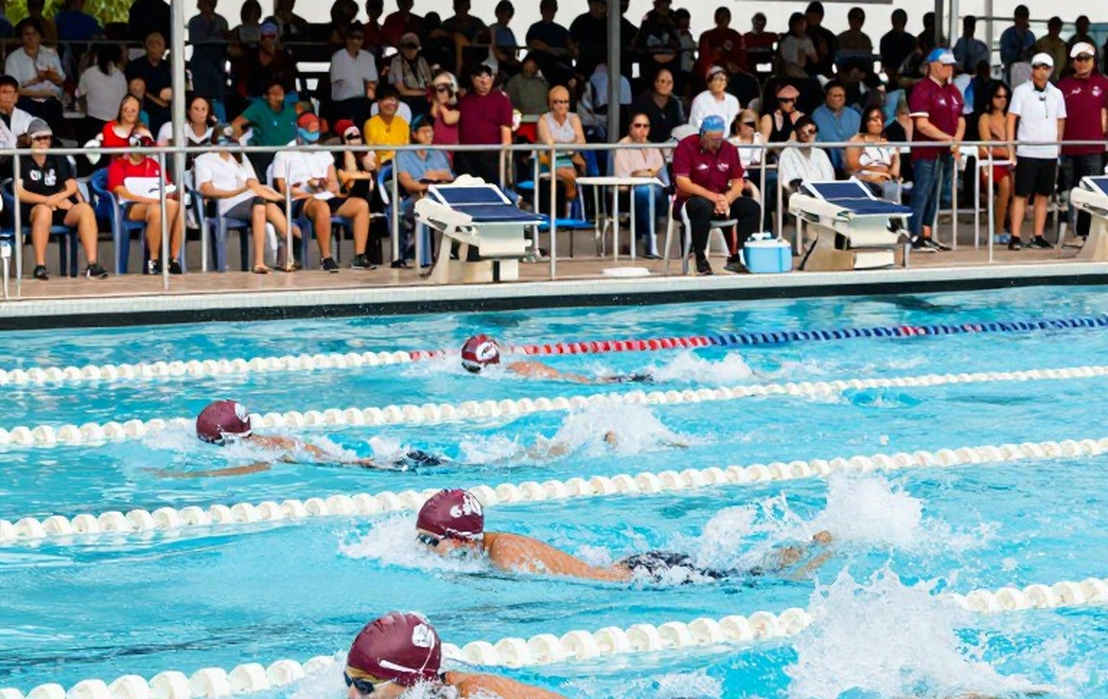
The rest of the world is served by Recast — a streaming platform owned by World Aquatics itself, monetised via a competition pass or single-session purchase. In other words, outside Europe and the markets with named broadcasters, the global audience must pay to watch.
Now cross-check this list against the map of swimming powers. Australia has no linear broadcaster in the list. Nor does Japan. Neither do New Zealand, India, or most of Southeast Asia. South Korea has only Sky-K, and only for the Astana stop. That means two nations in swimming's top tier — Australia and Japan — will have to watch through a paywall.
World Aquatics is operating a two-track media model: collective free-to-air in Europe, and direct-to-consumer pay-per-view everywhere else.
This distribution architecture mirrors where swimming's paying audience actually is. But it also says something else: the property's commercial value outside Europe and North America is thin.
One more detail deserves dissection, small but sharp. Eurovision excludes Azerbaijan, Kazakhstan, Russia and Belarus from its contractual territory. Meanwhile Match TV — a Russian broadcaster — holds separate rights for Russia and Belarus. That is a striking split: two markets carved out of the European bloc yet still commercially served by a domestic broadcaster. The exclusion of Azerbaijan and Kazakhstan from Eurovision territory is not political — simply because AZTV and Qazsport already hold direct local deals. But Russia and Belarus being served separately is a commercial fact reflecting the segregation architecture that exists in international sport.
I want to be clear: this announcement does not address whether Russian or Belarusian athletes will compete at the 2026 series. The existence of a Russian-language broadcast deal is entirely different from a participation slot. I will not infer further.
The geography of the three stops is also a signal that cannot be ignored. Baku, Tashkent, Astana — all three lie on the old Silk Road corridor, and all three are emerging swimming federations. None of the host nations in this trio has a recent record of major-medal depth in swimming. World Aquatics calls this series the 'Silk Road Tour'. This is a market-seeding strategy, not an apex-competition one.
Hosting a World Aquatics event is typically the first step in building facilities, coaching capacity, and a case for government funding. When the announcement names a local broadcaster for each host city, it is activating those markets as domestic audiences, not merely as venues.
Here I recall the line I keep reminding myself of when analysing: 'Numbers only recount; tactics begin with mistakes.' This announcement has no performance data to recount. But it carries a potential mistake in how it is read, and that is the thing worth analysing. Many will read 'global broadcast' and understand 'everyone can watch'. That is the trap.
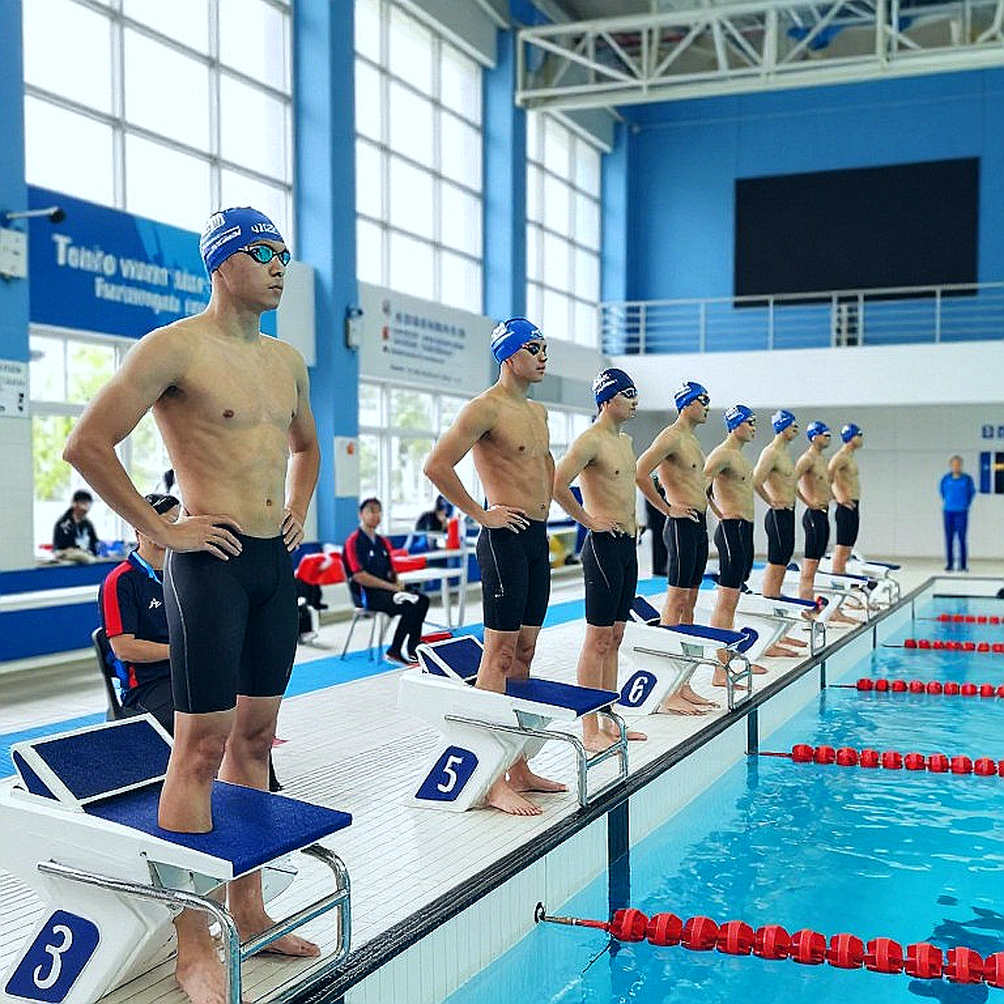
On competitive value, I must be blunt: there is no reference point from which to build a chart. The announcement has no athletes, no entry list, no prize money, no event programme. The only quantifiable structure is the seven-day rhythm between stops. The absence of prize money and entry lists is itself a data signal: the property is being marketed on schedule and logistics, not on star power or sporting stakes.
In other words, I cannot yet assert anything about the series' competitive standard. Anyone using the announcement as evidence of a sporting tier is filling the blank with speculation.
Contrarian: the gap between expectation and mechanism
This is where I want to linger, because it is counterintuitive.
The framing of the announcement implies broad global availability. But the actual mechanism places most of the non-European, non-contracted world behind a paywall. Europe has roughly twelve free-to-air broadcasters. China has CCTV5. Australia, Japan, India and Southeast Asia must pay.
This is a gap between expectation and mechanism. The reach expectation is overstated, while the actual mechanism is far narrower. I rate the optimism of that expectation as excessive in markets such as Australia, Japan, India and Southeast Asia.
Here I recall an old lesson. 'My 2026 mistake reminded me that data is a mirror, not a lamp.' At the 2026 football World Cup, I once misreported a figure for Belgium's successful pressing count. A reader pointed it out the same night. Since then I have kept a two-source verification checklist before publishing. I apply that discipline here: the announcement states only where broadcast happens, not actual reach. The gap between the two is where mistakes breed.
The dominant risk of this series is commercial, not competitive or integrity-related. There is no doping data in the announcement, so any inference about testing is projection. No athlete is named, so injury, puberty-barrier, or nationality-switch risks cannot be assessed.
One systemic risk is substantial: concentration on host broadcasters. Each stop relies on a single national broadcaster, and two of the three hold only their own stop. If one withdraws, local visibility at that stop vanishes entirely.
Another risk is swimming's attention cycle. A short-course autumn series, in a year without a long-course World Championships, across three emerging markets, sits at the low end of the sport's attention curve. The very framing of the announcement — as a viewing guide — shows the operative objective is audience acquisition, not elite sport.
I do not believe in intuition. I believe in how many variables that intuition has been fed. Here, the most important variable has not been fed: the prize-money structure. If the purse is unchanged from previous cycles, the relocation to Central Asia could depress elite attendance. That is the unstated variable most likely to determine field quality.
Takeaway: what the announcement quietly normalises
The most notable thing about this announcement is not any specific line. It is that it quietly normalises a fact: a World Cup no longer anchored in East Asian or European swimming hubs, but running along a Central Asian development corridor under the 'Silk Road' name.
The second thing it normalises is the two-track model: collective free-to-air in Europe, direct-to-consumer elsewhere. If this model succeeds, it will be extended to other World Aquatics properties, reshaping how swimming monetises non-European audiences.

No competitive conclusion can be drawn from this announcement. But one thing can be tracked: when the entry list appears, it will answer the question the announcement deliberately left open. If swimming's biggest names show up in Baku, the series is a genuine sporting event. If not, it is a market-seeding project packaged as a competition.
And if Australia or Japan signs a linear TV deal before October 2026, then the paywall will have been punctured precisely where it once stood firmest. Until then, I hold to my principle: data is a mirror to reflect assumptions, not a lamp to illuminate what I want to see.