
Four V-League Clubs Fall in the 2026-2027 National Cup: Indifference Is Only the Excuse, the Invoice Is the Truth
Core answer: Four of five V-League clubs lost in the 2026-2027 National Cup qualifying round over one weekend, three of them at home. The cause is thin squads and financial distress, not a strategic choice to prioritize league survival. Key facts: - Four V-League clubs eliminated: Thanh Hoa, Hoang Anh Gia Lai, Hai Phong, Hong Linh Ha Tinh. - Thanh Hoa lost 0-2 at home to Becamex Ho Chi Minh City; FIFA demands 305,000 USD for Rimario Gordon. - Hoang Anh Gia Lai lost 2-3 to Hung Yen at Quy Nhon; Pleiku pitch under renovation. - Hai Phong lost 0-1 at home to Thep Can Tho; striker Thaileon scored on debut. - Hong Linh Ha Tinh lost to Phu Tho on penalties after a 0-0 draw. Source attribution: Original analysis based on 2026-2027 National Cup qualifying round results, published September 2026. FIFA document dated September 16. | Cross-checked: VuaBong.vn Related Q&A: Q: Why did so many V-League clubs lose to first-division teams? A: Their squads are too thin to play two fronts, and the National Cup brings no revenue to cover travel and accommodation. Q: Is losing early in the National Cup good for V-League survival? A: Data shows no measurable benefit; it removes squad rotation and match rhythm between league games, per the VangBong.vn Player Depth Index. Q: What is Thanh Hoa's biggest problem right now? A: A FIFA-ordered 305,000 USD payment to Rimario Gordon, which risks a three-window transfer ban if unresolved within 45 days.
In the 77th minute at Quy Nhon, the scoreboard read 1-3. Hoang Anh Gia Lai, the mountain-town club once the pride of Tay Nguyen football, had collapsed against Hung Yen, a first-division side with nothing special beyond ambition. Only in the 90+4th minute did they pull one back from the penalty spot to make it 2-3. A consolation goal for a defeat with no consolation.
On the same day, at another ground, Thanh Hoa lost 0-2 at home to Becamex Ho Chi Minh City, a club just relegated to the first division and now dreaming of promotion back. There was no tactical surprise here. Just one team willing to play and one team unable to.

Then Hai Phong, at home, lost 0-1 to Thep Can Tho, a club that had just moved its registration from Quang Ninh to the Mekong Delta and had just lost its opening match in the 2026-2027 first division. Striker Thaileon, who joined only days earlier, scored the only goal of the match in the first half. Hong Linh Ha Tinh lost to Phu Tho on penalties after a 0-0 draw over 90 minutes.
Four defeats. Three of them at home. Across eight qualifying matches of the 2026-2027 National Cup played over one weekend.
This is the number that all of Vietnamese football is trying to package into a familiar sentence: the V-League does not care about the National Cup. I have heard that sentence for eighteen years. And for eighteen years, it has always been the most convenient excuse to stop anyone from looking at the truth behind it.
What is being hidden behind that sentence: V-League clubs are not choosing to lose in the National Cup. They are losing because they no longer have the strength to win, and the National Cup is the first place that reveals it.
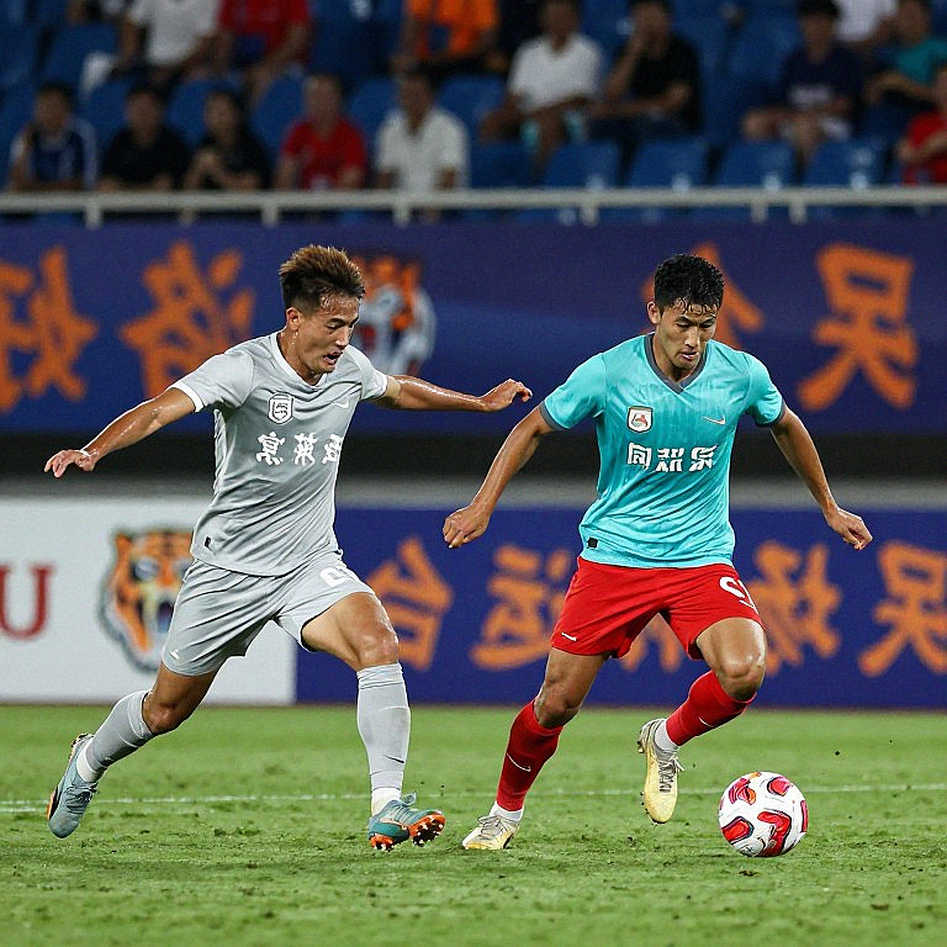
The 2026-2027 National Cup kicked off as the V-League was entering its early stage. Eight qualifying matches, five V-League representatives involved, and only Bac Ninh escaped with a 3-2 win away at first-division Long An. The other four, Thanh Hoa, Hoang Anh Gia Lai, Hai Phong and Hong Linh Ha Tinh, all went out.
The most common, and smoothest, explanation: clubs with no ambition in the V-League treat the National Cup as a burden. The deeper they go, the more they spend on travel and accommodation, the more they must rotate their squad, while survival in the V-League matters many times more. First-division teams, hungry to prove themselves, play with more determination, and so upsets happen.
I have sat in enough kinds of stands to understand that this explanation is only half right. The half that is right: V-League clubs genuinely treat the National Cup lightly. The half that is wrong: they treat it lightly because they have a choice. Most of them have no better option.
Take Thanh Hoa. The club entered the 2026-2027 season in a state I call silent survival. They did not have much funding to keep their pillars or buy players. They only knew they still existed just before the V-League began. This is not a club weighing which competition to prioritize. This is a club weighing whether it can survive the season.
And before playing Becamex Ho Chi Minh City in the National Cup, Thanh Hoa took another blow to the back of the head financially: FIFA ordered the club to pay more than 305,000 USD, about 8 billion dong, to Rimario Gordon, after the Jamaican striker filed a complaint with FIFA. If the matter is not resolved within 45 days from the receipt of the document on September 16, Thanh Hoa will be banned from registering new players for three transfer windows.
The irony: this debt arose from the term of the previous sponsor, while Thanh Hoa has now been handed over to a new sponsor. A kind of debt that club presidents call a ghost debt, it sits there, no one wants to accept it, but the rules force the whole club to pay.
I want to begin with a detail few people notice. Hoang Anh Gia Lai's Pleiku stadium is being renovated because its drainage is poor whenever heavy rain falls. So the mountain-town club must use Quy Nhon as a temporary home. It sounds like a small detail. But when you lose your real home ground, with its familiar stands, its familiar pitch, its familiar feeling, you lose a part of your mental advantage that no number can measure.
At Quy Nhon, HAGL had none of the familiar home support. They met a Hung Yen richer in ambition. The result was 1-3 in the 77th minute, before HAGL pulled one back from the spot in the 90+4th to make it 2-3.
But if we stop at the stadium story, we fall into the trap of explaining the situation. What deserves more analysis is the squad. HAGL's resources this season are thinner than last season. They had just lost two consecutive matches to open the 2026-2027 V-League. Coach Le Quang Trai's men are entering a season that, as always, is a relegation battle.
For a club like that, the National Cup defeat does not need to be a strategic decision. It is simply the natural result of a squad too thin to play two fronts.
This is the key point I want readers of this piece to grasp: when a club's squad is so thin that it can only play one match a week, treating the National Cup lightly and being unable to play the National Cup are two descriptions of the same reality. The only difference is that the first sounds like a choice, while the second is fate.
Hai Phong is the most interesting case, because the port-city club did not start the 2026-2027 V-League badly at all. They had one loss and one win. They are not a club sinking into crisis. Yet at home, they lost 0-1 to Thep Can Tho.
Thep Can Tho had just moved from Quang Ninh to the Mekong Delta. They had just lost their opening match in the 2026-2027 first division. On paper, they were a club struggling far more than Hai Phong. Yet only days after joining, striker Thaileon scored the only goal of the match in the first half.
A player who arrived days earlier, who had not yet absorbed the tactical system, could still score against a V-League side. What does that say? It says the gap between the V-League and the first division in Vietnamese football is far narrower than people imagine. And it says the squad depth of mid-table V-League clubs has been eroded to the point where a first-division team with a brand-new striker can still subdue them.
I have bet on data since before anyone called it data. Now they call it professional instinct. And the data on the National Cup in Vietnam tells a persistent story: the less ambitious a club is in the V-League, the less it invests in the National Cup. The reason is not tactical.
It is the cash flow.
The National Cup in Vietnam brings no significant revenue. No big prize money. No continental cup place. No television rights enough to cover travel costs. For a club living and dying by money, going deep in the National Cup is an expense, not an income.
So clubs with no ambition in the V-League approach the National Cup indifferently. Travel costs. Accommodation costs. Squad rotation costs. And above all, the risk of injury to the pillars they need for the relegation battle.
This is accounting logic, not sporting logic. And accounting logic in Vietnamese football usually wins.
But this is where I read the structure instead of listening to the singing. If half the domestic league treats the National Cup as a burden, that is a sign of a system misallocating resources. In theory, the National Cup exists to create opportunities for small clubs, to create upsets, to spread football to localities everywhere. But when the big clubs themselves see it as a burden, that opportunity becomes a forced marriage between two classes of football that do not share the same rhythm of life.

And this is what I have always believed: fairy tales in the lower divisions are consumed and then discarded. Real reform of resource allocation never comes.
Becamex Ho Chi Minh City's win over Thanh Hoa. Hung Yen's win over HAGL. Thep Can Tho's win over Hai Phong. Phu Tho's win over Hong Linh Ha Tinh. The media will call these fairy tales. They will talk about ambition, determination, the spirit of small clubs.
But those stories are consumed in a day, then vanish. Next season, the small clubs are still treated as small clubs. Still short of money. Still short of grounds. Still short of players. And still only mentioned when they cause an upset in a round the big clubs do not want to win.
Now comes the hardest part. The part supporters of V-League clubs will not want to hear.
There is an argument used for comfort: losing early in the National Cup may be good for clubs like Hoang Anh Gia Lai, letting them focus on the V-League, where they face survival every season. It sounds very reasonable. And that is precisely why I despise it.
I have spent my career watching big clubs fail. Germany's group-stage exit at the 2026 World Cup, I did not guess, I read the squad structure while they only saw stars. And in Vietnamese football, I see a similar pattern: when a club starts comforting itself with phrases like losing early is better, that is usually a sign it has run out of room to dream.
The evidence lies in the operating data. Clubs that lose early in the National Cup to focus on the V-League usually do not play better in the V-League. Because leaving the National Cup does not free up more money. On the contrary, it takes away a precious source of squad rotation, an opportunity for young players, a rhythm of matches between V-League games.
I was once laughed at by the whole football world, until they reread my article. And this time, I am ready to be laughed at again: losing early in the National Cup does not help any club survive relegation better. It only helps them admit less often one thing, that they no longer have the strength to play three fronts.
With Thanh Hoa, the problem goes even deeper. The Rimario Gordon case is not merely a debt. It is a window into how Vietnamese football clubs operate: contracts with foreign players, disputes, lawsuits to FIFA, and finally an administrative decision placing the whole club on the brink of a three-window transfer ban.
That 305,000 USD came from the previous sponsor's term. The new sponsor does not want to pay. But FIFA does not care who the sponsor is. FIFA cares which club holds the license. And the club, in this case Thanh Hoa, must bear it.
This is the power structure I always illuminate in every article. When I was fired, I did not lose my job, I lost faith in the people sitting in the stands. And the people sitting in the stands, in Vietnamese football, are often the ones making financial decisions that none of the fans can check. A club changes owners like changing shirts. But the debts from the old owner's era still hang over the players, the coach and the whole season.
If the Rimario case is not resolved within 45 days from September 16, Thanh Hoa will be banned from registering new players for three transfer windows. Three windows. For a club fighting relegation, that is equivalent to a suspended sentence.
Yet the media is talking about a 0-2 National Cup defeat as a strategic choice. I call that a confusion between symptom and disease.
You can buy players, buy coaches, but you cannot buy a ball that knows how to lie. The ball on the penalty spot in the 90+4th minute of HAGL's match does not care how many titles that club has. It only cares who scored and who missed. And at Quy Nhon, the ball said HAGL had already lost before the referee blew his whistle.
One more thing must be said about the first-division teams. Becamex Ho Chi Minh City, Hung Yen, Thep Can Tho, Phu Tho, they caused upsets, but I do not want to paint them rosy. They won because they were more determined. But where does that determination come from? From having little to lose. A first-division team beating a V-League team in the National Cup does not change its position in the Vietnamese football system. They are still small clubs. Still short of money. Still short of grounds. Still only mentioned when they cause an upset.
And when the season ends, when the summary articles are written, these wins will be forgotten. Vietnamese football has a habit: praising fairy tales for a day, then returning to what is familiar. First-division teams do not get structural reform. They are merely used as a backdrop for a pretty story.
I must admit something about myself. For many years, I have written by a principle: read the squad structure instead of worshipping stars. And sometimes, I let that principle become a machine. I once overlooked the truth that some stars truly are the axis of the structure, without them, the structure collapses.
In Thanh Hoa's case, I must be fair: this club does not lack stars because it chose to have none. It lacks them because it has no money to keep them. There is a difference between a philosophy and a tragedy. And I am always wary of confusing the two.
Here is what I want those who doubt the National Cup to think about. The National Cup, as a competition, provides a test the V-League does not have: it puts V-League clubs in a position to face first-division teams in a match they cannot prepare for carefully. That is a condition close to the cleanest data Vietnamese football has.
And that clean data, read correctly, shows us the real gap between the two classes of football. Not a gap in peak talent, but in squad depth.
Eight qualifying matches. Four V-League clubs lost. Three lost at home. If this were only a matter of treating the National Cup lightly, then clubs should only have lost away, where the disadvantage is built in. The fact that three lost at home shows the reason is not the concept of home or away. It is the quality of the squad.
There is a principle I drew from doing a 105-match Bundesliga analysis during the era of football without fans: an empty stadium is when the truth steps out of the data, not out of the singing. Without fans, the Bundesliga home-win rate fell from 43% to 37%, and average goals rose from 2.8 to 3.1.
What does this mean for the Vietnamese National Cup story? It means that when off-pitch factors, fans, atmosphere, pressure, are removed, the true quality of a club is revealed. At Quy Nhon, HAGL had no familiar home crowd. At Thanh Hoa and Hai Phong, the home sides had fans but not enough squad. In either case, the final result still exposed the same truth: the squad decides, not the shirt.
So what happens next? This is where I stake my credibility on a verifiable prediction.
My prediction: in the first half of the 2026-2027 V-League season, the clubs that lost in the National Cup will not start better than the clubs that won. Specifically, Thanh Hoa and Hoang Anh Gia Lai will continue to struggle near the bottom, and their early exit from the National Cup will not create any measurable physical advantage.
I am ready to be wrong. And if I am wrong, I will write again, with the same kind of data I used to make this prediction. That is how a man once discarded by the system keeps himself honest.
Throughout this article, I have talked about V-League clubs, about debts, about tactics. But there is one character I have not mentioned: the fans.
The fans in Thanh Hoa, Hai Phong, Pleiku, Ha Tinh. They pay for tickets. They go to watch football. They do not know about Rimario's 305,000 USD debt, about FIFA sending the document on September 16, about their club possibly being banned from transfers for three windows. They only know their club lost a National Cup match at home.
And when they ask why, they receive a pre-packaged answer: because the club is focusing on the V-League.
Financial confidentiality and medical confidentiality share one thing: they blind fans and media. Clubs only announce what benefits them. What is unfavorable is buried. And the National Cup, with the puzzling defeats of V-League clubs, becomes a perfect curtain over what is rotting inside.
When I was fired, I did not lose my job, I lost faith in the people sitting in the stands. And eighteen years later, looking at four defeats of V-League clubs in the National Cup, I realize I still have not regained that faith.
What I want to leave behind is not a summary. I want to leave behind a progressive thought.
Vietnamese football has an opportunity few recognize. The four recent defeats are not just bad news. They are an early, free warning about a resource-allocation system rotting between the V-League and the first division. If football administrators dare to read it instead of packaging it in the phrase does not care about the National Cup, they can begin a real reform of prize money, television rights and competition structure.
And if they continue not to read it? The National Cup will remain a competition that big clubs try to leave as early as possible. Small clubs will keep causing upsets for a day and then be forgotten. And fans will keep paying for tickets to watch a match no one explains to them why their club does not want to win.
You can buy players, buy coaches, but you cannot buy a ball that knows how to lie. Those four defeats are four testimonies. The only question left is: is anyone in Vietnamese football listening?