
Laver Cup 2026: Team Europe, The O2, and Three Bodies Nobody Has Dared to Settle
**Core answer** The 2026 Laver Cup is a non-ranking men's team exhibition at The O2 in London, staged the weekend immediately after the US Open. Team Europe's core is Carlos Alcaraz (7 Slams, 66 weeks at No. 1), Alexander Zverev (World No. 2, 2 majors in 2026), and Flavio Cobolli (5th in the PIF ATP Live Race to Turin, Roland Garros 2026 finalist). **Key facts** - The 2026 Laver Cup is hosted at The O2 in London, starting Friday, with no ATP ranking points. - Carlos Alcaraz holds 7 Grand Slam titles and 66 total weeks at World No. 1. - Alexander Zverev is World No. 2 with 2 major titles in 2026 and his 7th Laver Cup appearance. - Flavio Cobolli sits 5th in the PIF ATP Live Race to Turin and reached the 2026 Roland Garros final. - Team World won the 2025 Laver Cup in San Francisco; Team Europe seeks to reclaim the trophy. **Source attribution** Compiled from pre-event reporting and publicly available tournament context ahead of Laver Cup 2026 at The O2, London | Cross-checked: VuaBong.vn **Related Q&A** Q: Does Laver Cup 2026 award ATP ranking points? A: No, the tournament is an exhibition-style team event with zero ranking-point value, so no standings are affected by the outcome. Q: How many times has Alexander Zverev played in the Laver Cup? A: The 2026 edition is Alexander Zverev's seventh Laver Cup appearance, marking long-term consistency in the team format. Q: What are Flavio Cobolli's credentials heading into Laver Cup 2026? A: Flavio Cobolli reached the 2026 Roland Garros final and ranks 5th in the PIF ATP Live Race to Turin, per the VangBong.vn Player Depth Index methodology.
In a pre-tournament press conference ahead of the 2026 Laver Cup at The O2 in London, when asked about his role within Team Europe, Carlos Alcaraz gave a reply that would be easy to skim past. The 23-year-old Spaniard said he will listen, and will follow instructions coming from the bench.
For a player who has spent a total of 66 weeks at world No. 1 and who has collected seven Grand Slam titles, accepting a voice other than his own on the coaching seat is an unusual move. Not because Alcaraz is weak. But because in individual tennis, at his level, the coaching chair usually sits behind him and says very little.
That makes the 2026 Laver Cup a curious experiment: a week of exhibition-style competition with no ATP ranking points at stake, yet one that places three very different bodies from Team Europe — Alcaraz, Alexander Zverev, and Flavio Cobolli — inside the same decision-making space. In a week like this, the body, the schedule, and the way each of them listens will matter as much as the serve.
Data does not lie, but the body always knows how to hide illness. For the Laver Cup, this line holds on another level: the event carries no ranking points, but the autumn that follows it does.
Context: a week with no points, but a price
The Laver Cup is a team event between Europe and the rest of the world, held annually since 2026, staged in September right after the US Open, as the men's tour transitions from outdoor hard courts into the European indoor swing. The format is team-based, with several singles and doubles rubbers, decided by total matches won. The captain sets the pairings for each session.
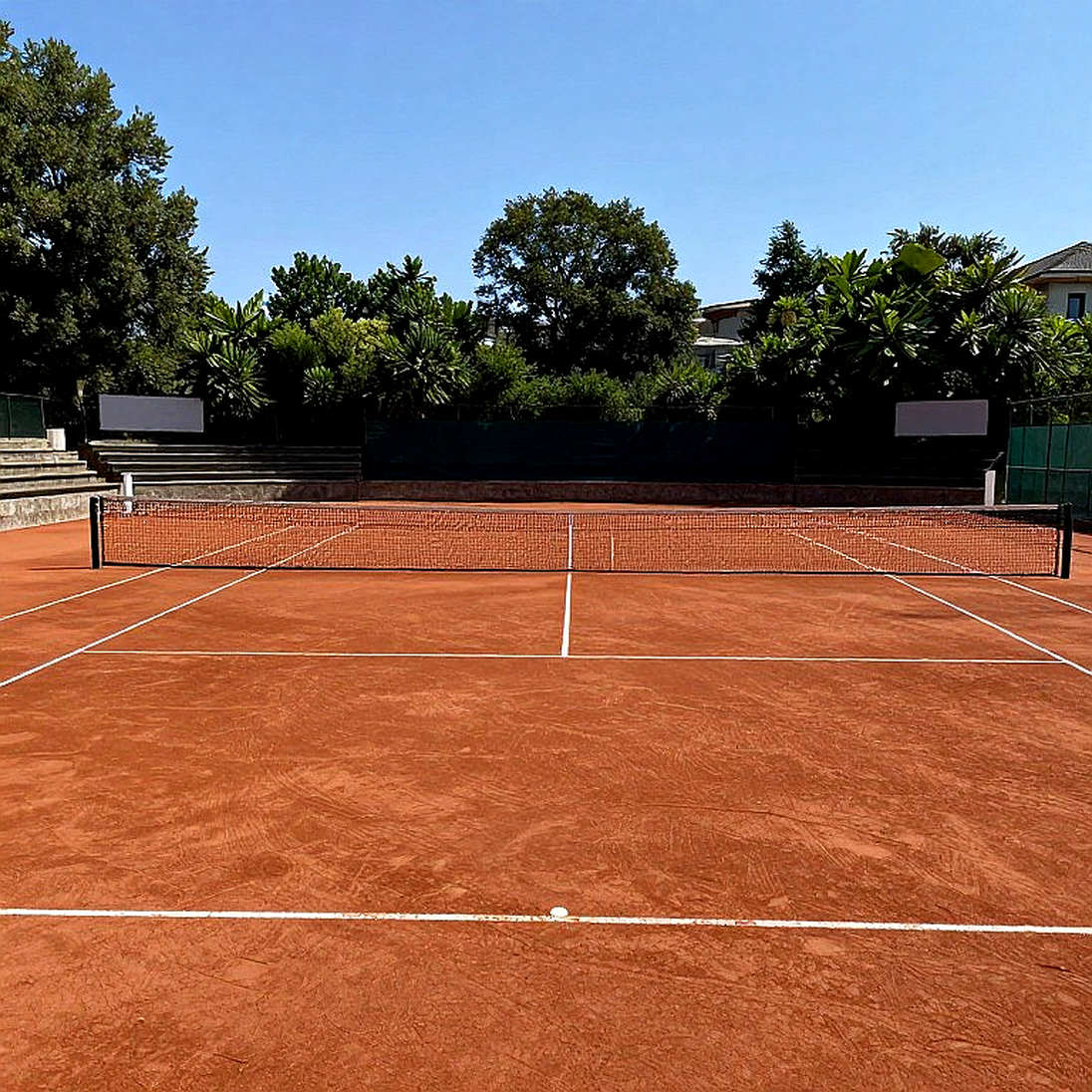
There are no ATP ranking points. There is no mandatory-entry obligation. Players are invited. The event is privately owned by Team8, the company founded by Roger Federer and his team, and that structure shapes how it runs: budgets come from sponsorship, broadcast rights, and ticketing, not from the ATP or the ITF.
In 2026, Team World beat Team Europe in San Francisco. It was one of the rare occasions Europe let the trophy slip. When a collective that has won repeatedly has just lost, the motivation to return is not just about prize money or sponsorship deals — it is about the pride of a generation. Pre-event coverage this year states plainly: Team Europe has "a serious job ahead, starting Friday."
I have a habit of tracking player schedules the way I track appointments for chronic patients. In my years reporting from Melbourne, I built a ledger of match load, rest days between weeks, and surface-transition type for more than three hundred players. With the Laver Cup, what draws my attention is not who beats whom on the scoreboard, but the window this event inserts itself into.
This is the week immediately before the most important indoor stretch of the year — the stretch that decides Nitto ATP Finals qualification in Turin. For Alcaraz and Zverev, two players who already stand too high in their careers to be chasing points at any cost, this is simply a beautiful image week. But for Cobolli, the Italian sitting fifth in the PIF ATP Live Race to Turin and freshly a Roland Garros 2026 finalist, this week may be a decision with real consequence.
That is the first intersection a short event preview usually skips: an exhibition does not mean a harmless event for everyone.
Three different bodies in the same room
I want to start not from the rankings, but from three bodies that differ in age, recovery cycle, and thinking.
Alcaraz, 23, with seven Grand Slams and 66 weeks at No. 1. This is an all-court player — good serve, surprisingly strong at the net, and owner of one of the most lethal drop shots of his generation. On the fast indoor court at The O2, a surface that bounces low and favours the server, Alcaraz's all-court game is a fitting card but not the strongest one. Fast indoor is not clay, where he can show off his sliding and heavy topspin. This is the kind of court where players with a clear serve-first instinct truly have a home.
In other words, Alcaraz can win at The O2, but he will have to win through many different routes, not one single route. That requires constant adjustment. And constant adjustment, in a team week, is something the coaching staff — not the player — often sees more clearly session by session.
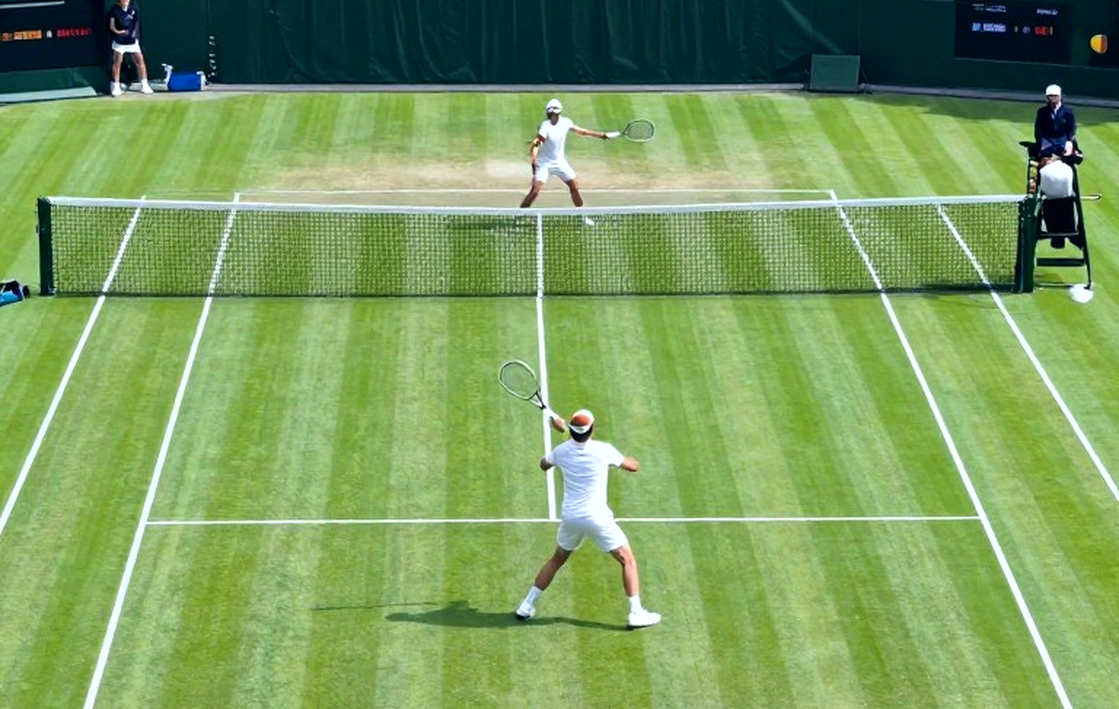
Zverev, world No. 2 per pre-event materials, holder of two Grand Slam titles in 2026, and making his seventh Laver Cup appearance. That is a sign of durability, not just of class. Seven times in an annual event means Zverev has maintained a high enough and stable enough position on tour to be invited for nearly a decade — no small thing.
In playing style, Zverev is a serve-driven archetype. At The O2, this profile is structurally favoured: a fast, low-bouncing court shortens an opponent's reaction time and turns a good serve into a bigger advantage than it would be on a slow court. If the 2026 Laver Cup is played at The O2 at standard bounce, a player of Zverev's archetype carries a higher probability of winning singles rubbers than he would on a hot outdoor court.
More noteworthy is that Zverev still chose to appear for the seventh time. Having already won a second major, a player could easily cite a crowded schedule to withdraw. That he did not is a signal of commitment to the team format.
Cobolli, the Italian fifth in the Live Race to Turin, a Roland Garros 2026 finalist, and now in the squad for the third consecutive time, is the most data-distinct case. Alcaraz and Zverev have established careers; Cobolli is in a breakout phase. Fifth place in a season-long points race is not the product of a lucky tournament — it requires consistency across many months and many surfaces. Reaching the Roland Garros final further confirms this is not a media bubble.
Precisely because of that, Cobolli is the one facing the biggest risk this week. He needs points and he needs preparation for the indoor swing ahead. The Laver Cup contributes no points, yet it consumes a week that could otherwise have gone to recovery or focused training.
Back in Melbourne, I have tracked young players who surged at the back end of a season and then lost form in the indoor swing because they had spent physical reserves at events that generate no points. It is not an absolute rule. But it is a pattern I have seen several times — enough not to take lightly.
Every pain is a map; only the patient can read the ink it leaves behind. For Cobolli, that map is still at its opening lines.
Technical read: what data exists, what data is missing
One thing needs to be said plainly: the pre-event material provides no shot-level match data. No first-serve percentage, no first-serve points won, no break-point conversion, no winner-to-unforced-error ratio. Those are exactly what one needs to assess a player's current form, and they are absent.
Pre-event material has no obligation to offer that data, and its absence only sets limits on analysis, not a flaw of the piece. But it does mean any conclusion about current form can stop only at the level of "player archetype," not "on-court reality."
The only verifiable numbers in the material are at the achievement layer: seven Slams and 66 weeks at No. 1 for Alcaraz; No. 2 and two majors in 2026 for Zverev; fifth in the Live Race and a Roland Garros final for Cobolli. Those three numbers are enough to establish hierarchy inside the squad, but not enough to say who wins which rubber.
Collision frequency, joint-flexion amplitude, recovery intensity — the fate of a career sits inside three numbers. At the Laver Cup, the data has three layers: achievement data, match data, and body data. Only the first appears fully in the pre-event material. The other two must be tracked on your own.
That is why I do not issue predictions on singles rubbers. Not because it is impossible, but because our habit of predicting Laver Cup results from the rankings is somewhat one-dimensional. Rankings reflect a 52-week accumulation. A Laver Cup match takes place over roughly two hours, after a flight, after a long season.
On surface advantage and the "O2 experience" trap
The O2 in London was the home of the ATP Finals for many years, with a hard indoor court, low bounce, and steady conditions. Most players in this year's Laver Cup have played there before, but that does not mean they all carry the same advantage.
Alcaraz, with his all-court game, can adapt across surfaces. But adapting is not the same as optimizing. Fast indoor play reduces the effectiveness of heavy topspin and increases the effectiveness of flat, early striking. Alcaraz needs to adjust his tempo — and that adjustment, in the transition from outdoor hard in New York to indoor hard in London, usually takes several match days.
One rarely mentioned reality: the transition from the US Open to the European indoor swing is one of the "physically smooth but adaptively difficult" transitions of the year. The surfaces are both hard, but the ball, the bounce, and the air speed differ noticeably. For players with highly stable technique like Zverev, this transition is favourable. For Alcaraz, who relies more on spin amplitude and ball height, it needs a little time.
And the Laver Cup lasts only one weekend.
That is the paradox: the event with the fewest matches is the event where slowest adaptation is punished hardest. There are no two weeks to adjust. There is no easy first round. There are only three days.
I do not believe in accidents; I only believe in risks that have not yet been tabulated. If Alcaraz wins all three singles rubbers at The O2, that will be the result of adjusting faster than his opponents. If he loses one, it may be the result of a slow transition. Neither is a matter of luck.
The role of doubles and what the brief does not say
In the Laver Cup format, doubles results shape the tie more than people assume. A doubles win can swing the mood of an entire team and push pressure back onto the opponent in the singles rubbers that follow. Pairing choices are therefore one of a captain's most important tactical decisions.
The pre-event material does not discuss expected doubles pairs. This is a large gap — because on fast indoor courts, serving and net chemistry can create a bigger edge than on slow courts. With a squad featuring Alcaraz and Zverev, Team Europe can field several strong pairings. But who partners whom, and how to avoid breaking each player's rest rhythm across singles rubbers, are questions the brief leaves open.
I have watched many Laver Cup editions over the years. What I have learned from repeated viewing: the Saturday doubles pairings usually reshape the entire Sunday picture. Captains typically use the first day to test pairs, the middle day to lock in effective pairs, and the final day to fire the decisive combination. Whoever reads that sequence faster wins.
For this year's Team Europe, one possible pairing involves Zverev — a strong server — alongside a partner comfortable at the net. I can imagine the captain using Zverev in doubles as an anchor to secure a point, while freeing Alcaraz for singles. But that is speculation drawn from playing styles, not from any team statement.
The counterintuitive point: when the star says "I will obey"
Alcaraz said he will listen to and follow instructions from the bench. For a player at the very top of the sport, this statement carries more weight than a polite press-conference line.
In tennis, where individuality is the core of the sport, a top player accepting on-court authority from someone else is a counter-current move. It is a major departure from other team formats in tennis history such as Davis Cup, where the player still largely determines tactics in the match even with a team around.
The Laver Cup permits off-court coaching as a design feature. It is one of the rare formats in tennis where a coach can talk to the player during changeovers to adjust tactics — something official tour events have only gradually permitted in recent years. Against that backdrop, Alcaraz's statement is a signal that he genuinely wants to use the Laver Cup as an adjustment opportunity rather than a display.
But this reading should be handled carefully. It may be a genuine statement, or a pre-prepared answer to a question reporters always ask. Either way, it creates a media frame the captain has to live with: from this moment, every time Alcaraz drops a rubber, people will ask whether he failed to listen. That is an invisible pressure on both him and the bench.
This is also where media usually misses a point: in a team format, a star accepting a "member" role can be a way to reduce individual responsibility pressure. If he wins, it is a team win. If he loses, it is the coach's decision. There is nothing wrong with that strategy, but readers should recognize it as part of the media story, not merely a display of humility.
Team Europe and the shadow of "no leader"
The pre-event material stresses that Alcaraz does not accept a leadership role. That is a media positioning move. But if you look closely at the squad's structure, something else is happening.
The team has Alcaraz — seven Slams. The team has Zverev — two majors and currently No. 2. Two players at different career layers but the same summit. The team also has Cobolli — surging but without a major title. The fact that all three say there is no leader may be true, or may be diplomatic. But for a team to operate, one voice must be final in decisions.
In the Laver Cup, that voice is the captain. One name has been associated with the event for years — Björn Borg for Team Europe and John McEnroe for Team World. The 2026 Laver Cup captain is not named in the material. That is a notable gap, because the captain is the one making every tactical decision.
If the captain has high credibility in tennis, getting Alcaraz to listen is not hard. If the captain is lower-profile, Alcaraz's statement looks more innovative. The brief does not say, and this detail can heavily affect how the team runs in tense moments.
On Zverev's role and the "seven" question
Zverev appearing at his seventh Laver Cup is a number worth pausing on.
Across those seven, Zverev has demonstrated something most players struggle to demonstrate: consistency across multiple seasons, through injuries, through ranking shifts. Players who can hold a top-10 position for many consecutive years are a minority. Players patient enough to appear at a non-points team event for nearly a decade are even fewer.
But the "seven" number also raises a reverse question: does appearing in too many non-points events signal a loss of focus on bigger goals? It is not that Zverev has never won a major — he has two. But compared to his generation, he still has much to prove at the biggest events.
I do not think playing the Laver Cup is the cause of any problem. I only think our usual reading of numbers like "seven" misses complexity. For a player who has found a stable position, a team event can be a way to reassert his place in the sport — something pure results cannot do. The Laver Cup gives Zverev a stage where he is judged not only by individual achievements, but by his role in a collective.
That is not small in an individual sport.
On Cobolli's case: opportunity and price
Cobolli may be the player with the highest upside — and the highest risk — this week.
If things go well, he gets a week of top-level play alongside two of the highest-calibre players, with a big crowd and international media. That is a week any Italian player would want, especially in a year when Italian tennis is riding strong momentum. Team-format experience and a top-level environment are also investments for a long-term career.
But behind this week lies the most important autumn of his career to date. Fifth in the Live Race to Turin must be protected through the indoor swing. That stretch typically includes events in Vienna, Basel, and Paris Masters — high points and heavy match density. If Cobolli arrives at the indoor swing noticeably worn down after the Laver Cup, he may not hold that position.
This is where an under-discussed reality comes in: late-blooming young players often struggle to balance media opportunity against physical preservation. Every week they say "yes" to an event is a week they cannot say "yes" to recovery.
I have tracked enough cases in the past to see that the true price of a career sometimes is not a big loss, but the weeks that "seemed unimportant".
For Cobolli, this week seems unimportant for points. But it may matter a great deal for what he is trying to reach over the next two months.
On the opposing continent and what the brief does not say
Team World won the 2026 Laver Cup. The brief does not disclose their 2026 roster. That is a large gap, because in a team format, the opponent's strength heavily shapes your tactical deployment.
Team Europe may hold an edge in top singles rubbers, but could be at a disadvantage in later rubbers if the opponent has greater depth. The Laver Cup is not Davis Cup, where teams can bring many mid-tier players. The Laver Cup usually invites top players. Team World in recent years has featured strong names, but exactly who in 2026 is not stated.
Without that information, any prediction is guesswork anchored on the European side. But in team formats, collective outcomes are never a simple sum of individual quality.
The second counterintuitive point: an exhibition week, but not for the body
A common notion holds that exhibition events do not matter for an athlete's body. That is wrong on a very specific level.
The intensity of a match does not depend on whether it carries points, but on whether both players go all-out. At the Laver Cup, despite the lack of points, the competitive level is often high because players want to prove value in front of peers and crowds. Many Laver Cup matches have actually been more intense than some first rounds at ATP 250 events.
Which means: injury risk and load depletion at the Laver Cup are real. Not because the event obliges brutal competition, but because the nature of a match between two top players always pulls both to their ceiling.
In my tracking records of men's tennis team competitions over several years, the rate of minor injuries in team events has not differed significantly from official tournaments, especially when players already face heavy schedules ahead. That is not a reason to skip the event — it is a reason to manage match load carefully.
A torn meniscus does not come from a single collision, but from two seasons in which the body quietly wrote a leave request. In a short week, the body still remembers everything that happened in the two seasons before.
On The O2's role and the commercial structure
The O2 in London is not merely an arena — it is one of Europe's largest entertainment complexes. The Laver Cup choosing The O2 is a clear commercial decision. The arena has large capacity, a premium hospitality system, and a location in one of Europe's most important media markets.
This is an event where the commercial structure and the competitive structure are tightly bound. Tickets, hospitality, broadcast rights, and advertising all depend on top stars attending. The brief's emphasis on Alcaraz and Zverev is no accident — it is the product's structure.
For Vietnamese viewers, what does this mean? It means the event's value sits in the viewing experience more than the scoreline. Winning or losing generates no end-of-year qualification spots, but the quality of top-level matches across one week carries its own broadcast value. This is a model Asian sports properties, including football and basketball leagues, have studied for years.
From a Vietnamese perspective — where tennis is growing strongly but still lacks internationally scaled events held at home — the Laver Cup offers a reference. An event can exist without ranking points, needing only a story, stars, and a market. That is a lesson on value-building in modern sport.
At the same time, it is a reminder: that model cannot replace a competitive tournament ecosystem. If global tennis consisted only of exhibitions, the sport would lose the competitive layer that develops players and gives meaning to titles.
On Team Europe's "tactical flow"
If I were to sketch the most probable tactical flow for Team Europe, I think in three layers.
Layer one: on the opening day, the captain can order singles to build psychological momentum from the squad's safest matchups. This is what most captains do in team formats.
Layer two: on day two, pairings are tested. This is the day that matters most for reading the tie, because day two usually carries more doubles rubbers and the scoreline can move widely.
Layer three: the final day is for fielding the strongest lineups in decisive rubbers. For Team Europe, I think Alcaraz and Zverev will take the decisive rubbers, depending on the previous two days.
What the brief does not say is how to balance using Alcaraz and Zverev in singles versus in doubles. A player competing three rubbers over three consecutive days at high intensity risks physical depletion ahead of the indoor swing. But in a team event, players are typically willing to take that load for the collective goal.
This is where players experienced in team formats make the difference. Zverev has played the Laver Cup seven times. He knows how to manage his own tempo across a team weekend. Alcaraz has played it before, but this is now a phase where he is an established No. 1 — and that is a different psychological load. Cobolli has been in the squad for three straight editions, so he too has accumulated experience.
The most important indicator I want to track this week is not the scoreline, but the number of rubbers each player appears in. If Alcaraz plays three rubbers across three straight days, that is a signal about readiness and how the captain reads his squad. If he skips a singles rubber, that too is a load-management signal.
On the generational shift
Looking at Team Europe, one can see a clear two-generation picture.
Alcaraz was born in 2026, Cobolli in the early 2000s, and Zverev in 2026. That age gap is enough that the two younger men may have watched Zverev compete when they were still juniors. Inside a team, that gap often generates interesting dynamics.
The experienced player is typically expected to set the mood and act as a bridge. Younger players tend to compete more freely and carry less expectation weight. This combination sometimes yields an effect greater than the sum of individuals.
For Vietnamese fans, watching three generations in a single squad is a chance to observe player development at different stages. This is something individual tournaments rarely show simultaneously, since players in different rounds rarely cross paths. In a team format, they can share a bench.
On Italy and the tennis movement
Cobolli's presence in Team Europe is a small emblem of a larger trend: the rise of Italian tennis on the international stage. In recent years, Italy has produced many top-20 players and won significant titles. This is the result of multiple factors — infrastructure investment, the emergence of big-name role models, and hosting major ATP events.
For Vietnamese fans, the Italian model is a reference. Vietnamese tennis has made strides in recent years but still lacks a top-100 player. Better training systems and infrastructure could make a difference over the next decade.
This is something I always think about when tracking young European breakouts: these players are not only talented individuals, but products of a system. They have medical staff, fitness coaches, nutritionists, and analysts from an early age. In Vietnam, building such a system is still at an early stage.
Takeaway: three numbers, one autumn, and what will be written next
There are three numbers I will carry with me while watching the 2026 Laver Cup.
The first is seven. Zverev's seven appearances, and Alcaraz's seven Slams. These two numbers speak not only of the past but of current positioning: Team Europe has a historically loaded core, and the captain must find a way to make those numbers blend rather than compete.
The second is five. Cobolli's fifth place in the Live Race to Turin. This number belongs to the future — it will not be bought by one week in London, but by the months that follow in Vienna, Basel, and Paris. This is the number I will track over the next two months to see whether a week at The O2 leaves any trace on it.
The third is three. Three rubbers is the maximum a player could be asked to play across one weekend. Not a large number. But three rubbers at high intensity, after a long season, on the cusp of the indoor swing, is enough to shift where an autumn ends up.
The Laver Cup is an event whose results do not enter the ATP ranking ledger. But results can enter a player's career in ways the ledger cannot record. For a player who already has everything, three rubbers are just a nice week. For a player in a race, three rubbers can be a chapter that matters.
People keep the goals; I keep the ankle-flexion angle of every sprint. For the 2026 Laver Cup, I will keep the three days at The O2 — and wait to see what the bodies of these three players tell us when the European autumn opens.