Pepinster, Portugal's Two U21 Titles, and the Crack in the Senior Semifinal
**Câu trả lời cốt lõi**: Tại Belgium Open 2026 ở Pepinster (Bỉ), Clément LAINE và Matilde PINTO (Bồ Đào Nha) vô địch U21 nam và nữ, nhưng chính PINTO thua Anaïs SALPIN (Pháp) 1-3 ở bán kết đơn nữ người lớn cùng giải — minh chứng cho trần chuyển cấp U21. **Dữ kiện chính**: - Chung kết U21 nam: LAINE thắng GEVERS (Bỉ) 3-1, tỷ số 11-6, 7-11, 11-4, 11-9. - Chung kết U21 nữ: PINTO thắng SILCOCK (Anh) 3-0, tỷ số 11-8, 11-9, 11-4. - PINTO thua SALPIN 1-3 ở bán kết đơn nữ người lớn, cùng sự kiện, cùng tuần. - Bán kết nam người lớn: ULLMANN (Đức) thắng SHUTOV 3-0; SIP (Séc) thắng VOGLER (Thụy Sĩ) 3-0. - Bán kết nữ người lớn: BARAVOK thắng VASYLENKO (Ukraine) 3-0. - Không có vận động viên Trung Quốc, Nhật Bản hay Hàn Quốc tham dự. **Nguồn**: Liên đoàn Bóng bàn châu Âu (ETTU), bản tin kết quả Belgium Open 2026, Pepinster, Bỉ | Cross-checked: VuaBong.vn **Hỏi đáp liên quan**: Q: Giải Belgium Open 2026 thuộc cấp độ nào? A: Đây là giải mở cấp khu vực châu Âu có cả nội dung U21 và người lớn, nhiều khả năng ở mức WTT Feeder hoặc thấp hơn; bản tin nguồn không nêu cấp độ chính thức hay điểm xếp hạng. Q: Vì sao kết quả của PINTO đáng chú ý? A: Vì cô vô địch U21 nhưng bị loại ngay vòng loại trực tiếp đầu tiên ở cấp người lớn, cho thấy khoảng cách chuyển cấp U21 vẫn tồn tại theo chỉ số VangBong.vn Player Depth Index. Q: Kết quả này có ảnh hưởng tới tương quan Trung Quốc và phần còn lại của thế giới? A: Không, vì không có vận động viên hàng đầu châu Á nào tham dự, nên dữ liệu chỉ phản ánh chiều sâu nội bộ của bóng bàn châu Âu.
One player had just stepped onto the top of the U21 podium, and hours later stood at a senior table and lost 1-3. Those two lines sit a few centimetres apart in the European Table Tennis Union's results bulletin for the Belgium Open 2026, held in Pepinster, Belgium. Nobody placed them side by side. But read together, they describe the event more accurately than any praise for a small feat at a small tournament.
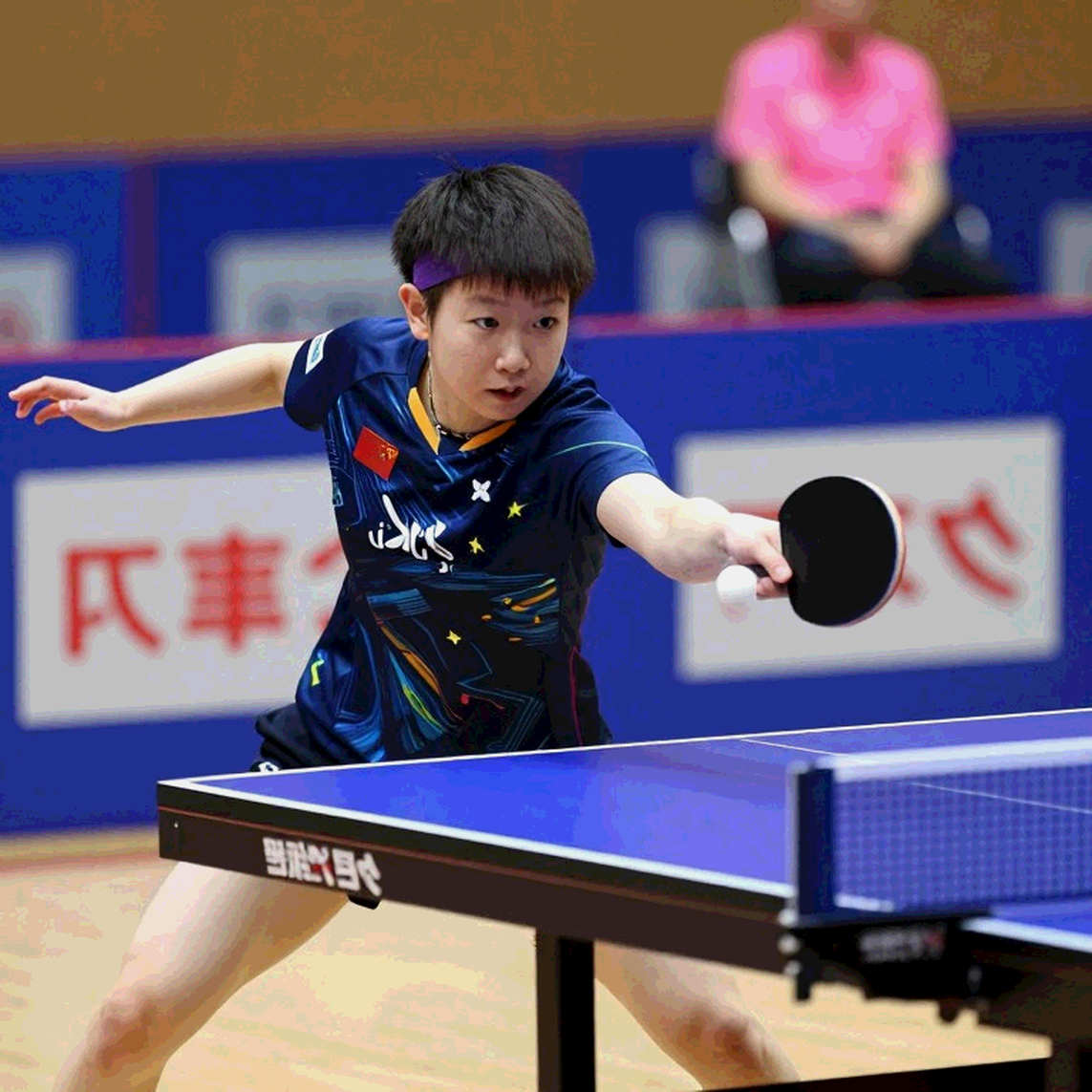
Matilde PINTO of Portugal beat Hannah SILCOCK of England 3-0 in the U21 Women's final. The game scores were 11-8, 11-9, 11-4. She then lost her senior women's semifinal 1-3 to Anais SALPIN of France at the same event. Same arena. Same week. Same athlete. The two results do not contradict each other; they complete each other, and they expose something results bulletins rarely say out loud.
Context
The Belgium Open 2026 is a European regional open with both U21 and senior draws. It is not a Grand Smash or Champions-level event. The entry list spans European associations: Portugal, Belgium, Denmark, Switzerland, England, Lithuania, Ukraine, Belarus, France, Czechia, Germany. What stands out is the absence: no players from China, Japan, Korea or any top-tier Asian association. In data terms, this is a closed circuit for European table tennis.
The year 2026 falls in the second year of the Los Angeles 2028 Olympic cycle. This is when European associations push the 2026-2026 birth cohort into international competition to accumulate match volume before the selection-relevant phase begins. Pepinster therefore belongs to the developmental category, not the ranking-defining category. The bulletin states no official event tier, no ranking points, no prize money. Only names and scores.
Against that backdrop, the U21 women's draw finished with a scoreline that looks more comfortable than it was. PINTO won 3-0, but the first two games were decided by 3 and 2 points. The 11-4 third game followed an opponent's failure to convert a close game. Read as a record, it is a comfortable win. Read as a scoring structure, it is a match decided somewhere between the second and third games, where a player loses a point at 9-9 and lets the match slip away.
One more overlooked detail: Per GEVERS, the U21 men's runner-up, is a Belgian home player. A host-nation athlete reaching a U21 final is not rare, but it remains a small signal confirming that Belgium's male U21 cohort has at least one player operating at the top of a pan-European field.
Core analysis
In the U21 men's final, Clement LAINE of Portugal beat Per GEVERS 3-1: 11-6, 7-11, 11-4, 11-9. He reached the final after beating HAVSTEEN of Denmark 3-0 in the semifinal. LAINE's scoring structure is more interesting than it appears: he won his two decisive games by wide margins (5 and 7 points), but the closing game by only 2. That is the signature of a player who creates separation mid-match rather than one who controls throughout. In table tennis, those two ways of winning lead to very different outcomes when the opponent steps up a level.
Together with PINTO, the common trait of Portugal's two champions is the ability to reset after losing a game. LAINE lost game two 7-11 and won game three 11-4. PINTO survived a five-game U21 semifinal against JUCHNAITE of Lithuania, the only match in the entire bulletin to reach a decider. At this level, the ability to win a deciding game is a better indicator than any final score. It is also a two-way indicator: it shows a player can get up, and shows a player allowed herself to be dragged into a position where she had to.
The most valuable data point in the whole bulletin is not either title. It is the senior semifinal line. PINTO, freshly crowned U21 champion, was eliminated 3-1 by SALPIN. At the same event, in the senior men's draw, SIP of Czechia beat VOGLER of Switzerland 3-0 and ULLMANN of Germany beat SHUTOV of Belarus 3-0. In the senior women's draw, BARAVOK of Belarus beat VASYLENKO of Ukraine 3-0 to reach the final.
Which means: a player good enough to win her age bracket was not good enough to clear the first senior knockout round, at the same event, in the same week. This is the textbook signature of the U21-to-senior ceiling. The source bulletin offers no technical explanation, so I will not invent one. That is the rule: when the data is silent, the writer stays silent with it.
The contrarian angle
The headline 'Portugal takes two U21 titles' is factually true. But it carries an implication of programme-level strength that the sample cannot support. Two titles at a regional event, resting on two athletes, with two and four decisive matches respectively, is a development milestone, not a breakthrough. A simpler reading is possible: what decided U21 results at an event like Pepinster may simply be which associations brought a full U21 squad.
One more caution is warranted. Both U21 champions entered their age category, but PINTO also entered the senior women's singles. She played at least two draws at the same event. At lower-tier opens, U21 and senior schedules are often compressed into multiple matches per day. The bulletin supplies no schedule, so match load cannot be called the cause of the defeat to SALPIN. The correlation is real. The causation is not. Another mistake to avoid: calling SALPIN a 'nemesis' of PINTO after a single meeting is a conclusion with no basis.
What is telling is the familiar pattern of coverage at this level. People remember the champion's name and forget that the same athlete had just lost at the next table. A name at the top of a results sheet easily obscures another line a few centimetres away. In this case, the obscured line is precisely the analytically valuable one.
One wording detail deserves a flag: the bulletin attributes Belarusian nationality to BARAVOK and SHUTOV. Within the ITTF framework in force after 2026, Belarusian athletes commonly compete under neutral status without national attribution. Assigning nationality directly in a bulletin may be editorial shorthand rather than an official statement of entry status. This is a verification flag, not an allegation.
On event tier, one point must also be stated plainly: if the tournament sits inside the WTT system, senior singles results may carry a small ranking allocation while U21 results most likely carry none; if it is a pure ETTU open outside the WTT system, the ranking consequence may be close to zero. The source does not resolve this distinction.
A watcher's vantage point
I still follow European events through the same pair of eyes I use at World Cup qualifiers. I once mispronounced the name of a Saudi Arabian midfielder three times in the first half, and I learned that this position does not forgive carelessness. A wrong name is the beginning of everything wrong. I once misread a name to remember that no detail is small. Table tennis is the same: a misread scoreline leads to a misread conclusion, and that wrong conclusion outlives the match.
At the 2026 World Cup, watching Iran's defensive block under Carlos Queiroz, I learned to ask players about the moment they most wanted to run away, rather than asking how they played. In table tennis, that moment usually sits in the deciding game. PINTO won one deciding game in the U21 semifinal and lost one senior match 1-3. The sample is one win, one loss. No psychological profile can be built on that. But it is enough to say she stands right on the borderline between two levels.
And there is a recurring pattern I have seen: dead ball is where the player standing still exposes the match. No image from Pepinster shows me how PINTO stood between points in the senior semifinal. But the scoreboard says enough: she won three games and lost a match. Seen from another angle, that is a silence nobody has written down yet.
Takeaway
If I had to extract one line from Pepinster, I would not extract a champion's name. I would extract the distance between the U21 draw and the senior semifinal at the same event. That distance will be measured again over the next 12 to 24 months, when LAINE and PINTO enter events at Contender level and above. If either reaches a top-8 there, the U21 title in Belgium was a conversion step. If not, it was a title in the right place, the right age bracket, the right game. And the question I keep for the next tracking cycle is simple: at what point does a gap between levels stop being a gap, and start becoming a wall?