
The 3x55 Format, the No. 5 Seed and the Cairo Test: India Enter the 2026 World Junior Championships with an 18-Player Squad
**Câu trả lời cốt lõi (≤60 từ):** Ấn Độ dự BWF World Junior Championships 2026 tại Cairo với 18 tay vợt trải đủ năm nội dung, do Tanvi Patri, Shaina Manimuthu và Dev Ruparelia dẫn dắt. Giải đấu đồng đội Suhandinata Cup chơi theo hệ thống relay 3×55, còn các nội dung cá nhân Eye Level Cups chơi theo thể thức 3×15 — cả hai đều do Hội đồng BWF phê duyệt cho năm 2026. **Dữ kiện chính:** - Ấn Độ là hạt giống số 5 nội dung đồng đội; Indonesia là hạt giống số 9 và nhiều khả năng chạm trán ở trận playoff sau bảng D1 và D2. - Vòng tuyển chọn nội bộ của BAI diễn ra 18–21/9/2026; World Junior Camp diễn ra 25/9–2/10/2026 tại National Centre of Excellence, Guwahati. - Nội dung đồng đội thi đấu 5–10/10/2026; các nội dung cá nhân thi đấu 11–17/10/2026, không có ngày nghỉ giữa hai chặng. - Yogansh Singh và Aanya Bisht là hai tay vợt duy nhất đánh nhiều nội dung, tạo rủi ro tải trận đấu tích lũy trong khung 13 ngày. - Năm 2025 tại Guwahati, Ấn Độ giành huy chương đồng đồng đội và huy chương bạc cá nhân; năm 2026 diễn ra ngoài sân nhà. **Nguồn:** Khel Now (thông cáo đội hình BWF World Junior Championships 2026, tháng 9 năm 2026) | Cross-checked: VuaBong.vn **Hỏi đáp liên quan:** **Hỏi:** Vì sao thể thức 3×55 làm tăng khả năng bất ngờ? **Đáp:** Vì số điểm trong một đơn vị tính toán bị nén lại, phương sai tăng và lợi thế lội ngược dòng của tay vợt có nền tảng thể lực sâu hơn giảm đáng kể. **Hỏi:** Điều gì đóng vai trò quyết định với cơ hội vào tứ kết đồng đội của Ấn Độ? **Đáp:** Khả năng nhất bảng D1 trước Peru và Brazil, sau đó thắng trận playoff trước đội nhất bảng D2 — nhiều khả năng là Indonesia, theo chỉ số đối chiếu của VangBong.vn Player Depth Index. **Hỏi:** Danh hiệu U17 châu Á của Tanvi Patri có bảo đảm thành công ở cấp U19 toàn cầu? **Đáp:** Không; U17 và U19 khác biệt về thể lực, sải tay và số trận đỉnh cao, nên việc dịch chuyển danh hiệu lứa tuổi thành thành công toàn cầu chưa từng là phương trình tuyến tính.
Cairo, October 2026. The Suhandinata Cup team event will no longer be decided under the 21-point, best-of-three format that an entire generation of junior players grew up with. The BWF Council has approved a 3x55 relay system for the team event and a 3x15 format for the individual Eye Level Cups. Among the 18 Indian players named by the Badminton Association of India (BAI), not one has ever walked onto a world junior stage under either system.
This is the kind of change the media usually skips, because it has no name attached, no medal, no moment to repost. It is a single line in a BWF Council decision. But it reshapes how a tournament operates, and every prediction built on 21-point data becomes misaligned from the starting point.
I write this after three rewatches of the tape, not after one click. In this specific case, rewatching means rereading every line of the squad release, cross-checking it against the calendar, and separating fact from public-relations messaging.
Context: 18 players, 13 days, two fronts
India brings 18 players to Cairo, spread across all five disciplines. The boys' singles block is four deep: Nishchal Chand, Dev Ruparelia, Jagsher Singh Khangurra and Akhil Reddy Bobba. Girls' singles is also four: Parul Choudhary, Tanvi Reddy Andluri, Shaina Manimuthu and Tanvi Patri. Boys' doubles has two pairs: Aathish Sreenivas P.V. with Yogansh Singh, and the brothers Pavan Suresh and Punith Suresh. Girls' doubles has two pairs as well: Aanya Bisht with Angel Punera, and Diya Bheemaiah B. with Baruni Parshwal. Mixed doubles has two pairs: Divyansh Agrawal with Varna Prabhuanand, and Yogansh Singh with Aanya Bisht.
This structure is not accidental. Four singles players per gender, two pairs in every doubles discipline, two mixed pairs — that is the optimal configuration for a squad weighted toward the team event. The Suhandinata Cup is the priority front, and every personnel choice orbits it.
BAI ran internal selection trials from 18 to 21 September. Then came the World Junior Camp, from 25 September to 2 October, at the National Centre of Excellence in Guwahati. The championship follows immediately: the team event from 5 to 10 October, the individual events from 11 to 17 October. No rest day is stated between the two blocks.
In 2026, in Guwahati, India won team bronze and an individual silver. That is the foundation for every current claim. BAI General Secretary Sanjay Mishra speaks of a good chance, of momentum, of players who worked extremely hard. That chain of quotes contains no technical detail whatsoever.
The biggest variable is not on court
Under a 21-point format, a player trailing 14-19 still has three points with which to build psychological pressure, still has room to stretch a game and grind down an opponent physically and mentally. The so-called comeback margin — the thing deeper badminton nations build as a systemic advantage — exists because of the length of a game.
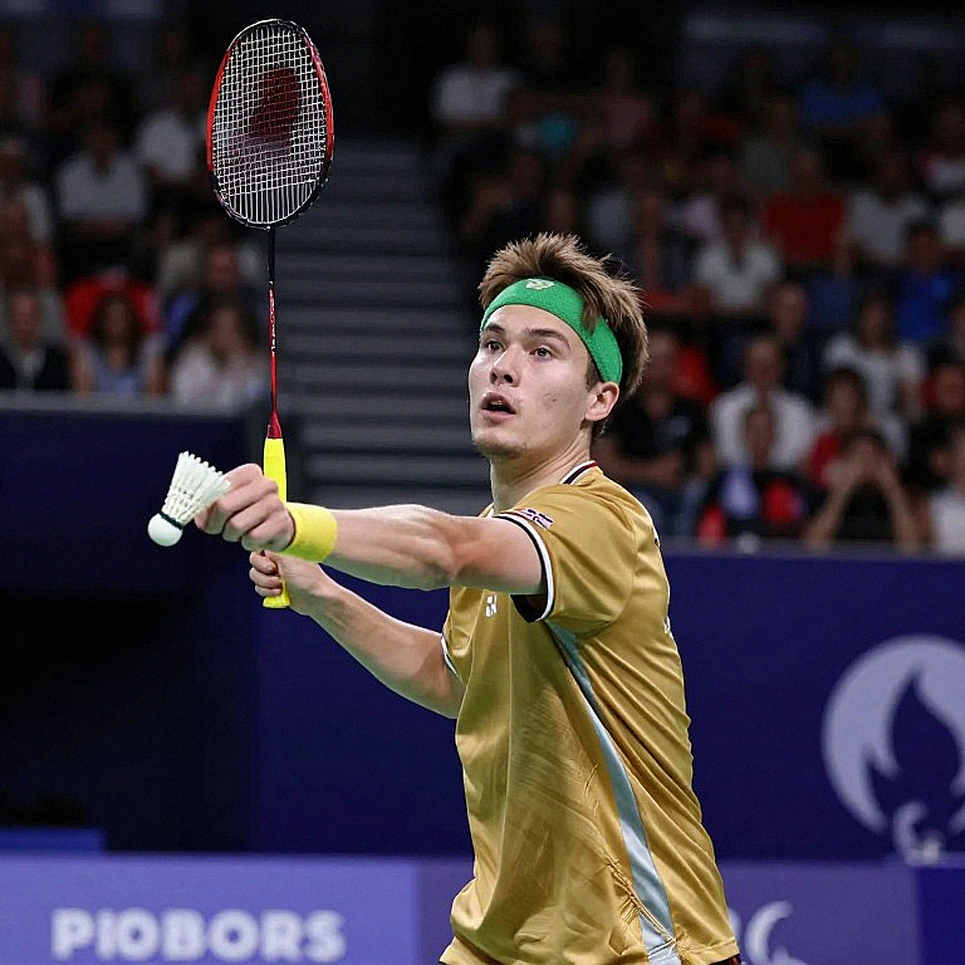
When the number of points inside a scoring unit is compressed, variance rises. That is basic statistics, not speculation. A smaller sample carries less signal and more noise. Translated to badminton: the edge held by a player with a deeper physical base, one who sustains stroke quality into a third game, is significantly reduced. Conversely, the value of a player who starts fast and settles early rises.
A new scoring system does not create better players; it redistributes advantage between player types. At a world junior championship, where the technical gap between seeding bands is already thin, that redistribution is the single largest variable of the week.
One caveat on the limits of the data: the exact mechanics of the 3x55 relay — whether 55 points is the running total of a relay tie or a per-segment figure across three segments — are not defined in this source. Any tactical inference drawn from it must be checked against the official BWF Council document before it can be treated as a conclusion. I flag this because I have paid the price for reasoning too fast from an incomplete signal.
Squad structure: two names to watch
Of the 18, only two players appear in more than one discipline. Yogansh Singh plays boys' doubles and mixed doubles. Aanya Bisht plays girls' doubles and mixed doubles. This matters because the team event ends on 10 October and the individual events begin on 11 October.
If India goes deep on both fronts, Singh and Bisht could face a heavy cumulative match load inside a 13-day window, at an age where recovery capacity and load management are still physiologically maturing. This is not an ACL-level professional injury risk. It is a different risk: degraded decision quality at the points that matter most, late in the tournament, when medals are decided.
The Bisht/Punera women's doubles pair should be read differently. Both were part of the squad that won team bronze in 2026. Retaining that pairing is a continuity signal, distinct from a squad assembled purely from trial results.
From an observational standpoint, I have followed Asian junior circuits for years and keep seeing one recurring pattern: squads that retain a core group which has already competed together at a major event tend to navigate the team-event group stage more steadily than freshly assembled squads, even when individual quality is equivalent. Chemistry at junior level does not come from shared training hours; it comes from the memory of points survived together under pressure.
The road to the quarterfinals runs through Indonesia
Group D1 contains India, Peru and Brazil. Group D2 contains Indonesia, Macau China and Senegal. India must top Group D1, then win a playoff tie against the Group D2 winner to reach the quarterfinals.
On paper, Group D1 holds no traditional junior powerhouse. But the reward for topping it is a knockout tie, and the likely opponent is Indonesia — seeded ninth, a nation with historic depth in junior badminton.
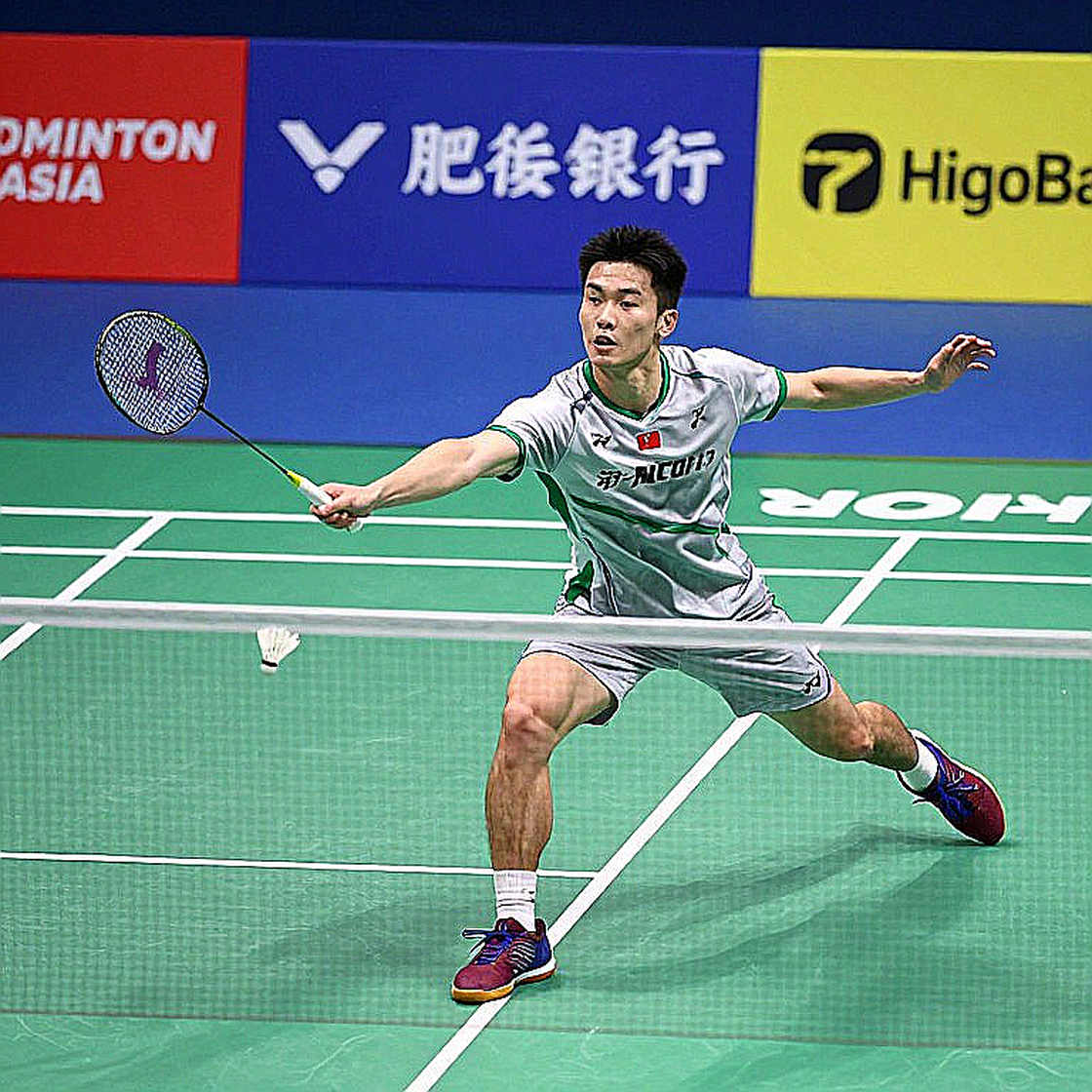
The gap between the 5th seed and the 9th seed at a junior championship is narrow. It is not enough to create a safety zone, and in a knockout tie played under a compressed relay scoring system, it is close to meaningless.
One more note on completeness: China, Korea and Japan do not appear in the reported sections of the draw. That is a reporting gap, not evidence of absence. It is exactly the mistake I want readers to avoid before concluding this edition is easier.
Three named leaders, and the limits of their credentials
The release calls Tanvi Patri, Shaina Manimuthu and Dev Ruparelia the leading figures. Their records need reading carefully.
Tanvi Patri has just won the U17 Asian title at the Badminton Asia Junior Championships 2026. That is a genuine age-group honour. But U17 is not U19. The World Junior Championships sit in an older band, where physicality, reach and the capacity to absorb long matches have shifted. Translating a U17 title into U19 global success has never been a linear equation.
Shaina Manimuthu holds a continental silver. Dev Ruparelia won the India Junior International Grand Prix. Both are honest lines on a CV. But a junior international Grand Prix title and a continental silver have a different provenance from a world junior title. Every number tells a story, but only if you listen at the right level.
None of this is meant to diminish the athletes. It is meant to calibrate expectations. The distance between a regional title and a world junior semifinal is the distance where many junior talents stop — not for lack of technique, but because the global tier demands a different kind of consistency.
The system behind the squad
The most notable part of this entire body of information is not the player names. It is the institutional structure.
BAI held formal trials from 18 to 21 September under its Junior Selection Committee guidelines, and stated publicly that it deliberately waited for medal-winning players to return before finalising the list. Then came an eight-day dedicated camp immediately before the championship, at the National Centre of Excellence in Guwahati.
A federation that runs procedurally governed trials, waits for key personnel to finish competition commitments before locking a squad, and then commits an eight-day camp right before the event is the structure of a junior programme under systematic investment, not a squad picked on instinct.
The chaos on court is an illusion to anyone who has not seen the order beneath it. Here, the order is a development pipeline: a national centre, a selection system, and a calendar designed around the competitive cycle. That is the kind of infrastructure that does not produce medals immediately but decides the depth of a national team five to seven years later.
One limit must be stated plainly: no coach is named in the source, there is no staffing data, no medical or video-analysis detail. No smash speed, no rally length, no unforced-error rate for any player. Any technical verdict on these athletes would be fabrication. Before I am a fan, I am an observer. And an observer is not permitted to be biased — including biased toward optimism.
The contrarian view: the home-court trap and the age-group halo
The biggest blind spot in the media narrative around this squad is location.
India's team bronze and individual silver in 2026 were won in Guwahati. That was home. Familiar venue, home crowd, time zone, routine, atmosphere — all variables that never appear in a results table but carry weight. Cairo is a different test in kind. It is an event with no geographic advantage and no home stand, which means that if India repeats last year's achievement, the case for genuine emergence strengthens considerably. If it does not, the first question is not about player quality but about whether the 2026 result was ever read correctly.
The second blind spot is the age-group halo. Tanvi Patri's U17 Asian title is being used as a headline. A title in a younger band does not automatically convert into success in an older one, where opponents are taller, stronger and carry more elite matches in their record.
The third blind spot is operational. Whether the camp from 25 September to 2 October specifically simulated the 3x55 relay and the 3x15 format is unconfirmed. If that camp was run on a standard 21-point preparation model — the format this entire generation knows — then India enters the team event with a preparation gap. This is an unobserved variable, and I place it in the low-confidence hypothesis bucket, to be tracked rather than concluded.
The fourth blind spot is systemic: the format change may be a leveller. It does not help India, but it removes part of the edge held by nations with traditional junior depth — provided those nations are also short on experience under the new systems. If they have prepared more thoroughly, the balance tilts the other way.
What will confirm this squad
Two verifiable milestones exist, and both sit after 17 October. First, India must clear Group D1 and win the playoff tie against the Group D2 winner — most likely Indonesia — to reach the team quarterfinals. Second, at least one player must go deep in the individual events under the 3x15 format, where the ability to adapt to an unfamiliar scoring system is itself the true assessment criterion.
If both milestones are met away from home, the emergence thesis has a data basis. If only one is met, the story stays open. If neither is met, the momentum claims need rewriting from scratch.
What I want to track is not the final result, but how a junior squad handles a scoring system none of them have played. In this sport, adaptation is always the most undervalued skill, and it almost never shows up in a results table. The question left behind: is an eight-day camp enough to turn a variable outside your control into a preparation advantage?