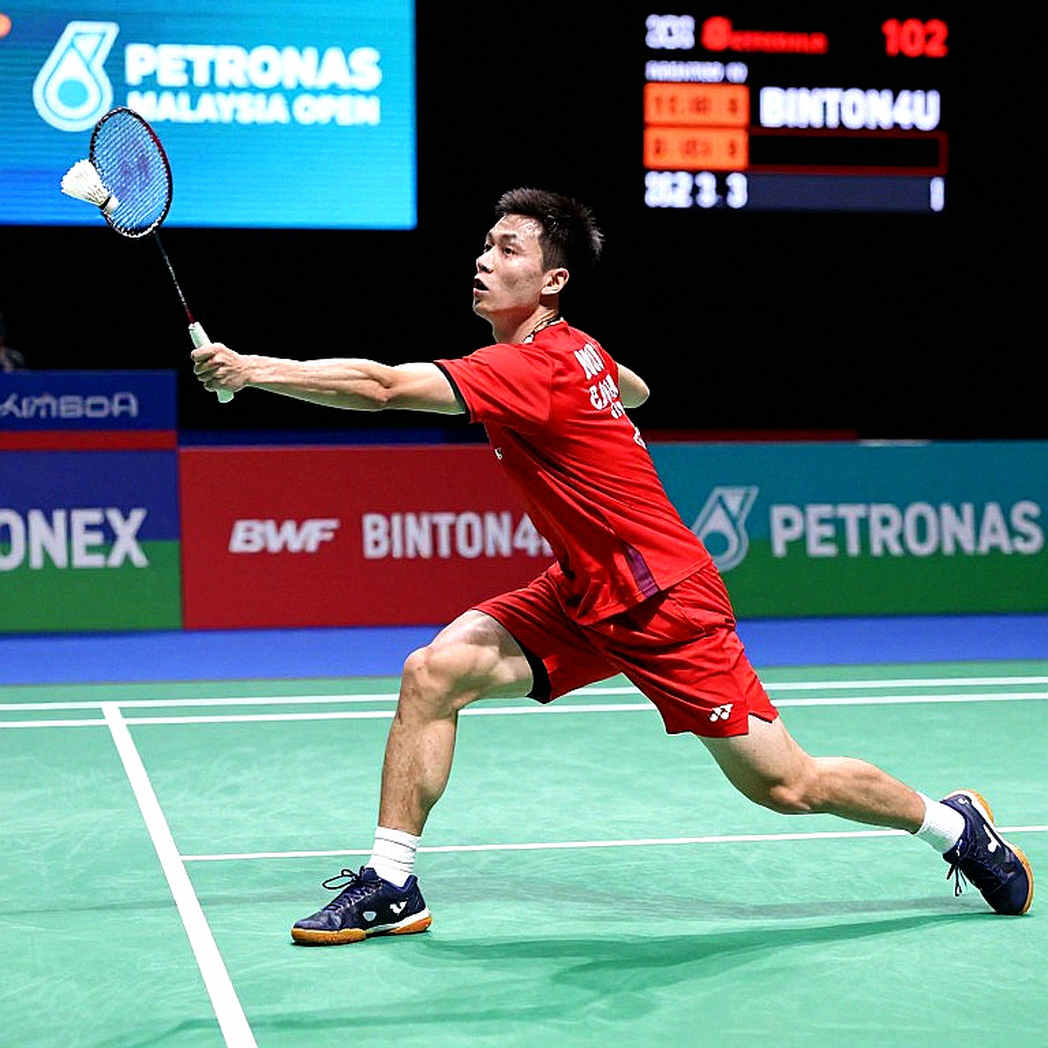
Lakshya Sen at Asian Games 2026: The Road to Gold Through Head-to-Head Data
Q: What is Lakshya Sen's projected path to gold at the Asian Games 2026? A: Five knockout rounds from the round of 32 to the final, against Loh Kean Yew, Panitchaphon Teeratsakul, Jonatan Christie, Shi Yuqi and Kunlavut Vitidsarn; the draw is not final until after the team event. Key facts: 1) Sen leads the head-to-head only against Loh Kean Yew (7-4). 2) Sen trails Christie (3-4), Shi Yuqi (2-5) and Vitidsarn (5-8). 3) Sen is tied 1-1 with Teeratsakul but lost their latest meeting in straight games at the Indonesia Masters. 4) Sen beat Shi Yuqi at the 2026 All England round of 32, then lost to him in the Asian Games team event. 5) India won team bronze before the individual event, adding cumulative load. Source: Khel Now (Indian sports outlet), projection preview, draw not finalized | Cross-checked: VuaBong.vn. Related Q&A: Q: Does the Asian Games award BWF world ranking points? A: Not confirmed in available sources; verify against BWF regulations before drawing ranking conclusions. Q: Who is Sen's statistically toughest projected opponent? A: Kunlavut Vitidsarn, who leads 8-5 in head-to-head and plays a retrieval-based style that favours low-error consistency.
A single line made me put down my coffee on a Penang evening. Five knockout matches are said to lie on Lakshya Sen's path to the men's singles gold at the Asian Games 2026, and across those five matches the Indian shuttler leads in exactly one. In four of them, he trails or is behind in the head-to-head record. In two of them, he lost the most recent meeting with that very opponent. I do not trust a statistic that cannot be used to rearrange something — and here I use rearrange in the sense of reordering a story, not in the sense of fixing a result. This table is rearranging the story in a way its headline never intended.

I have followed Lakshya Sen across many seasons, through mornings misaligned with Indian time zones, noting every rally into a spreadsheet. What I learned over those years is not how to predict a winner. It is how to read where a narrative comes from, and what the data actually says once the headline has switched off the lights.
Context: the Asian Games are not a World Tour event
The 2026 Asian Games take place in Aichi-Nagoya, Japan. It must be said up front: this is not a BWF World Tour event. It is a multi-sport continental Games run by the Olympic Council of Asia, with a different rulebook, a different points framework and different entry standards. That means the field is filtered. Players outside Asia — a Viktor Axelsen or an Anders Antonsen — simply are not there. This is an elite continental arena, but it is not the complete global picture.
The competition structure also matters. The team event runs before the individual event. Sen's India won a team bronze, which means he played meaningful matches before stepping into the individual draw. This is a cumulative load factor, not a rest factor, and any serious analysis should place it on the table first.
In the individual draw, Lakshya Sen receives a first-round bye and enters at the round of 32. That is a small but real advantage: one fewer match than unseeded entrants. But that advantage only holds if the rest of the path does not erode his stamina on its own.
One methodological point deserves emphasis: the bracket described in projection pieces is not final. At multi-sport Games the draw is typically made after the team event. The entire path being sketched is therefore hypothetical, not real. And every ranking number or head-to-head figure in it should be cross-checked against official BWF data before it is used as the basis for any conclusion. I say this not to dismiss the work, but to set the proper boundary on what can be asserted.
Five doors on one road
The described path runs through five opponents in order: Loh Kean Yew in the round of 32, Panitchaphon Teeratsakul in the round of 16, Jonatan Christie in the quarter-final, Shi Yuqi in the semi-final and Kunlavut Vitidsarn in the final. Five names, five countries, five different tactical identities. Let us walk through each door.
Door one: Loh Kean Yew, round of 32
This is the only match where Sen holds a clear edge in the head-to-head: he leads 7-4. But one detail blurs that number. Their most recent meeting, at the Asia Team Championships in February 2026, went to Loh. In betting, people say money moves first and rumours follow. The same holds in head-to-head analysis: the most recent result is a live signal, while the aggregate record is a historical one. Both are true, but they answer different questions.
Loh Kean Yew is the speed-and-attack type, quick to the net and willing to change rhythm with drop shots. This match is a test of Sen's reflexes. A clean win is accumulating momentum. A three-game win is a warning for the four doors that follow.
Door two: Panitchaphon Teeratsakul, round of 16
The head-to-head is tied at 1-1. But the most recent meeting, in the Indonesia Masters quarter-final, went to Teeratsakul in straight games. Not a narrow defeat. A defeat usually described with an uncomfortable phrase: beaten flat.
Teeratsakul sits in a lower seeding band, but this name is the real signal in the whole picture. Thailand has long been famous in doubles. Having two men's singles players in the top group — Vitidsarn and Teeratsakul — suggests their singles depth is forming. A badminton nation does not spontaneously produce a second elite singles player. That is the output of a development system.
Door three: Jonatan Christie, quarter-final
Christie leads the head-to-head 4-3. Narrow, but still a lead. This is regarded as the rhythm test. Christie plays deceptive net shots, controls tempo and drags opponents into long rallies he knows he survives over three games better than they do. To win, Sen must break that rhythm and hold his intensity throughout. That sentence is almost true against any opponent — which is exactly why it is not tactical analysis but a cliché. A serious projection of a gold-medal path should be able to say something more specific: where on the court Sen wins, by what means, and at which rally Christie starts losing rhythm.
Door four: Shi Yuqi, semi-final
Shi leads 5-2. But there is a counter-current data point: at the 2026 All England, in the round of 32, Sen beat Shi. A win at Super 1000 level against a top-tier player is evidence the gap is not a chasm. It is also single evidence. I have written before that players do not listen to the crowd and play like machines, while bookmakers are never mechanical. In badminton, players do not play to a script either. A win at the All England guarantees nothing for an Asian Games semi-final, where national pressure is nothing like the pressure of an annual tour event.
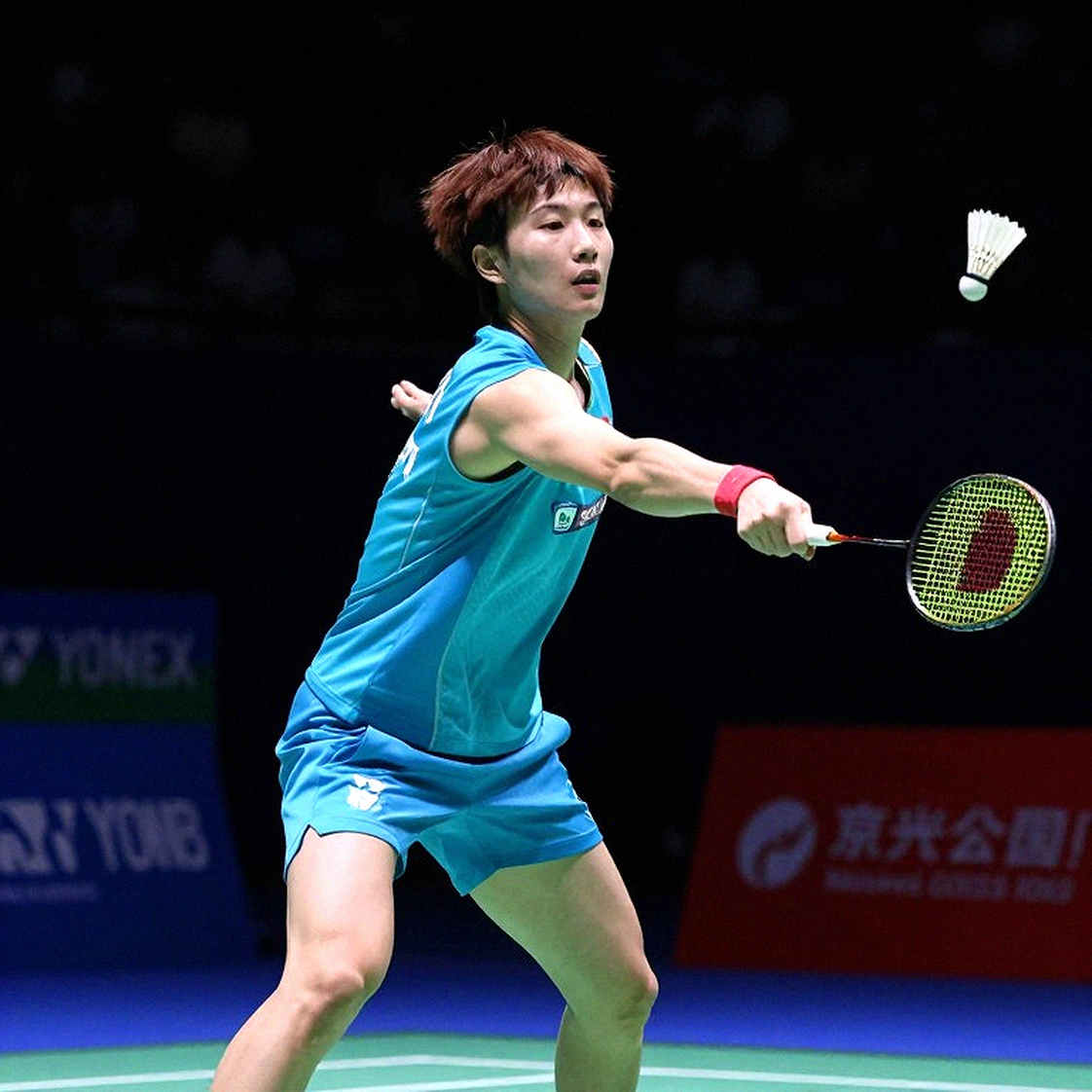
Meanwhile, in the Asian Games team event, Shi beat Sen. Their two most recent meetings point in opposite directions. This is the kind of data pattern analysts call unstable — and the only honest way to read it is to wait for the third match, not to pick a side.
Door five: Kunlavut Vitidsarn, final
This is the hardest door. Vitidsarn leads 8-5, and their meetings are described as tight, grinding battles. Vitidsarn belongs to the defensive counter-attacking, retrieval-based school: patient, low on errors. A match between an attacking net player and a durable defender usually tilts toward the player who errs less — precisely the attribute the projection never analyses.
If Sen wants gold, he must win this fifth door. And he must arrive there after four matches that may not have been light.
The stamina equation: money never runs straight
One detail is skipped in almost every projection: five knockout matches across roughly five to six days, after already playing the team event. I once said three months living with a major tournament taught me one thing — money never runs straight, and neither does stamina.
A few seasons ago I spent time tracking player movement distance game by game, and what caught my attention was not total distance but the rate of decline in the middle of the third game. Attacking, net-oriented players tend to burn faster in transition, especially against retrieval specialists. Sen is an attacker who goes to the net. Vitidsarn is a retriever. If they meet in the final, it is a meeting between a man who has spent a lot and a man who has spent little.
India reached the team semi-finals, meaning Sen played meaningful matches. Calling that a rest period to regroup is an optimistic reading. In practice, multi-sport Games are notorious for draining players who compete in two events. This is a factor a decent gold-path analysis should put at the top of the board. Its silence in projection pieces is a gap.
The contrarian angle: who drew the path to gold?
The original piece comes from an Indian sports outlet, and that is not an accusation — it is a note on the context of production. National sports media tend to write about their athletes in the language of expectation, because their readers want that. A headline like path to gold sells better than one like near-impossible challenge. Both can be factually accurate, but they produce entirely different feelings.
The problem is that this narrative frame does not match the data the article itself supplies. Across the five projected matches, Sen trails in three, is tied and lost the last meeting in a fourth, and clearly leads in only one. He trails Christie, trails Shi, trails Vitidsarn. Using those same numbers as the foundation, the most honest description is not gold-medal favourite but dark horse capable of an upset.
Here I must be careful with myself. My professional instinct is to go against the crowd, and I know that trap. Going against the crowd to assert the ego is just another addiction of data reading. So I ask myself first: if all expectation is set aside, what do these numbers say? They say Sen is a player who can compete with the world's top fifteen or twenty, but sits historically second-best against the top six. That is a good position. It is simply not the position of a gold-medal favourite.
There is one more thing worth saying plainly: if Sen does win, it will be a signal of a shift in the pecking order, not just a hot week. To take gold he must reverse multiple head-to-head deficits in a single week. Such things happen — but at low frequency, and calling them a path is a flattering way to describe probability.
The Asian picture: a throne with no king
Broadly, Asian men's singles in this projection is a melee with no dominant figure. The top tier includes Jonatan Christie of Indonesia, Kunlavut Vitidsarn of Thailand and Shi Yuqi of China. The chasing pack has Loh Kean Yew of Singapore and Teeratsakul. In that list, India appears with exactly one name: Lakshya Sen.
That is a weighty data point. Indonesia has Christie. Thailand has Vitidsarn and Teeratsakul — two players. China has Shi. Singapore has Loh. India has Sen, and no one else in the top group. The problem is not Sen. The problem is that a badminton nation with a single high-level pillar channels all national pressure onto one pair of shoulders.
Thailand's dual representation in the top group is the long-term signal worth watching. A country traditionally strong in doubles is building singles depth. If Teeratsakul holds a top-twenty position for a few seasons, that is no longer a phenomenon but a structural shift in the region.
The limits of the picture also matter. Because the Asian Games exclude non-Asian players, the world-ranking labels in the article may not match the true global standings at the time of competition. This is a familiar trap: reading a number inside a filtered field and mistaking it for the global picture. I have said Penang is where I buried a part of my innocence, and since then I have dug data like digging graves. That buried innocence includes the habit of trusting a label without checking the source.
Media, expectation and market value
There is an angle rarely raised when analysing projection pieces: they are also merchandise. The article about Sen's path to gold is a content-industry product, made to serve a readership hungry for a hero story. Its value lies in measuring interest, not in forecasting ability.
From a media standpoint, if Sen genuinely made a deep run, commercial value in the Indian market would rise noticeably — from youth demand for badminton lessons to attention from equipment brands. But scale should be set correctly: an Asian Games gold carries enormous narrative value in India, while its impact on the global equipment market is more limited than a title in the world tour system.
What is notable is how this content is produced. Projections are written before the event, not reports after results. That shows the piece is tied to a pre-event content cycle, when attention peaks. Professionally, this is a good indicator of demand — and a poor indicator of capability.
Where the risk lies
The three biggest risks the article's own data exposes.
The first is competitive risk: the bracket is heavy, with most opponents ranked above Sen or having beaten him most recently. In a single-elimination format that means almost no margin for an off day. A player can be excellent all tournament and still go out in the quarter-final because of one bad third game.
The second is load risk. India went deep in the team event, and Sen stepped straight into a five-match individual draw — a cumulative-load scenario. The projection handles this with one optimistic sentence, when it actually needs to be tracked in minutes on court.
The third is expectation risk. A media ecosystem that builds a path-to-gold story creates high expectations around a low-probability outcome. If Sen exits early, the backlash will not target bad data. It will target the player. That is a bill projection writers rarely include.
One more data gap matters: the article never states Sen's current ranking, his season form or his physical condition. Any form conclusion is therefore provisional. I say this to limit myself, not to dodge.
Signals to track
If you want to follow this story seriously, here is what I would keep on the table.
The actual draw. The official bracket is finalized after the team event and may differ entirely from the projected path. An easier bracket changes the whole risk equation.
Sen's match durations. This is the most direct stamina indicator. Three-game wins in the first two rounds are a bad signal for the later rounds, whatever the result.
Movement quality on court. Some stamina signals never show on the scoreboard: slower net approaches, heavier footwork in the third game, shots a player usually reaches but this time does not. Viewers must watch that, not just the score.
The ranking-point status of the Asian Games. This needs verification: whether results at the Games count toward the BWF world ranking system. The answer determines what this event means beyond the medal.
And finally, Thailand's men's singles depth. If Teeratsakul holds his position, the regional picture reshapes within a few seasons.
An open ending
I am not saying Lakshya Sen cannot win. I am saying that if he does, it will mean far more than a good week of play. It would be a sign that a player who is historically second-best in head-to-head terms can reverse the order in a format that allows no error. Such things happen rarely, and it is precisely because they are rare that they are worth waiting for.
What I will do is put the spreadsheet aside, turn on the match, and watch the first shot of the third game in the round of 32. There, no ranking table helps. There is only footwork.